The Critical Pedagogy in Me


Learning to read may take many paths. There are those who learn to read from the whole to the parts and those that learn to read from the parts to the whole. I found my experience to be the former. Growing up in the East African country of Tanzania, I experienced a number of challenges in learning to read. Like in American schools, reading is approached from the parts to the whole in Tanzania. The appropriate route to learning how to read involves teaching the student first the sound, then the letter, and finally the words (Wink, 2011). However, I learned how to read using cartoon characters in the newspaper to understand a story. In her book, Wink calls students like me the “others” because we learn to read from the whole to the parts. I found meaning on what mattered to me first. The sounds, letters and words were not meaningful to me. The big picture or “whole” as told through the cartoon characters was.

Growing up in a village in rural Tanzania, there was no kindergarten and therefore I did not attend one. I learned to read through collecting and reading the cartoon sections of old discarded newspapers. There were no books to go around and the fact that my parents could barely read and write themselves did not help either. Therefore it was through my own efforts and watching others read that I learned to read. Because of the interest I had to read the cartoon characters and to understand what they were saying, I was able to look at the whole picture and then put the pieces together. Thus from my own experience, I believe that children have many paths through which they can learn to read. It might be true that most children learn how to read through the sounds, letters and words first, but many other children learn to read through the whole to the parts. Therefore, one size or methodology does not fit all children when it comes to teaching them to read.  Teachers must be aware of this fact and offer their students a range of options in their course instruction.

As we learn and grow as individuals, our social and cultural context plays a major part in our learning. I learned this concept the hard way in my first two years of teaching. Teaching is my second career. Prior to teaching, I worked in the environmental field for many years. I had the content knowledge and believed that this was all I needed to go into a classroom and be a successful educator. However, I did not realize that students also have their own social and cultural context that influenced their learning. It was not long before I realized that content without pedagogy, methodology and a deeper understanding of my students’ social and cultural context was a recipe for disaster.

I started teaching in the Baltimore City Public Schools System through their Baltimore City Teaching Residency. As a Baltimore City Teacher Resident, I was enrolled at Johns Hopkins University to pursue a Master’s Degree in Education and was also assigned a faculty advisor. In my first few weeks of teaching I had to go through the process of “learning, relearning and unlearning” my previous assumptions about teaching. I came to realize that content alone would not help me prosper as an educator. I did not really understand the culture, social interactions, and belief systems of my students. Moreover, I had no solid methodologies for how to teach nor did I have a theory of teaching and learning to ground my praxis. I was completely lost. This is what Wink calls “Contradictions and Change”. According to Freire and Macedo, 1987 (as cited by Wink, 2011) reading the world is as important and more so as reading the word. I had not read my world. I knew the word (the content to teach) but I was clueless as to my world (my students’ social and cultural perspectives and beliefs in education). I had to learn, relearn and unlearn quickly.

The student population at my school was 100% black, low income and low socio-economic status. Coming from Tanzania I thought I was black and I understood what it meant to be black, poor, and of low socio-economic status. I came from those humble roots. I understood early on that education was the only route I had to climb the socio-economic ladder and free myself from the shackles of poverty. This point was emphasized to me repeatedly by my impoverished parents who never had the opportunity to go to school beyond the second or third grade. I thought my students and I were on the same page on the role education could play in their lives. I assumed that because we were all black that we all shared the same culture and beliefs. But, I was very wrong in this assumption. I had to relearn and unlearn my philosophical and cultural position. As Wink (2011) states “in this enlightened-and often uncomfortable-educational space, relearning and unlearning begins.”  I realized we were all black but we all held very different philosophical and social and -cultural positions regarding education. As Vigotsky (as cited in Wink, 2011) puts it, “language and culture drives our thoughts processes”. Through the process of learning, relearning and unlearning, I was able to understand that “culture is not singular, nor is it fixed; it is multiple as in multiculturalism” (Wink, 2011). In order to be an effective educator for my students, I had to challenge my own belief system and begin to understand their thoughts and beliefs.  This is a process I began many years ago and which I find myself continuing to perform with each new class of students that I face. 

Now, I will turn to discussing the three models of teaching. During my education in Tanzania, I was exposed exclusively to the transmission model of learning. According to Wink (2011) the characteristics of the transmission model of learning are that: “The teacher is standing in front of the classroom, and the students are at their seats, which are in rows. They listen to what (s) he says and they write it down in their notes”. This is how I was taught and that is the only way I knew how to teach; thus, this is how I initially taught my students. This model of teaching was boring for my students and was mostly unsuccessful.  Again, I had to learn, relearn, and unlearn my world views on the proper way to learn and teach.

To learn, I had to first name my problems, critically reflect on these identified problems, and then act on my problems to create solutions.  After much reflection, I decided that my main problems were that: (1) I did not know enough about my students to engage them in the learning process and (2) I lacked a solid praxis based on practice, methodology, and theory to guide my teaching. To better understand my students, I conducted some research to find out how kids in urban environments, particularly black kids of lower socio-economic status, learn.  I needed to know which teaching methodologies and practices had been shown to work with these types of students. 

In the course of my research, I found an interested study by Young, Wright and Laster, (2005) entitled “Instructing African American Students”.  Young and colleagues found that there are two types of learners – the global learner and the analytical learner. A global learner (right brain) is visual, tactile and kinesthetic. According to the study, “she/he visualizes what has to be learned, touches what has to be learned and also moves a lot during the learning process”. The authors concluded that most, if not all African American students, are global learners. The authors also argued that instructional variability (movement, oral traditions, visual and touching) are key to ensuring that African American students are successfully engaged in the learning process. Another study by Castle, Deniz, and Tortola (2005) found that need based instruction strategies and grouping students according to their needs was a more effective instructional strategy compared to grouping students by ability in urban school settings. Finally, a study by Heystek (2003) indicated that parental involvement in schools with large African-American populations is limited. They concluded that the “limited involvement in turn, leads to low achievement in most of these schools”.

Presented with the findings from this research review, I had to change the way I taught. Through the process of naming, critically reflecting and acting, I was able to move from the transmission model of teaching to the generative model of teaching. I also believe that the process of critical reflection helped me gain the cultural capital I needed to meaningfully engage my students. To be a generative teacher, I had to learn a number of new teaching techniques including the Socratic dialogue. I learned how to develop questioning techniques (the oratory traditions) that helped my students gain a deeper understanding of the content. For example, during the time I was going through this learning, relearning and unlearning processes, I developed a lesson plan on the concept of carrying capacity (Appendix 1). In this lesson, I wanted my students to understand: 1) what plants needed to survive, 2) what will happen to plants if we vary their requirements, and 3) the overall concept of what the carrying capacity of an ecosystem is (see Appendix I). I used a series of directed questions to help my students gain this knowledge in a way that kept them engaged and let them be discoverers of their own information.  It also helped foster their critical thinking skills. 

In another example, I developed a lesson entitled “Where O’ Where Is All of the Water” (see Appendix 2) to help my students understand how the water cycle was relevant to their lives and not just some abstract concept that they had to learn in science class (Appendix 2). Through the lesson, my students learned how water is distributed around the world. They also learned how they could conserve limited water resources in their own homes and community. Though a letter writing exercise to community leaders, students had the opportunity to use the information they had learned to advocate for environmental protection.  This exercise helped students develop critical thinking and communication skills while arming them with the information they needed to make a persuasive argument.

Along with improving my teaching techniques, I also tried to improve how I assessed my students’ understanding of the material.  After reading Wink’s book, I believe that critical pedagogy runs counter to how we currently assess students in today’s classrooms (Wink, 2011).  Most assessment is currently done through standardized tests. Standardized testing does not assess students’ critical thinking skills nor does it assess higher level skills such as “synthesizing” or “analyzing” information, two skills needed in our increasing technology-oriented society.  A multiple choice test simply is not designed to get at these higher level skills.  Instead, standardized testing focuses on measuring basic understanding of materials (facts) and concepts at a given point in time, and thus, does not adequately prepare students for the work environment.  Moreover, current assessment tools are not suitable for measuring the success of critical pedagogy instruction techniques. Instead, critical pedagogy instruction should be assessed using performance based assessment that “calls for students to typically display fairly high level skills” (Popham, 1997).  In my own classroom, I have tried to supplement required standardized testing with performance based assessment methods to get a clearer understanding of my students’ progress. 

In summary, I found this text to be extremely helpful to me.  I enjoyed how the author used a story telling style to write the text. Often, academic books are written very matter of fact and as a result can be dry and somewhat boring. However, I found this book to be different; the author invites you to create your own understanding of the text through her story telling. I found this approach refreshing. In addition, I was not aware of the term “critical pedagogy” before I read this book.  However, as I read the book, I was happy to discover that I often employ critical pedagogy techniques in my own teaching. This book has empowered me to continue to use these techniques and has given me even more ideas on how to integrate critical pedagogy into my instructional and assessment strategies. As Wink points out, learning does not start and end in the classroom. I want my students to connect their learning experiences with what is happening in their homes, community, and globally. To do that, I will continue to utilize critical pedagogy in my classroom.


References

American Psychological Association. (2010). Publication manual of the American Psychological Association (6th ed.). Washington, DC: American Psychological Association.

Castle, S., Deniz, C.B., and Tortola, M. (2005). Flexible grouping and students seanring in a High-Needs School. Journal of Education and Urban Society, 37(2): 139-150.

Heystek, H., (2003). Parents as governors and partners in schools. Journal of Education and Urban Society, 37(4): 371-397.

Popham, W. J. (1997). What’s wrong- and what’s right-with rubrics. Journal of Educational Leadership, 55(2): 72-75.

Young, Y.Y., Wright, J.V., and Laster, J. (2005). Instructing African American students. Journal of Education and Urban Society 125(3): 516-524.

Wink, J. (2011). Critical Pedagogy: Notes from the Real World (4th ed). New Jersey, PA: Pearson Education, Inc.


Appendix 1: A Socratic Dialogue on Carrying Capacity in Ecology

Q: Question

EA: Expected Answer

EX:  Explanation

Q:  We are going to explore an ecological idea called carrying capacity. Does everybody see what I have in front of the class?

EA: Yes, you have a jar with a plant in it

Q: What does a plant needs to survive?

EA: It needs food, water, shelter and good weather (many different answers were offered, I only used the correct ones based on the book we were using)

Q: What will happen if I added 400 more seedlings in the same jar?

EA: Some plants will survive and some will die (again, different answers here as well)

Q: Why do you think some plants will die and others will survive?

EA: Because there will not be enough food, shelter, and water to support all the plants.

Q: Let say I increase the space of the container and the amount of water while keeping the same amount of food. Will all the plants survive because they now have enough space and water?

EA: No

Q: Why do you say no?

EA: Because the amount of food is not going to be enough to support all the plants

EX: No matter how much shelter, water, and other resources there might be, the population will not grow much higher because it has reached its carrying capacity. The largest population that an environment can support is called its carrying capacity.


Appendix 2:Where in the World Is All the Water?


Grade level: 9th –Grade: Environmental Science


Objectives:


Students will be able to:

1)      Construct a model illustrating the distribution of the earth’s water.

2)      Graph the distribution of the earth’s water.

Background:


Water is the most abundant, unique and important substance on Earth. It is essential to life and is a major component of all living materials. Approximately 1,520 billion liters of water exist on Earth. The earth has been called the water planet. Pictures taken from space show the earth as a big blue marble because of the amount of water found at the surface. The earth’s water, however, is actually found in, on and above the surface in three physical states: solid, liquid and gas. The following is a breakdown of the earth’s water supply: Oceans (97%), glaciers/icecaps (2%), groundwater (0.7%), atmosphere (0.3%), freshwater lakes (0.01%), saline lakes/inland seas (0.01%), soil moisture (0.01%), and rivers (0.001%).

Vocabulary:


  • ocean
  • glacier
  • icecap
  • groundwater
  • ponds
  • lakes
  • reservoirs
  • rivers

Materials:


  • 1000 ml beaker
  • 5 cups or small beakers
  • 1000 ml tap water
  • medicine dropper

Procedure:


1)  Introduction (15 minutes)       


Today, we are going to talk about how we conserve water so that we always have enough to drink.

Write the following paragraph on the board and have a student volunteer read it.

“Water is the most abundant, unique and important substance on Earth. It is essential to life and is a major component of all living materials. Approximately 1520 billion liters of water exist on Earth. The earth has been called the water planet. Pictures taken from space show the earth as a big blue marble because of the amount of water found at the surface (show picture). The earth’s water, however, is actually found in, on and above the surface in three physical states: solid, liquid and gas.”


2)  Small group activity (60 minutes)


Break students into groups of six.  Pass out materials to each group.  Instruct each group to fill their 1000mL beaker with 1000mL of tap water. Label the large beaker “ocean” and the 4 cups as follows:

§  1-glaciers/icecaps

§  2-groundwater

§  3-atmosphere

§  4-Surface water

The students should then pour water from the ocean into each of the cups in the proportions they think the water on Earth is distributed. Allow each group to report their distributions.  Pass out the “Did you know” worksheet showing the actual distribution of water.  Have students distribute their water in the correct percentages.  Discuss with students how only a small percent of water is suitable for human use and that it is important to conserve the water that we use in order to ensure that we always have enough.

Distribute graph paper to each student.  Ask them to create a pie chart showing the distribution of water.  Next to their pie chart, have them write some ways they can conserve water. 

3)      Discussion (15 minutes)


Ask students to share some of their ideas for how to conserve water.  Write their suggestions on the board.  Add to list as needed.  Post students’ pie charts outside in the hallway.

4)   Homework


Students should select one of the ways for conserving water and try it at home.  They should record their experiences in their journal for two weeks.

Extensions:


  1. Have students research a water conservation method and present their findings to the class.
  2. On an overhead, show students a list of organizations that are available that offer information about protecting the environment. Allow students to choose one organization they would like to write to receive information. Assign students as homework to write a short letter requesting information from a specific organization. Have them explain in their letters why they are requesting the information (what they are studying). Send home a letter to parents requesting a stamped envelope if possible. Have the school as a return address and mail the letters.
  3. Have students write a letter to a local or national politician (e.g. their Congressman or even the President) stressing the importance of conserving water. 


Tanzania Education System: Why Change It?


Each year and each time the National Examination results (Standard Seven, Form Four, and Form Six) are announced, the discussion regarding the failures of the education system in Tanzania pops up.  The central question in these discussions is whether or not the education system is meeting its goals of educating the Tanzanian youth? TWAWEZA’s  data (2011-2012) from a cross-sectional studies in over 38 districts of the Tanzanian education system highlights some of the issues and the difficulties facing the system. Access the report here. Findings from this cross-sectional study paints a gleam picture. At the primary, secondary, and high school levels, majority of our children are not learning and not acquiring practical  and problem-solving skills needed to be successful in life and for post primary education. The skills gap is much wider between rural and urban primary, secondary, and high schools. This skill gap has created a rural-urban divide on how children access quality education in Tanzania.

Major Issues Facing the Education System in Tanzania

Tanzania has a K-13 education system. It starts with the kindergarten level for one year, the primary level for seven years, the secondary school level for four years, and the advanced secondary school level for two years.  Currently, there is a multifaceted primary school education in Tanzania composed of English Medium Schools (the very minority) from political and affluent families and those attending regular primary education (the majority). And Within the regular education system, the facility and staffing quality differences between schools in rural areas and those in urban areas are quite staggering.

Those attending regular primary schools in rural areas normally lack books, teaching aids, and are schooled in dilapidated teaching environment. Furthermore, they have teachers who are ill-prepared to teach the courses that are assigned to them to teach. Furthermore, there are no professional development opportunity for the teachers to engage in professional learning and development. Professional development activities that will enhance proficiency in their teaching, teaching methods, in the medium of instruction, and  finally mastery of content.

The teaching culture also needs to change to reflect the changing student needs. It should be reasonable for student to engage in a discussion with the teacher and other students without fearing retaliations. The fact that students are scared to ask questions in class is very troublesome. Teachers are supposed to be facilitators of children’s search for knowledge. It is the duty and responsibility of each teacher to encourage children to ask questions, to guide children in their thirsty and hunger for knowledge. How are children going to learn if they do not have the opportunity to ask questions? What type of citizens are we producing? Citizens who cannot ask questions? Citizens who cannot analyze issues? I always ask myself why we entirely depend on the people who failed to teach our kids. Failures produce failures in my book.

Change Requires Clear Vision

To counteract these issues, the government of Tanzania needs to be at the forefront. The government needs to develop goals on how the educations system in Tanzania should look like for the short and long term.

Questions like:

What knowledge is of most worth to the youth in Tanzania?

What research based-teaching strategies are best for achieving this knowledge?

What educational management model would be best for achieving the knowledge we seek to impart to our children?

Who will pay for the cost of providing this knowledge?

These questions needs to be asked and thoroughly explored. Without a clear plan, it will be impossible to measure if the education system is actually addressing the needs for the short and long terms. In assessing the education program we need to ask ourselves:

What our standard seven graduates need to know and  be able to do?

What our form four graduates need to know and be able to do?

What our Form Six graduates need to know and be able to do?

Further Issues to Explore: Why are Tanzanian Youngsters not Learning?

There is not a single answer to this question. Several factors contribute this issue in one way or the other.

Learning Activities

Learning activities used in most classrooms do not reflect the interests of children. We are still using teaching strategies that are outdated, non-engaging and based on memorization to teach children whose attention spans have changed over the years. Most of the digital-age children have very short attention and memory spans. Lecturing for hours without interactive activities, hands-on-activities, and experiential learning activities will not be beneficial to them. In my opinion, we cannot continue to teach non interactive lessons, lessons that don’t address children brain development theories, motivation theories, cognitive theories, and expect our children to learn. In addition, teacher absenteeism, lack of classroom resources, and pathetic salaries contribute to the failures seen.

Research to what interests our kids to learn is needed

I plea for Colleges “UDSM , SUA, and UDOM” to do research aimed at finding out what exactly interests our young people today. Our this is known, these colleges could be at the forefront in the development of curricula that reflects these interests. A bottom up approach  for developing curricula from the the school level, the district level, the regional level, and the country at large needs to be used. Matching students interests, intelligences, learning style preferences with instruction has been shown to improve students’ interests and academic performance.

Curricular Should be Regional Rather Than National

Tanzania is a huge country. Curricula diversification is very important.  What kids learn in Mtwara should reflect the challenges and opportunities available to them. Kids should learn through solving real life problems facing their community. What kids learn in Tabora, should reflect issues that are directly linked to their own society. We need to move past the one-size-fits-all mentality in education policy formulation, delivery, and especially the curricula itself.

The Age Factor

For primary education the age factor needs to be seriously discussed. In my views, Standard Seven graduates are indeed too young to participate meaningfully in any civil and citizenship responsibilities. For example, getting a job at the age of 13-to-14 years is almost impossible in the current work-force-system or structure in Tanzania. I certainly believe that raising the end of school age to Form Four for all will adequately help to give our youth enough time to grow physically, mentally, and academically for them to participate fully in their nation building work and in realizing their potentials.

Secondary School for All Kids

The money factor and the school structure needs to be discussed openly. Like I said earlier a bottom-up approach will do more good than harm. It will be a huge undertaking but it would be worth the effort in the end. Indeed, a whole generation of talented Tanzanians  are left behind with the current system. For example, I was one of those luck persons who passed the Standard Seven examination alone in my school. I do not believe that I was the smartest. I have no idea where the standard seven friends I left behind are doing right now. It is a shame that I left a lot of them behind to fend for themselves at the age of 13-to-14 years old.

Probably knowing the life time income differential between a primary school graduate and a secondary school graduate in Tanzania will help in narrowing down the options on which way to go. There are no data at the moment, however, I believe those who attends secondary schools will have an upper hand on this. Once it is known for fact that secondary school graduates earn more on average that primary school graduates, then, the government can be compelled to allow secondary education for all kids. If indeed, secondary school graduates make substantially more income over the course of their lives, then I am for expanding those opportunities to all our young men and girls.

Ms. Magreth Mushi’s First Year Doctoral Studies Reflections: Join the Conversation.


I am starting a conversation here with students who completed their first year of studies in a doctoral program. My hope is that through a deep reflection of their experiences, I will be able to help others who are interested in this joyous, but thorns-laden-journey. If you are a PhD student anywhere in the world feel free to share your reflections on the three prompts below. The expectation is that you will have taken time throughout the year to consider these items and to process deeply their implications in your personal, family, and professional growth.

Today I am officially starting this conversation with Ms. Magreth Mushi, a doctoral candidate at the North Carolina State University.

Image

How has the doctoral program curriculum and experience stretched you professionally?

It has being a year now and I am glad to say that it was a challenging and a rewarding year both professionally and culturally. Before talking about my professional experience, I would like to first talk about the cultural experience shift I have encountered this year. I believe the cultural shift has influenced my perception on how I view my the profession growth I have seen this year.. You will agree with me that there is a big cultural difference between the so called Developed Countries and Developing Countries. Coming from Tanzania, it was challenging for me to keep up with the classwork and research workload in my first semester. I had to work twice as hard and with a family of three children- it wasn’t easy! Being in a PhD program as you know requires extended study times and intense intellectual effort. Without a doubt my professional experience has taken a leap forward. Professionally, I was a lecturer at a university in Tanzania. I spent most of my teaching time standing in-front of my class teaching, giving homework, exams, and doing research. Therefore, starting a PhD in the United States where you have to start from taking foundational courses, was revolutionary to me. This year the only thing that did not change was the research part in my life, everything else changed. I had to sit in classes, listen, do homework, and exams— it was like a parent becoming a child again. The whole point of it is the hands-on experience I get all the way from class sessions to the labs where you have to apply what you learned in class to live systems and simulated life-experiences. As a teacher I wasn’t doing much of the application side of teaching in my home institution. All of these new experiences were challenging at the beginning, but now I am used to doing them and it has become fun. From knowing the theory part of teaching, now I know more and I am starting to combine practical part of what I used to teach in class and much more.

Any crossroads have you encountered that have caused you to re-situate your thinking about a topic or issue?

I have come across many cross-roads. I believe this is very common in a PhD journey. I am not sure if crossroad is the right word, but it is rather a result of me gaining more knowledge and adapting to the new experiences. As explained above, what I was thinking before coming to the United States and starting my PhD is quite different from what I am thinking right now. A good example is the research statement I wrote during my PhD application. The title of this statement has changed twice over this year. This is due to me gaining more understanding in my area of research interest and I believe it is not final yet. It is possible that it will change again as I gain a deeper understanding in the area. I still have a long way to go.

What are your future plans post-doc and how do you imagine the next three years preparing you for those plans?

After my PhD study I am planning to do a post doctoral in order to enhance my professional experience. After that I plan to go back to Tanzania to continue with my carrier as a researcher and an educator. I believe there is so much improvement to be done in the education system in Tanzania. In five years to come I see myself in one of the top positions in the education system in Tanzania. I have many ideas on how to change the education system from the elementary level, secondary, and all the way up to higher education. I worked with the Tanzania Education and Research Network (TERNET) as deputy executive secretary since the day it was founded in 2007 until 2012 when I joined my PhD studies. I understand the challenges we face in our education system. Those that are easy to solve and those that are not but, challenging nonetheless. I know it only need honesty, knowledge, exposure, and will power change to change the way educational policies will impact the future of our education system in Tanzania.I am aware that for the rest of the years in my PhD and my post doctorial experiences, I have to enhance my technical and research skills to achieve all my goals. Furthermore, what is most important to me is developing leadership skills. I am glad that the university I am studying at (North Carolina State University (NCSU)) is giving me all the opportunities to advance in these areas. I believe at the end of my studies, I will be able to accomplish my plans and goals. Starting fall 2013, I am going to be involved seriously in research work in the area of computer networking (specifically fiber networks). I expect to sharpen my research and technical skills all the way through. I believe in enhancing my leadership skills through participating in different professional and community groups. For example right now I am a member of Women in Computer Science (WiCS) group at NCSU where we take a leading role in supporting, promoting, and retaining women in Computer Science, as well as encouraging other women to join computer science and engineering fields. I am also a member of NCSU STARS Student Leadership Corps (SLC) providing students with the opportunity to learn more about computer science careers, participate in service and outreach programs to local schools, engage in research, meet with leaders in the computer field. This entire involvement is meant to sharpen my technical, research, leadership skills for today and the future.

My advice to prospective PhD students in Tanzania.

My advice to anyone who is interested to embark into the PhD journey is to prepare to work hard and to also think through thoroughly before applying. They should prepare to meet and solve many challenges along the way while maintain a positive outlook of the situation. The article that helped me to get through all the PhD madness in my first year is included here. This article was (and still is) very helpful to me in several situations when I have to rethink my PhD path. I believe it will also help (and I recommend this to) all who are looking forward to start their PhD journey. I promise you, there are some times along the way you will have to stop and say “wait, am I sure I want to continue with this?” these are checkpoints where you have to think maturely and get advice from trusted sources. It is not something to be proud of, but several times I have visited flight booking websites wanting to book my flight back home, seriously! But few hours of rethinking and getting advice, will get you going. The good side of all of that is, others did it, others are doing it, and others will do it! Why not you? Wishing you good luck and welcome aboard!

Smoky Mountains, Tennessee and Ballet Recitals


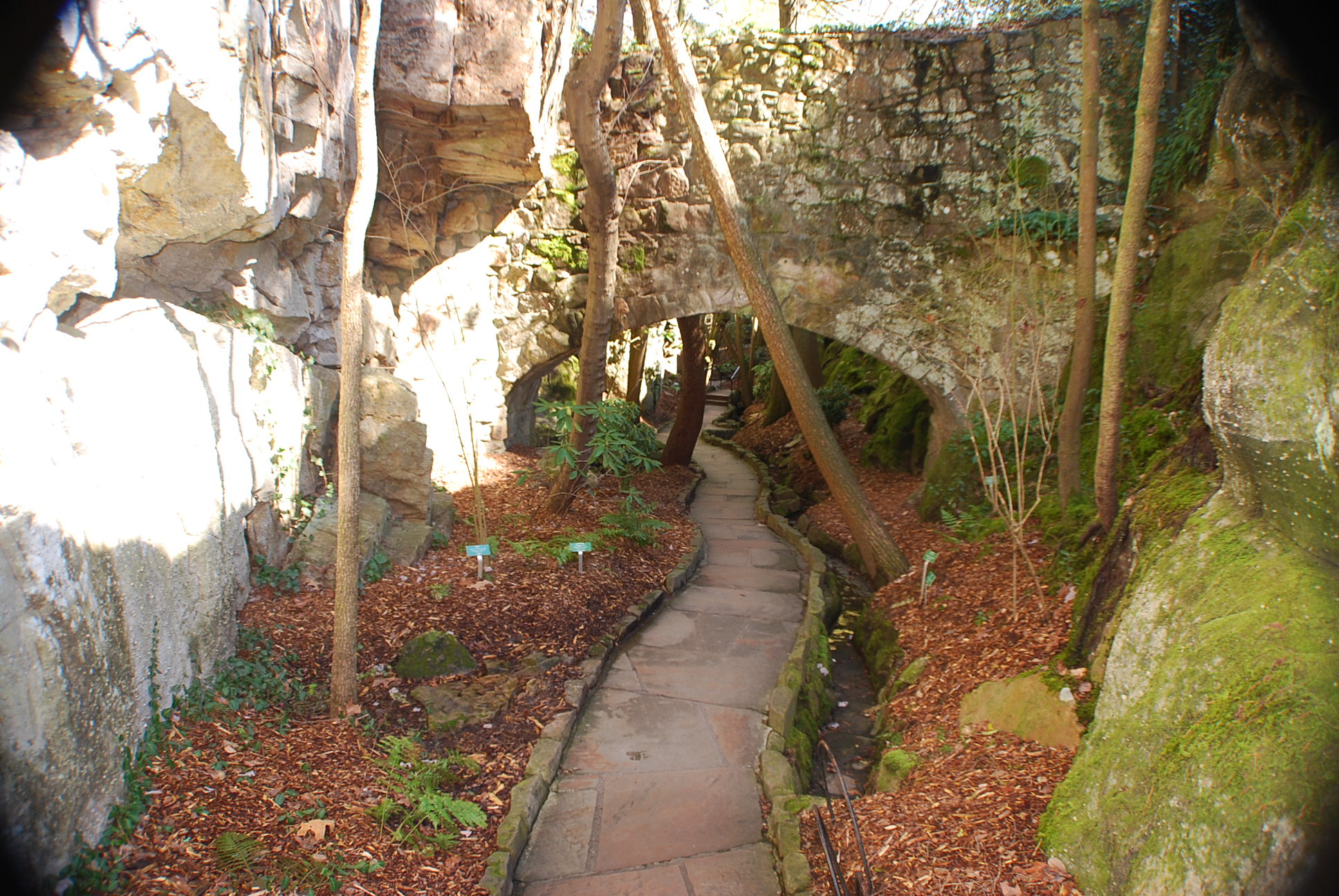
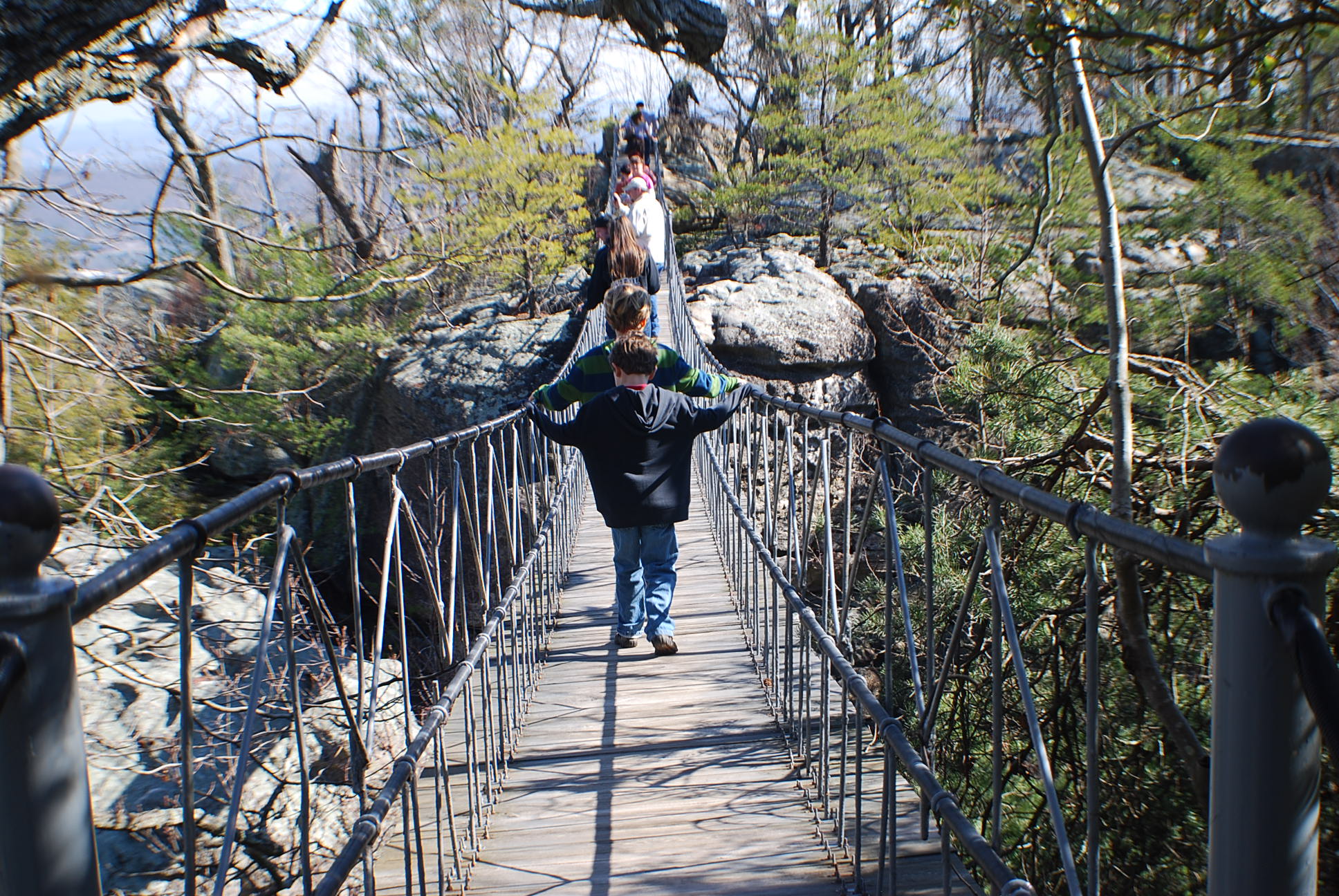
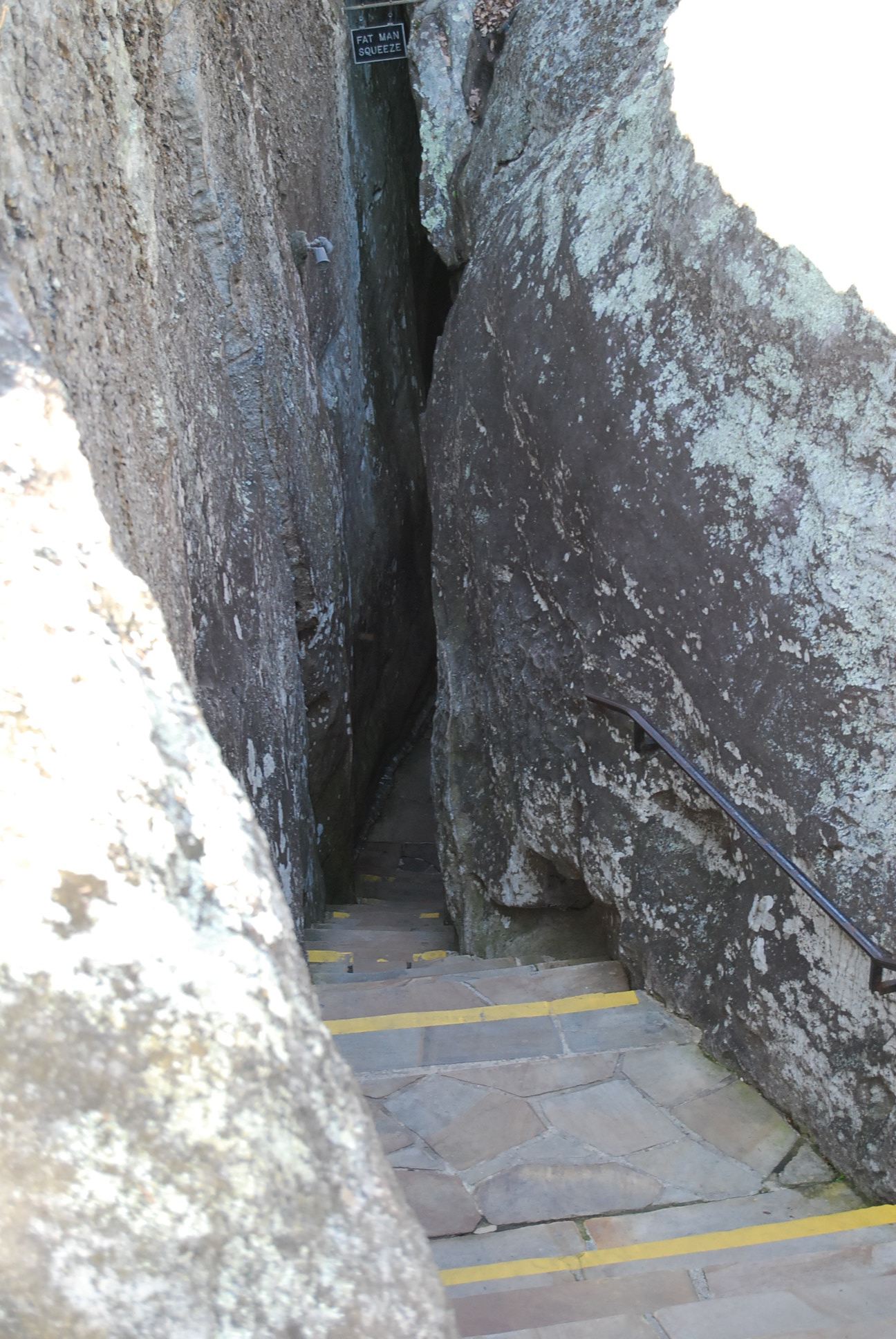
Image There are so many ways to spend your week-end here in Atlanta without going into your wallet. Don’t take this literally though, because you will have to shell some cash for gas, drinks, and food. For starters, there are numerous outdoor festivals going on each week-end; the many parks, lake Lanier activities, and the nearby (Smokey) Smoky Mountains in Tennessee. You can do it all if you happen to like a week-end filled with fun and excitement.Image

It has become our tradition to spend a week-end away from home every now and then during spring, summer, and fall. The weather is just too nice to spend the whole week-end in the gloomy and traffic ridden Atlanta. I am not trying to say that Atlanta’s week ends aren’t fun. I live in the city each and every-day and therefore a change of venue now and then is warranted.  I feel like week-ends are times well spent somewhere close to Mother Nature. Week-ends are timesImage to explore a different landscape, a different way of earning a living, a different of way of approaching the daunting task that is life.Image

Thus last week-end was no different. We took off Friday evening for a time on the slopes of the Smokey. A great a place to visit and to distress. There are plenty of hiking trails, river flows, and water-falls to see and indulge on. We had a blast! Probably we might consider the Smokey again before the summer gets-out.Image

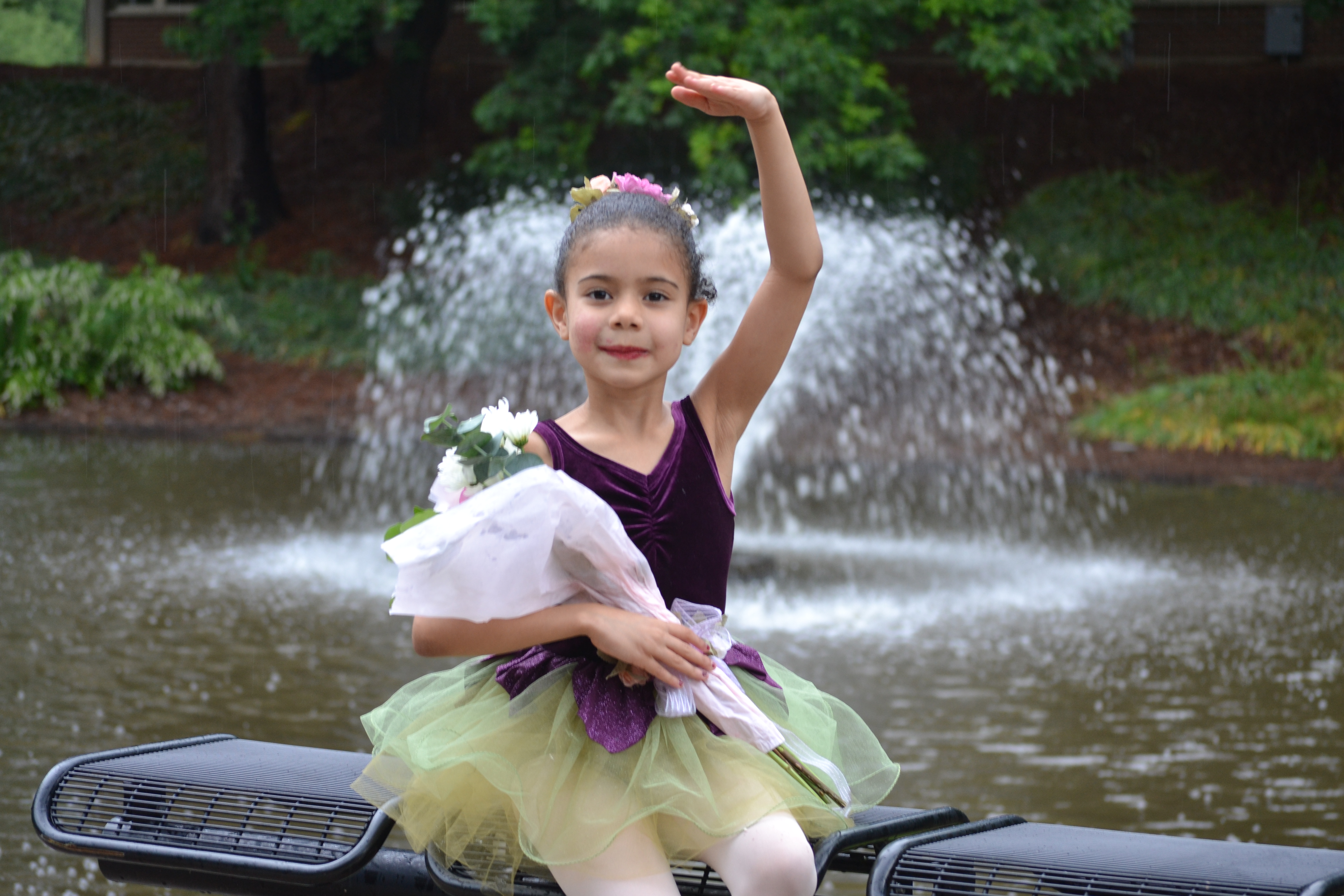
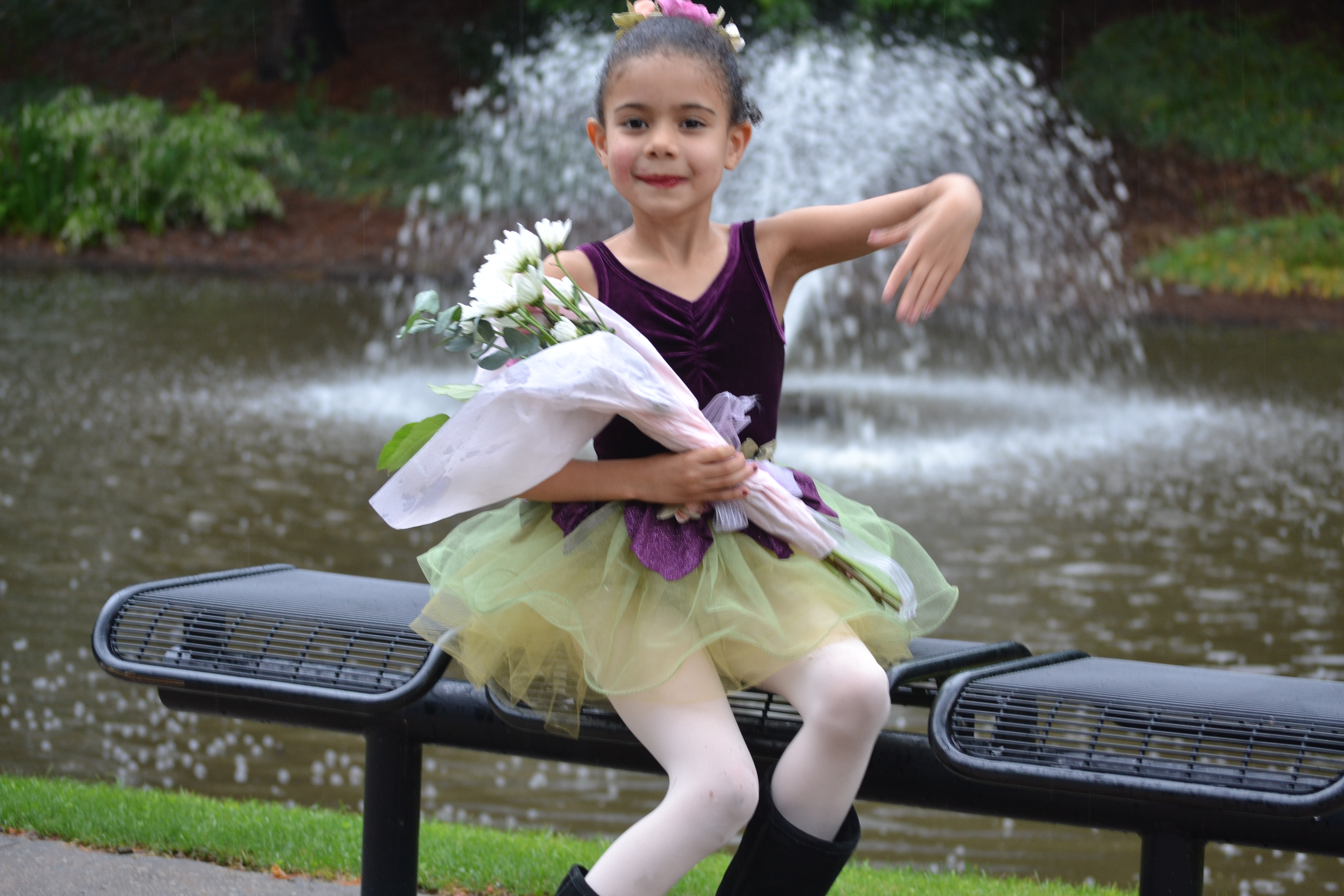
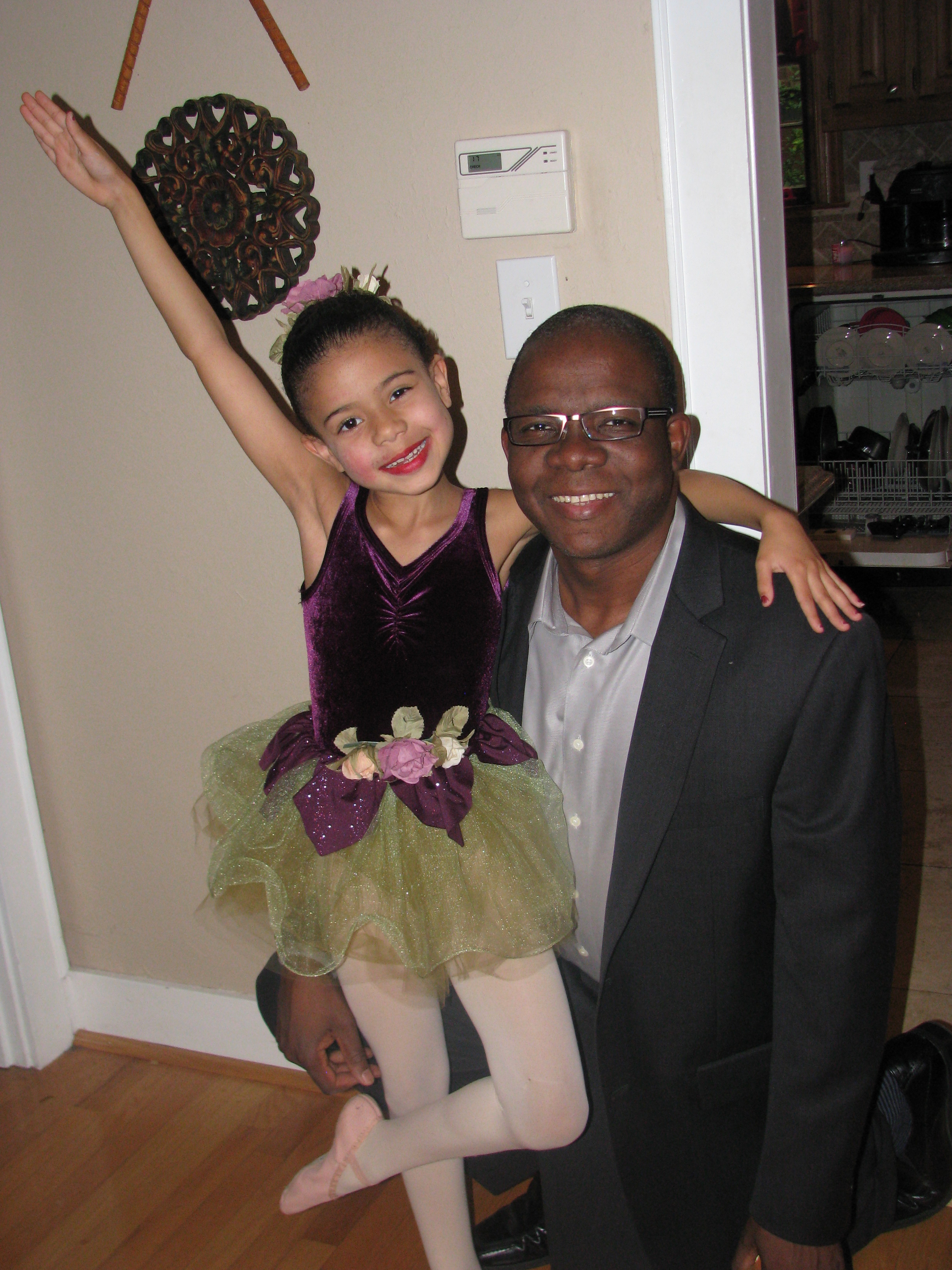
On another note, yesterday evening was my daughter’s recitals for her ballet classes. So we rushed down from the Smokey after an early lunch so we can be with her and her friends. It was awesome. The dancers represented not only ballet dance but also all sorts of dances from around the globe. So, I will leave you with the photos of Pili from the recitals.

                  “While others accumulate things, I chose to accumulate memories

Predictors of Student’s Likelihood of Passing the Biology End Of Course Test (EOCTs) by Gender, Race and Economic Status in an Urban High School Setting.


Gender, race, and the economic statuses of students are directly associated with students’ achievement in mathematics and reading in urban schools (Southworth, 2010; Lubienski & Crane, 2010). The achievement gap associated with these factors has persisted in the American education system for 59 years since the Brown vs. Board of Education decision. Moreover, it has been 47 years since the Coleman Report of 1966 (Southworth 2010), which implicated race and income as predictors of student achievement.

Over the years, educational policies have changed in the United States. The introduction of the “No Child Left Behind Act” in 2000 led to staffing each school with highly qualified teachers in the hope of reducing it (Konstantopoulos & Chung, 2011). However, evidence in related literature illustrates that race, economic status, and gender continue to impact a student’s achievement (Van de Gaer et al, 2008).

The present study will investigate the roles that race, gender, and students’ economic statuses play on whether or not a student passes or fails the End of Course Test Scores (EOCTs) in Biology in a suburban high school in the southeastern United States.

Search Strategies

For the content of this paper, the Google scholar search engine was used in the initial searches of utilized. All resources were published between January 1990 and June 2012.  The articles were identified through a comprehensive search of four electronic databases: Academic Search Complete (EBSCO), Education Journals (ProQuest), Omnifile Full Text (Wilson), and Research Library (ProQuest). After an initial search, additional sources were found by searching the bibliographies of the chosen articlesThe search terms used during the computer-based searches included: gender effect on learning and achievement; parental income and student achievement; race and student achievement; income, race, and EOCT scores; students’ learning outcomes; achievement; achievement gap, student and/or pupil.

To be eligible for this review, the article had to meet the following four criteria: 1) include race, gender, and family income as a predictor of student achievement; 2) been published in a peer-reviewed journal; 3) be published between 2000 and 2012; and 4) Only studies published in English were reviewed.  In addition, the study must assess the effect of gender, race, and family income on student achievement.

Research questions:

Is race a statistically significant predictor of a student passing the end of course test (EOCT) in Biology?

Is gender a statistically significant predictor of a student passing the end of course test (EOCT) in Biology?

Is parental income a statistically significant predictor of a student passing the end of course test (EOCT) in Biology?

Null hypotheses:

Race is not a statistically significant predictor of a student passing the end of course test (EOCT) in Biology.

Gender is not a statistically significant predictor of a student passing the end of course test (EOCT) in Biology.

Parental income is not a statistically significant predictor of a student passing the end of course test (EOCT) in Biology.

Data Collection

The data used in this authentic project was collected from the DeKalb County Public School’s website on student achievement. The database consists of student achievement scores in Biology, Mathematics, Physical Science, and Writing as measured by the End of Course Test (EOCT). I selected only the data pertaining to the names of students that I teach this semester in the Instructional Data Management System (IDMS Database).  The information available via IDMS was incomplete due to missing information. To fill in the gaps of missing information, I developed a survey for my students to complete which included questions pertaining to:  race, gender, and parents-income [measured by whether they received free and reduced lunch or not (see Appendix I)]. The pre-existing data and the survey data were both examined for accuracy and for filling in the information gap that existed between them.

The data collected was used to determine whether gender, race, and a student’s family income are predictors of their EOCT score in Biology. Various literature (Southworth, 2010; Van de Gaer et al, 2008 & Lubienski et al, 2010 & Dulaney & Banks, 1994, Desimone, L. 1994, Patterson, Kupersmidt, & Vaden, 1990) published in regards to a student’s achievement in urban schools has linked gender, race, and student’s economic statuses to the student’s achievement. However, few studies have looked extensively into these predictors in suburban high schools. Therefore this authentic study will assist to culminate the existing information gap on the effect that race, gender, and family income has in the American suburban schools.

Method

            The authentic study used both existing and survey data. The study participants’ population included a total of 90 high school students of whom 50 were males and 40 were females. The racial distribution of the student participants included; 28 Hispanics, 35 African Americans, 21 Caucasians, and 6 Asians. Of the total 90 students surveyed, 55 did not receive free and/or reduced lunches while the remaining 35 did. The analysis solely included Biology EOCT scores taken in the Fall semester of the 2012-2013 school year.

Measures of Low income, Race, Gender, and Academic Achievement

            For the purpose of this research paper, low income was defined as the percent of students who received free or reduced lunch. The definition was consistent with past research on measures of low income in secondary education in America (Abbott & Joireman, 2001). Race was categorized into four groups: African American/Black, Caucasians, Hispanics, and Asians. Students chose the race category that they belonged to based upon their own understanding of racial identity. Student gender data was extracted directly from the IDMS website. Furthermore, academic achievement was categorized into two groups; students who passed the EOCT or those who did not.

Data Analysis

            The data collected in the authentic study were analyzed using SPSS statistical software. Binary regression was used to perform the analysis. The data was first entered manually into the SPSS statistical program. There was no continuous data in any of the predictors’ outcomes variables. Therefore all data was entered as categorical data. Since all the predictors’ variables contained categorical data, there were no linearity or multicollinearity assumptions to be met before the binary regression statistics were run. In addition, since the participants in the IDMS database were randomly selected, I assumed independence of errors. The significant level was decided based upon the p values. If the p value was greater than 0.05, then the null hypothesis was rejected. And, if the p value was less than 0.05, then the null hypothesis was accepted.

Results

            The logistic regression results indicated that gender and race were not statistically significant predictors of a student having passed the EOCT exam in Biology. The parental income, however, was a significant predictor, p < .001 and therefore its null hypothesis was rejected (see Table 1). Based on the results of the logistic regression, both null hypotheses for gender and racial identity were accepted since the associated p values were greater than .05, at .315 and .257 respectively. The summaries of findings are the following:

  • The odds of a male student having passed the EOCT in Biology were 1.74 times greater than that of the odds of a female student passing the EOCT in Biology; however, the odds was not statistically significant, p values was greater than .05.
  • The odds of a student who was not receiving free and reduced lunch having passed the EOCT in Biology was 9.37 times greater than that of a student who was receiving free and/or reduced lunch. The odds for the predictor were statistically significant, p < .001.
  • The odds of a student who was an African American passing the EOCT in Biology was .53 times less greater than the odds of a Caucasian student passing the EOCT test in Biology; however, the odds was not statistically significant, p value was greater than .05.
  • The odds of student who was Hispanic passing the EOCT test in Biology was .19 times less greater than the odds of a Caucasian student passing the EOCT test in Biology; however, the odds was not statistically significant, , p value was greater than .05.


Table 1

Logistic Regression Predictors of a Student’s Passing Biology EOCT test in Biology


Variable

   B

OR

95% CIs for OR

Constant

0.50


Parental Income


Did not Received   Free Lunch

2.24**

9.37

[2.61, 33.58]

Receiveda


Gender


   Femalea


   Male

0.55

1.74

[.59,   5.15]

Racial Identity


African     Americans                        


-.63


.56


[.04,   6.64]

Hispanics 

–    1.67

1.88

[.02,   2.41]

Caucasiansa  


Nagelkerke   R2              

.32


χ2(5)

25.25***


  • Note. N = 90
  • p < .05*, p < .01**, p < .001***.
  • a Reference category.


Tables Associated with the Logistic Analysis are Listed Below:

Table 1           

Case Processing Summary


Unweighted Casesa

N

Percent

Selected Cases

Included in Analysis

90

100.0

Missing Cases

0

.0

Total

90

100.0

Unselected Cases

0

.0

Total

90

100.0


a. If weight is in effect, see classification table for the   total number of cases.


 Table 2

Dependent Variable Encoding


Original Value

Internal   Value

Failed

0

Passed

1


Table 3


Categorical Variables Codings


Frequency

Parameter   coding

(1)

(2)

(3)

Race

Hispanic

28

1.000

.000

.000

Black/African American

35

.000

1.000

.000

Caucasian

21

.000

.000

1.000

Asian

6

.000

.000

.000

Students_Who_Recieve_Free_lunc

Does Not Receive Free and Reduced Lunch

55

1.000


Receive Free and Reduced Lunch

35

.000


Student_gender

Female

40

1.000


Male

50

.000


Table 4


Omnibus Tests of Model Coefficients


Chi-square

df

p

Step 1

Step

25.254

5

.000

Block

25.254

5

.000

Model

25.254

5

.000


Table   5


Model Summary


Step

-2   Log likelihood

Cox   & Snell R Square

Nagelkerke   R Square

1

87.882a

.245

.342


a. Estimation terminated at iteration number 5 because parameter   estimates changed by less than .001.


Table 6

Classification Table


Observed

Predicted


Student_EOCT_Scores

Percentage   Correct


Failed

Passed

Step 1

Student_EOCT_Scores

Failed

19

10

65.5

Passed

8

53

86.9

Overall Percentage


80.0


  1. The   cut value is .500


Table 7


Variables in the Equation


B

S.E.

Wald

df

p

Exp(B)

95%   CIs EXP(B)

Lower

Upper

Step 1a

Gender(1)

.555

.553

1.008

1

.315

1.742

.590

5.146

Parent_Income(1)

2.237

.651

11.805

1

.001

9.369

2.614

33.575

Race


4.041

3

.257


Race(1)

-1.673

1.301

1.653

1

.199

.188

.015

2.405

Race(2)

-.630

1.288

.239

1

.625

.533

.043

6.644

Race(3)

-1.609

1.417

1.289

1

.256

.200

.012

3.218

Constant

.498

1.215

.168

1

.682

1.645


a. Variable(s) entered on step 1: Gender, Parental_Income, Race.


References.

Desimone, L. (1990). Linking parent involvement with student achievement: Do race and income matter? The Journal of Educational Research, 93(1), 11-30.

Dulaney, C., & Banks, K. (1994). Racial and gender gaps in academic achievement (E&R Report No. 94.10). Raleigh, NC: Wake County Public Schools System, Dept. of Evaluation and Research. (ERIC Document ED380198)

Konstantopoulos, S. & Chung, V. (2011). Teacher effects on minority and disadvantaged students’ grade 4 achievements. Journal of Education Research, 104(2), p73-86.

Lubienski, S. T., & Crane, C. C. (2010). Beyond Free Lunch: Which family background measure matter? Education Policy Analysis Archives, 18(11), p1-39.

Petterson, C. J., Kupersmidt, J. B., & Vaden, N. A. (1990). Income levels, gender, ethnicity, and household composition as predictors of children’s school based competence. Child Development, 61, 486-494.

Southworth, S. (2010). Examining effects of school composition on North Carolina student achievement over time. Education Policy Analysis Archives, 18(29), p1-42.

Van de gaer, E., Pustjens, H. & Van Damme, J. (2008). Mathematics participation and mathematics achievement across secondary school: The Role of Gender. Sex Roles, 59(7/8), p568-685. DOI: 10.1007/s11199-008-9455-x


Appendix I


Student Survey:

Predictors of Students’ Scores on the Biology and Physical Science EOCTs


Ethnicity and/or Race

Check the box next to the correct term that correctly describes your race or ethnicity.

  • o Black/African American
  • o Latino/Hispanic
  • o White
  • o Asian


Parents’/Guardian’s Income

Do you receive free and/or reduced lunch or breakfast or both?

  • o Yes o No

Gender

Check the box that correctly describes your gender.

  • o Male
  • o Female

EOCT Scores

Be very honest in reporting your EOCT score for the following subjects. Check the appropriate box.

a) I passed my Biology EOCT the first time I took it.

  • o Yes   o No

b) I passed my Physical Science EOCT the first time I took it.

  • o Yes   o No


High Stakes Standardized Testing in America: The History


Are they being tested too much?
When is enough is enough?

This essay will explore the history of testing in American education, the introduction of standardized testing in American Secondary Education, the philosophical underpinning of these events, the historical perspectives, and the ethical standpoint that led to where we are today. In addition, the essay will also touch on the ontological perspectives, axiological perspectives, and the epistemological perspectives regarding testing and what it means for students to KNOW something that they were taught and how we measure/define knowing.

The frequency with which students are assessed for content understanding and general attainment of information has been rising in the American Education System (Madaus & Clarke, 2001). Currently in Most County Schools students are tested 8-14 times per semester. Those are just state and county mandated tests including benchmarks, Students’ Learning Outcomes (SLOs), and high school graduation tests. When teacher created tests and quizzes are included, an individual student taking a four class load in a block schedule would have been tested 20-25 times by the end of each semester. It is my belief that this frequency of testing is excessive. Subjecting students to this high frequency of testing and the magnitude some of these tests bear each testing period is ridiculous to say the least. In my view, I do not believe that the high-stakes tests and the frequency in which they are offered improve accountability for teachers, administrators or school districts. If this was the case, Finland would not be ranked number 1 in the world for science and mathematics since Finland only test its secondary students just twice in their secondary education careers (Washington Post, 2012).

In America, policymakers argue that in-order to improve students’ performance teacher, administrators, and school districts need to be held accountable for students’ achievement (Ravitch, 2002).  However, the frequency under which these tests are offered has been found to be associated with students not taking testing in general seriously anymore (Ravitch, 2002). Despite of the increase in testing frequency, American students’ scores when ranked with their peers in the developed world around the world has been declining steadily (Washington Post, 2012).

Testing and methods for measuring students understanding of content can be traced to the Socratic era in ancient Greece. During the Socratic era, students were asked to respond to questions posed by their instructor to gauge their understanding of concepts and to encourage their critical thinking. Socrates used a dialogue between himself and his students to gauge their understanding and to help them create their own understanding of concept. Even before Socrates, conversational dialogue was used to assess students’ understanding and knowing (Frost, 1989).

Testing in the American Education System was modeled after education systems in Europe.  Colonists brought the idea of testing with them when they founded schools in the newly formed United States (Urban & Wagoner, 2009). Testing can be traced directly to the one-room schools and the church schools in colonial America (Urban & Wagoner, 2009). Even apprenticeship schools used testing to gauge mastery of student’s learning. Testing was never used to evaluate the teachers’ effectiveness at that time and students who failed were deemed to be incapable of learning and therefore were subsequently left behind (Madaus & Clarke, 2001).

In the late 1800s, prestigious universities including Harvard, Princeton, Johns Hopkins, and Yale introduced college entrance examinations as a basis for admission.  Other universities did not have this requirement.  To further complicate the issue, each prestigious university had its own separate entrance exam.  The different requirements for admission at each of the universities, led school principals and parents to complain that is was difficult to prepare students for the multitude of college entrance exams at these universities.  To harmonize the process, the College Entrance Examination Board was created to prepare and oversee a single test for college admission (Urban & Wagoner, 2009). This was the beginning of the standardized tests phenomenon that we see today in the education system in America.

In the early 1900s teachers also were required to take entrance exams. But, once they were interviewed and offered a job with an interviewing panel that included a clergy and the local school board members, a teacher would never again be subjected to testing related to their performance, suitability and/or capacity to teach. Testing for results based accountability in the American education is a contemporary phenomenon (Ravitch, 2002).

Moreover, the early 1900s was a tumultuous time in education. This is the time when educational psychology was introduced into the education field. Education psychologists believe that there is a need to justify education as a scientific endeavor. Thus, demonstrating that education can be measured through experimentation and testing was a major aim of educational psychologists at the time.  The leading educational psychologist of the early 20th century, Edward L Thondike, was determined to demonstrate that education is an exact science through education testing. Most education psychologists of the 1920s and the 1930s were heavily interested in devising a testing instrument to help teachers diagnose students’ understanding of concepts and consequently to develop interventions based on data. However, the educational psychologists of the time never intended for their tests and data accumulated from the testing to be used for educational accountability.

The 1930s witnessed the Great Depression. Due to e economic hardship of the period, education progressives gained huge influence. They wanted schools to be friendly to students who were not interested in traditional schooling. Educational progressives of the time cared more about students’ adjustment in schools. The emphasis on a child’s social adjustment took the front seat over grades, subject mastery and discipline (Urban & Wagoner, 2009). They started using the testing instrument developed by educational psychologists to identify and develop remedial education for disinterested kids in schools. These educational progressive felt that education was a right for all children and believed in the philosophy that every child can learn. This era was the beginning of social promotion as we know it today. All these events happened at the time when there were no job to be had by high school dropout during the peak of the depression and therefore keeping kids in school was a better option at the time. The testing that was done during this period was mainly to inform teachers where students were and how to device learning goals to help them learn. The data collected had no bearing to student’s promotion nor was it used as a tool for evaluating the performance of teachers, administrators, or school districts.

The 1950s and early 1960s were a special time in American education. From the Sputnik report, the decisions of Wade vs. Board of Education, and the release of the book “What Ivan knows that Jonny Doesn’t?” created an atmosphere for educationists and policymakers to try to find answers to what was perceived to be going wrong with the education system in America (Urban & Wagoner, 2009). The reports, the book, and the decisions for equal education opportunities for all Americans lead in one way or another to the introduction of data driven accountability in the American Secondary Education System.

The report by sociologist James Coleman in 1966 entitled “Equality of Educational Opportunities” was the landmark report that started to pique the interest of policymakers in using achievement data to hold teachers, administrators, and districts accountable for student’s low performance. The report was significant in many ways including its emphasis on a shift from input oriented education system to results oriented education system. Prior to this report, educationalists believed that many of the low achieving problems in the school systems will eventually be eliminated through more funding. The Coleman report shifted the emphasis onto accountability. This shift led many policymakers to start examining how school resources affected student’s performance and achievement. The 1960s was a very interesting time in America. Events such as the civil rights movement provided most of the impetus to what was happening in the education system. The drive for education equality and opportunities for all Americans led to more scrutiny on student’s score data. The gap that existed and that continues to exist between white Americans and other minorities groups especially African Americans, pushed for accountability in education to improve achievement for the racially disadvantaged groups.

The establishment of the National Assessment of Education Progress and the Department of Education in the 1970s also led to a shift from inputs (resource) to outputs (results).  This shift was fueled by the readily available testing data which allowed policy makers to compare student achievement across regions and ethnic groups.  The international testing of mathematics and science provided even more data on how American secondary school students faired when compared to students from other industrialized nations. The fact that American students performed poorly on mathematics and science tests when compared to other industrialized countries added more pressure for policymakers to tie student’s achievement to teachers, administrators, and districts and to hold them accountable for poor student performance. 

The 1960s and 1970s also witnessed a growing tension between the professional educators who believed in the input model (resources will solve the underachievement problems) and the policymakers’ output model (results and accountability will drive instruction). Public pressures from parents, stakeholders and policymakers to see improvement in the low achievement scores among minority groups have kept the focus on using standardized testing for accountability. In the 2000s, laws like “The No Child Left Behind Act” and “Race To The Top,” new evaluation systems such as Teacher Keys were introduced.  These laws and evaluation systems placed renewed emphasis on using standardized testing as a mechanism for accountability.

Currently, there is a war between these two camps or paradigms in the American Education System. On one hand, the results from accountability and data driven evaluation have shown some promise in states such as Massachusetts, Virginia, Texas, and North Carolina (Ravitch, 2002). The achievement gap between blacks and white students in these states has narrowed after the introduction of results based assessment for teachers, administrators, and school districts. However, elsewhere in the country the results are mixed, and in many states and districts across the country, the achievement gap between the racial groups—whites and Asians on one hand and blacks and Latinos on the other—is widening even faster.  On the other hand, professional educators argue that more resources are needed to narrow this achievement gap as educational budgets have been continually slashed over the past decade.

Presently, American education will continue to be dominated with these two paradigms: the professional education paradigm who believes increased resources will solve the problems and the policymaker paradigm who believes public education should follow the business model of incentives and sanctions based on performance. As the war wages on, whatever paradigm wins will determine the direction that the American education system will go. In my view, it is going to be very difficult to change the current testing culture to include performance-based assessment that measure what students’ can do. The pressure put forth by the testing companies, businesses and universities who are profiting magnificently from the current testing environment is too great for policymakers to ignore. I am most definitely sure that all the testing companies will join hands to fight tooth and nails whoever is trying to change the current system that is benefiting them greatly (Frediriksen, 1984).

While the battle rages on, both camps need to realize that:

  • Throwing money at education by and in itself rarely produce results. To achieve improvement system-wide, focused approach and long-term strategies are needed.
  • Good teachers are essential to high-quality education. Treatment of teachers as valuable professionals including a living wage will be helpful.
  • The cultural assumptions and values surrounding education can do more to support or undermine it.
  • Education system should strive to keep parents informed and work with them. Parents are neither impediments to nor saviors of education.
  • Education systems need to consider what skills today’s students will need in future and teach accordingly. Teaching for the present job opportunities is a disservice to our young people because most of jobs they will be working on are possibly not created yet.

There is no argument that knowledge is important.  The question, however, is how we assess that knowledge.  While in today’s school environment standardized testing is the main method utilized for assessing students’ knowledge, Socratic dialogue and other dialogue techniques is a better method for assessing student knowledge.  For the Greeks being able to articulate concepts and being  able to do the task or the skills associated with the learning experience was  a basis for ensuring students had adequately grasped the concepts conveyed by the teacher (Frost, 1989).  In contrast, standardized tests merely diagnose what students have learned on a prescribed curriculum rather than what they can do or perform (e.g. report writing, synthesizing information, conducting basic and advanced research topic).  These tests are therefore, limited in their ability to truly measure what students have learned during a course (Madaus & Clarke, 2001).

For me, the pendulum has swung too far over to using standardized tests as measures of accountability.  Instead, I would like to see more performance based testing used in the classroom which measures what students can do with their knowledge and less standardized testing which only simplistically measures recall of basic information.  Others, however, have argued that performance based assessment also has limitations including time constraints, resource constraints, and the training required to effectively assess students’ knowledge with these methods (Linn, 2013).  While I acknowledge these potential limitations, I firmly believe that performance based assessment is a critical component of a comprehensive assessment of student achievement based on my years of teaching. The use of standardized testing as the sole method for assessing student performance is inadequate and short sighted.  If we truly want to understand if students have absorbed the material and are able to apply this knowledge in their everyday lives, we need to include performance based testing as part of a comprehensive assessment strategy. 


Reference

Best Education in the World: Finland, South Korea Top World Rankings, U.S. Ranked Moderate (2012). Washington Post: Accessed: http://www.huffingtonpost.com/2012/11/27/best-education-in-the-wor_n_2199795.html

Frederiksen, N. (1984). The real test bias: Influences of testing on teaching and learning.

          American Psychologist 39(2), 78-81.

Frost, S. E. (1989). Basic teachings of the great philosophers. Garden City, NY: Random House, Inc.

Madaus, G. F., & Clarke, M.(2001). The adverse impact of high stakes testing on minority students: evidence from 100 years of test data. In G. Orfield and M. Kornhaber (Eds.), Raising standards or raising barriers? Inequality and high stakes testing in public education. New York: The Century Foundation.

Ravitch, D.(2002). A brief history of testing and accountability. Accessed: http://www.hoover.org/publications/hoover-digest/article/7286

Urban, J. W., & Wagoner, L. J.(2009). American education: A history. New York, NY:  Taylor & Francis.

Wiggins, G. (1989). A true test: Toward more authentic and equitable assessment. Phi Delta Kappan, 70(9), 703-713.

Wiggins, G. (1988). Rational numbers: Scoring and grading that helps rather than hurts learning. American Educator, 20(25), 45- 48


Spring Break, Florida


ImageImageImageImageImageImageImage

Student Survey: Predictors of Students’ Scores on the Biology and Physical Science EOCTs in Georgia.


Student Survey: Predictors of Students’ Scores on the Biology and Physical Science EOCTs in Georgia.

Ethnicity and/or Race

Check the box next to the correct term that correctly describes your race or ethnicity.

Black/African American 

Latino/Hispanic 

Caucasian 

Asian 

Other

Parents’/Guardian’s Income

Do you receive free or reduced lunch and/or breakfast?

Yes 

No

Gender

Check the box that correctly describes your gender.

Male 

Female

EOCT Scores

Be honest in reporting your EOCT score for the following subjects.
Check the appropriate box.
a) I passed my Biology EOCT the first time I took it. 

Yes   

No

b) I passed my Physical Science EOCT the first time I took it. 

Yes   

No

Easter Fun Sunday


ImageImageImageIt’s Easter Sunday. Without a doubt, Easter is a kid friendly holiday around this time of the year. Many churches around my neighborhood sponsor a Easter eggs-hunt on the Saturday before Easter Sunday. I took my kid there yesterday to pick up some candy. Our Easter Sunday tradition is to do a eggs-hunt early in morning followed by opening up gifts from the Easter Bunny. The Easter bunny was very generous this year. I walked away like a bandit. After the gift opening we always do the egg-dying ceremony. We normally do around 9 eggs. We colored the eggs in many shades of colors and then did Imageour individually signature decorative figures on each. See the pictures below:Image

Happy Easter Everyone!

In Nothingness Is Nothing


Nothing happens in a vacuum as they say. What happens in the education system is always a reflection of what is going on in that society—socially, economically and otherwise. What type of education do we want for our youth? What knowledge is of most worth in our society? Who should get it? These are some of the questions we need to ponder as a society. Passing blames to teachers and parents after the facts is not going to cure the ailment.

The last week’s form IV results did not just happen from nowhere. These results are a products of ill-conceived policies from Kigamboni that were years in the making. The passing on of blames like we always do will not cut this time around. Too much is at stake here. The country’s security is at stake. Here are the historical failure trends from 2009 to present: 2012 Form 4 results

DIV 1: 1,641 (0.4%)
DIV 2: 6,453 (1.6%)
DIV 3: 15,426 (3.9%)
DIV 4: 103,327 (26.0%)
DIV 0: 240,903 (60.1%)

2011 Form 4 results

DIV 1: 3,671 (1.09%)
DIV 2: 8,112 (2.41%)
DIV 3: 21,794 (6.84%)
DIV 4: 146,639 (43.60%)
DIV 0: 156,085 (46.41%)

2010 Form 4 results

DIV 1: 5,363 (1.53%)
DIV 2: 9,944 (2.83%)
DIV 3: 25,107 (7.14%)
DIV 4: 136,777 (38.9%)
DIV 0: 174,407 (49.60%)

2009 Form 4 results

DIV 1: 4,419 (1.78%)
DIV 2: 10,493 (4.21%)
DIV 3: 27,310 (11.2%)
DIV 4: 130,651 (52.61%)
DIV 0: 65,708 (26.46%)

 For starters, most teachers are ill prepared to teach the content they are teaching and parents are ill prepared to supplement the gap. So talking about parents’ involvement is just something I do not see value in right now. The pass rate numbers in Tanzania has been dwindling and going backwards for the past decade. No one was even looking at the trend and creating solutions to the impending disaster. You know the song: KINGA is better than CURE!

 Here is a personal example: I myself went to school all the way to UDSM in Tanzania. Never one time had my parents looked at my notebooks (the parents’ involvement piece). My parents are illiterate, not by choice, but victims of their times (Many of the students in Tanzania from rural areas and even the cities fall under this category). But, I was able to go to school and do well because the education system was a flat system back then. If the system is working as it is intended to, parents involvement is not such a significant factor.

The other issue back then was Equal resources in most schools which is not the case today. Some of the ward schools don’t even qualify to be called schools. Some have one teacher for 300 students. What kind of a miracle worker do you think these individuals are? What is the likely outcome?

Tanzania Form IV Results 2013: The Saga Continues!


The Tanzania form IV results 2013 are out and the picture they paint isn’t pretty. Let me get straight to the numbers first. The breakdowns by divisions are as follows:  division I-1,641; division 2-6,453; division 3- 15,426; division 4- 103,327, and division 0-240,903.  And the breakdown by gender for those who received divisions 1-3 are as follows: girls =7, 178 and boys = 16, 342.

Once again I have written and spoke about this trend for the past 3 years on the kibogoji blog. I guess you can read some of my previous posts on this issue to better inform yourself about the factors that have led to the scores to drop over the years. In some of those posts I attempted to offer solutions to this problem. Increasing the budget to education isn’t the solution, but most politicians in Tanzania seem to think and believe that it is.

On the numbers above, I feel like it is a letdown to women in Tanzania who have against all odds worked so hard to compete with men over the years and they had been doing really well on the education front. Looking at the gender disaggregated data, less than one half of the students who received divisions 1-3 are females. This is pathetic and is a major letdown to the women in Tanzania.

In this article I will not discuss what needs to be done from now forward. What I will say is this, action is needed and now.

Tanzanian Kids Going to School

This trend of failures cannot be sustained if the country wants to stay in the race to compete with other nations—academically, economically, and socially. I am damn sure that these results will prompt a knee jerk reaction through which committees will be formed and none in terms of their recommendations will be implemented.

It is high time for a reshuffle at the ministry level. The president cannot keep quiet no longer on the future of Tanzania, which is education to the youth. The minister and his high ranking files have failed to offer solutions to this problem for the past three years. Some heads need to roll.

Who will stand up and take responsibility for this if the president can’t do it? Can the good and law abiding citizens of Tanzania demand accountability? Accountability on how their tax money is spent? who spends it? and for what? To be exact, only 5.6% of those who sat for this exam got divisions 1-3 and the rest failed. That is 94.4%. Getting a division IV is equivalent to failing in my book—I do not know about you?

Swahili To Be The Language of Instruction in Tanzania.


Not so fast!!!

This debate comes and goes. The debate normally arise whenever secondary schools results comes out. And, it is especially true when students achievement scores are terrible. Educationists in Tanzania will normally and easily point their fingers to English as the culprit. The argument always goes like, “see, I told you so, we can’t test them in English. It is unfair to them. They don’t know English. Let us switch to Swahili alone as the medium of instruction.”

The argument above is flawed in several ways. One way of debunking this argument is by looking at primary school results. The pass rate there is not great either. In 2011 the numbers were 30% passing to 70% effective failures. In primary schools Swahili is the only medium of instruction for all subjects. If English is the only reason for all these massive failures at the secondary level, then, why are the primary school students failing miserably despite the fact that all subjects are taught in Swahili?

This shows  that it isn’t the language of instruction alone that is causing these massive failures.

As an educationalist myself, I knew all along that there are many variables that co-vary with the language of instruction. These may include: 1) teacher absenteeism, 2) a disconnect between the test and material taught, 3) lower pay, 4) instructional strategies used, 5) language of instruction, and the list doesn’t end there. Watch my Factors Affecting the Education System in Tanzania video on you tube under Kibogoji Conversations and read my other articles on the state of the education system in Tanzania here. In some of these articles I attempted to explain in detail the solutions to this year in and year out problem in exam achievement.

Here is a blog post with more information on the same subject. Click here to read the post.

To add salt to a wound, here are this year’s standard seven results as broken down by the IPP MEDIAs’ newspaper. Of-course, standard seven students are all taught in Swahili except for the subject of English. Below are the numbers showing how they did in the examination.

Total number of students who took the exam: 456,082.

Breakdown by gender: girls (52.68 per cent) and 409,745 boys (47.32 per cent).

Of those who passed: 3,087 candidates scored grade A, 40,683 grade B, 222,103 grade C.

Total pass rate: 265,873 (30%).

Of those who failed: 526,397 grade D, 73, 264 grade E.

Total failure rate: 599,661 (70%).

From all this data, one can conclude that the evidence is overwhelming. The evidence clearly indicate that English is not the only variable that is ailing the Tanzanian education system. Maybe it is the right time to say that Swahili is the cause of all these massive failures. I believe it is high time to ask ourselves what are the causes (a variety of them) of the under-performance rather than looking for a single cause. When we ask ourselves the right questions, we normally come up with the right answers to complex problems such as this one.


Scientific Cheating Catalog: The Mismeasure of Man


Scientific Cheating Catalog: The Mismeasure of Man

The book “the mismeasure of man” chapters 3 and 4, Gould discusses further some of the ways that scientists have cheated either intentionally or unintentionally. I have cataloged some of those instances I found to be fascinating in these two chapters below.
1) Francis Galton (1822-1911) was Darwin’s cousin. He used numbers to construct the so called beauty map of the British Isles and he also suggested a method for quantifying boredom. He could back up his methods by numbers; however as we all have come to know–interpreters of numbers as Galton was are often times trapped by their own priori convictions (page 107).
2) Robert Bennett Bean in 1906 published a long technical article comparing the brains of American blacks and whites. He was a practicing physician and through his research he found –according to him, meaningful differences in that black are inferior to whites. He used the relative sizes of the parts of the corpus callosum to justify that blacks are inferior to whites since they have smaller genu, hence less brain in the front seat of intelligence (page 109).
3) Paul Broca (1861) was a professor of clinical surgery in the faculty of medicine and the founder of the Anthropological Society of Paris in 1859. He was the strongest supporter of the ideas that brain sizes constituted the differences in intelligence among the races. Again, even after extensively restudying Morton’s method, Broca still was another victim of his own preconceived notion about blacks. He and the society he lived in held deep beliefs that blacks were an inferior race (page 114-125).
4) E. D. Cope was the most celebrated American paleontologist who came up with the idea of recapitulation. In recapitulation the idea is that adults of inferior groups (i.e., blacks) are like children of superior groups (i.e., white male). Cope identified 4 groups of human forms following this criterion: nonwhite races, all women, southern as opposed to northern European whites, and lower classes within superior races (page 144).
5) B. Kidd used the recapitulation argument to justify colonial expansion into tropical Africa. He wrote “dealing with peoples who represent the same stage as that of children in the history of the development of individuals in the white race. The tropics will not, therefore, be developed by the natives themselves”. To that end, recapitulation is indeed still used in many circles in the west as a justification for imperialism and economic colonization of Africa (page 147).
This does remind me of the many things I have heard and seen on TV this and many years past. I will use the past presidential election as an example. If you happened to watch MSNBC and Fox news simultaneously, you would have thought the election was too close to call. Each of these TV news channels had their own statisticians manipulating the numbers to meet the expectations of the pre-conceived notions of their viewers. For Fox news, Mitt Romney was a winner long before the election-day and for MSNBC news, Obama was a declared winner weeks ahead of the election-day. This shows how prior convictions can have a huge impact on the way data is collected and computed to fit the fore mentioned prior notion.
In addition, another contentious today’s issue that priori conviction is at play is global warming. Global warming is one of those issues that scientific consensus has almost been reached. However, you still have few scientists who are using data from geological times to justify the fact the earth has cooled and warmed in times past and that, perhaps what we are experiencing now—might just be one of those natural circles. Therefore, there should be no cause for concern.
On the other hand you have scientists who have accumulated great amount of data supporting the argument that global warming is caused by excessive burning of fossil fuel causing the accumulation of greenhouse gasses. I am leaning on the latter camp. It might be just because of the environment awareness time that I am in and if the former a proven to be collect—future generations will debate this issue in light of our prior conventions the same way we are talking about scientists such as Broca and their ideas regarding biological determinism and inferiority of the blacks and other minority races to whites.
To conclude, most of the research we are conducting as researchers today are somewhat clouded by our own views and the societal expectations of the time—our time. Yes, better scientific method have been developed to minimize the effect of priori conventions in data collection and interpretations through the development of the scientific method, but still as we are humans, our prior notions most times shows up in the results sections. Therefore, numbers alone are not all that important at all if confounded with prior-convictions.
Reference
Gould, J. S. (1996). The mismeasure of man. New York: NY. W.W. Norton &Company, Inc.

Transformation Theories: A Reflection


By: Shaaban Fundi
In this essay I will discuss transformative theory of learning through four different lenses or approaches. These approaches include Mezirow’s psychocrtitical approach/theory, Daloz’s psychodevelopmental perspectives, Paulo Freire’s sociocultural theory and Boyd’s psychoanalytical approach. I will then, discuss the similarities and differences among these four lenses of transformative learning. Furthermore, I will discuss my views regarding the theories of transformative learning and to whether or not the theories have changing my world view (epistemology) over the years.

Mezirow (1997) defines transformative learning as the process that affects change in persons’ frame of reference. He argues that adults have over the years developed experiences that define their world. Because of this body of experience we tend to “reject ideas that fail to fit our preconceptions” (Mezirow, 1197, p.5). In Mezirow’s psychocritical approach, meaning structures are differentiated into three categories–frame of reference, habits of mind and point of view. In addition, for transformative learning to take place Mezirow argues that transformation must take place in our belief system, attitude and our entire perspectives. And, experience, critical reflection, reflective discourse, and action are central phenomenon in Mezirow’s psychocritical transformative learning theory.
Despite a well-developed theory put forth by Mezirow, critics argue that there is too much overreliance on rationality. According to Merrian, 2004 (as cited on Merrian, S., Caffarerra, R., & Baumgartner, L, 2007, p.136) “one’s cognitive development may influence his or her ability to experience a perspective transformation.” Thus, refuting rationality as the major cause of transformative learning.

According to Daloz, 1986 education is a transformational journey geared at enhancing development in an individual. The focus of transformation in Daloz’psychodevelopmental perspective relies on stories of the journey that someone takes to expand his or her world view. Dialogues and discourse are integral part of the transformation process his perspectives. On the other hand, Boyd “sees transformation as an inner journey resulting into greater personal consciousness (Merrian at al., 2007, p. 139). Boyd also places greater emphasis on the importance of dialogue or discourse for transformation to occur.
The major similarity amongst all these three theories of transformational learning is that they all place a greater emphasis on the discourse and/or dialogue. The difference between Boyd’s perspectives and Mezirow’s theory are that Boyd focused on the importance of stories on the journey towards transformation and Mezirow does not.

The last theory of transformation I will briefly discuss is the sociocultural transformation learning theory by Brazilian educator Paulo Freire. His theory emerged from the context of poverty, illiteracy, and oppression and focuses mainly on social change. Paulo classifies consciousness in three categories: i) magical (no control over own life, everything is externally influenced), ii) Midway (people starting understanding that they have some level of control and can change their circumstances), iii) critical consciousness (people are fully aware of forces that shape one’ life) (Merrian at al., 2007, p.141).
Central to all the four theories of transformational learning is the idea that through dialogue and/or discourse a person involved in a transformative learning experience can move to a frame of reference that is “more inclusive, discriminating, self-reflective, and integrative of all experiences” (Mezirow, 1997, p. 5). I see myself going through this transformation, especially in the sociocultural view point. Over the years I was stuck in the mindset that the problems in my community were too big and I thought too much external forces beyond my control were at play. But as I engaged in self-reflection and dialogue with others, I am now seriously thinking that most of the problems I have seen and continue to see in my community have solutions from within rather than from without.

I will highlight one issue here as an example. The village I grew up in, does not have a library or a computer center where young people and others can access information. There are three secondary schools and one teacher’s college in the area. I looked at the problem and felt helpless in the beginning. But, last year I decided to take action and started to collect used laptop and desktop computers from friends and co-workers for a small learning center. I named the center Kibogoji Experiential Learning Center, Inc. Currently I have 7 computers and bought enough bricks to build just a single room for the center. It is not operational yet, but I feel like this will no longer be a problem in my village the near future.

This example shows the power of transformation through education. It is imperative through education to understand forces that shape one’s life and in the process to become an active agent of change by creating a more just reality for all. I have changed from the mindset that external forces are in charge (the blame game) to becoming a person that will transform part of my previous world. Thanks to education and its transformative forces.

I am trying to instill this kind of transformative education to my students. Teaching them not just lecture hall related subjects but also “teaching them the ability to lift themselves by rethinking and reconfiguring their frame of reference.” To achieve this transformative education, I use research based and theory derived teaching strategies such as blending gizmos with tradition teaching to empower students to create their own meaning from text and/or concepts (Shunk, 2012, p.293).

Reference

Shunk, D. H.(2012). Learning theories:An educational perspectives (6th. Ed.). New York: Pearson.
Merrian, S. B., Caffarella, R. S., & Baumgartner, L. M. (2007). Learning in adulthood: A comprehensive guide (3rd ed.). San Fransisco: Jossey-Bass.
Mezirow, J. (1997). Transformative learning: Theory to practice. New Directions for Adult and Continuing Education, 74

Savannah: Georgia Educational Researchers Association Conference Reflections


In this essay I will reflect on one educational topic presented I at the Georgia Educational Researchers Association (GERA) 2012 conference in Savannah, Georgia. I will discuss what I thought was interesting in the presentation and also discuss the applicability of the research to my own teaching and research.

Friday morning I attended several presentations. The presentation I will reflect on was an evaluation research presentation. We all know that professional development training for teachers happens in many places throughout the year in the state of Georgia. As it is customary, Many of the training are immediately followed by an evaluative survey to gauge how the participants viewed the training usefulness and applicability. Most of the evaluative surveys at the end of each training sessions have questions such as: 1) on a scale of 1-10 how satisfied were you with the training? 2) will you recommend the training to others?, and 3) did you learn anything useful from the training? Off course many other useful questions are also asked in these surveys besides the ones mentioned.

In the presentation I attended, the presenters argued that as good as these survey questions maybe at assessing participants’ levels of satisfaction with the training, they don’t go far enough to assess the usefulness of the training in changing practice. The presenter further argued that, if a researcher want to understand whether the trainings are achieving their intended goals, that is influencing best practices at the work place–then they need to go a little further in their evaluative research by visiting training participants in their work places to observe and see whether or not practices are actually changing as a result of the training participants received.
The Presenter had done a research evaluating the effectiveness of training and/or professional development at changing practices. She did an evaluation of a middle school training session on the use of best practices to teach science in middle schools. The training was aimed at teaching middle grade science teachers to use discovery learning approaches in their classrooms. The researchers asked attendees to fill out a survey asking them about their satisfaction with the training and whether or not they will use the best practices learned in their own work places.

The finding from the survey was that a significant numbers of training participants are not using the best practices learned during the training. However, approximately 87% of respondents were satisfied with the training and expressed that they will more likely than not use the teaching methods in their classrooms. When the researcher visited the participants at their work place– only 15% were using or trying to use best practices methodology of teaching in their classes. The findings from this study shows how difficult it sometime is to get educators’ buy in in implementing innovative teaching methods.
For my experience, I have attended numerous professional development in my teaching career, I have not really integrated wholly what I learned in a single training session into my classroom or lecture hall. I feel as though educators attending training session, most often pick and choose what is more important to their teaching and leave the other information that they don’t find interesting and/or useful in their own situations. Training effectiveness evaluators need to realize that most educators are not going to adopt each and every single segment of the training information into their daily practice. More likely than not, they will take what is useful to them and use that rather than adopting the entire new system into their own. There are various reasons contributing to this phenomenon from the educators’ point of view: 1) like many educators, I somewhat believe that if it is working why change it? 2) I feel like traditional educators would not like discovery learning approaches as it takes away authority from them and hands autonomy to students, 3) most schools are concerned more with students’ scores in standardized tests; therefore more emphasis is put into teaching to the test rather than teaching for understanding.

Furthermore, the challenges of implementing a discovery learning approach in a classroom are many. In my own experience, it takes more time to create lesson plans centered in the constructivist learning approaches such as discovery learning as compared to traditional learning approaches. Most often constructivist teaching approaches create classrooms that are louder because of the amount of discussions that are instrumental in meaning making for students. Therefore, creating classroom rules and procedure early on is paramount. In this type of learning, students become autonomous and also take more responsibility of their own learning.

I attended many presentations at the conference, but I was really interested in understanding whether professional development sessions have a positive impact on changing the way educators teach. The evidence from this research suggests that most teachers do not change the way they teach from attending just a single training session. It is possible that more teachers will adapt these learning methods if trainings are conducted over a long period of time or done in chunks.

Overall, I feel that GERA is a very informative conference for teachers and educational researchers. I enjoyed spending time with like minded educators and observing how other educational researchers go about conducting and presenting their findings. Most of all, it was a perfect opportunity to connect, build friendship, and long lasting connections for future research and job opportunities. I am already looking forward to next year!

Andragogy: My Education Philosophy


I believe that education is a collaborative process between the educator and the students. I feel that educators should recognize that students bring their own experience and skills to the classroom. In other words educators should view their students as active partners in the learning process and not as passive participants. In so doing, the educator and the students can learn from each-other to enhance content and general knowledge understanding for both parties. In this essay, I will present a brief overview of my personal belief about education and educating students, I will explain my views on what roles educators should play and what roles students should play to making learning a meaningful experience for both students and educators.

First, I believe that the role of an educator is to introduce students to new ideas and skills and then assist them in integrating those ideas and skills into their own experiences. I am not fond of the uni-directional learning approach whereby the educator imparts knowledge to the learner. Instead I subscribe to the bi-directional learning approach whereby the educator and students work hand in hand/together to discover knowledge and meaning. In this era of multiple accesses to information, educators cannot be and should not try to be the sole source of information to students. In fact, educators should use different type of presenting information to students such as lecture, video, computer related technologies, guest speakers and field trips.

In addition, educators should help students to think through issues critically. And challenge students to see the relevance of education to their lives. By doing so, the educator would cultivate a student culture that values new information and also are able to integrate the skills and ideas they have learned into their own world view and perspectives. In addition, educators should foster a lifelong love of learning in their students that will continue on long after class has ended.

Second, educators have a responsibility to create an environment in the classroom that encourages students to actively participate in their learning. Students should be made to feel that it is safe to express their thoughts and feelings without fear of reprisals from either the educator or other students. I strongly believe that this is one of the responsibilities of a reflective and professional educator. And again, without creating an environment of mutual respect between the educator and the students; and amongst the students themselves, no real learning will happen. Therefore it is paramount for educators to take their responsibilities serious and to create a classroom environment and culture that is conducive and receptive to learning for all. For instance, the educator is responsible for setting the tone of all discussions as one of mutual respect where everyone’s ideas are viewed as important contribution. It is important that the educator create an atmosphere where certain students-whether because of race, gender, national origin, or educational attainment- do not feel marginalized. All students should feel equally valuable to the learning process.

Third, educators also have the responsibility to come fully prepared for the classroom session. I believe that educators have the responsibility to fully research the topic and have a good grasp of the subject matter before making any demonstration and/or presentation to the students. Being well prepared helps an educator to reduce a lot of the commotion and misbehavior issues that impedes students’ learning. Educators have the responsibility to develop clear, straightforward presentations of material that can be easily understood by students. Educators should facilitate student participation by encouraging students to ask questions throughout the presentation and by pausing at specific junctures to ask students their thought and/or opinion on the material. The learning material needs to be chunked-up and delivered in a way that meets the multiple learning styles and needs of the students. Educators should make their lessons and all the learning activities relevant to their students’ lives and interests.

Undoubtedly, technology and other social media usage in the classroom help students to stay engaged and on task throughout the lesson. Therefore, educators should use multiple teaching strategies to meet all their students’ learning needs inside and outside the class sessions. Tapping into the social media can potentially be a helpful learning experience for both the students and the teachers. Currently there are several social media gadgets that are educator and student friendly. These gadgets can be used to provide instant assessment and feedback to student and also to keep students interest in the lesson for the entire length of the period.

In terms of students’ responsibilities to the learning process, first, I think that students have a responsibility to be prepared when they come to class by doing the necessary readings, and bringing the required supplies. I also believe that they have the responsibility to be active participants in their own learning. Students who are well prepared for class by doing the necessary reading and by attending tutorials generally do better on tests and quizzes. They also appear to really enjoy the course and the material presented in class. This is just speaking from my own observations and experience as a classroom/lecture hall educator.

Second, students must also be willing to critically examine their own attitudes and be open to new ideas and ways of viewing the world. Students, who are open to new information, will likely be able to integrate the new information into their own realm of thinking. Therefore, it is crucial for students to not be closed minded as in doing so they fail to acquire new skills and information necessary for them to grow academically and professionally.

Third, students must be willing to engage in the discussions and work together with the teacher and other students to challenge their pre-conceived notions and expand their knowledge base. It is imperative for students to be able to share their experiences among themselves and with the teacher during group discussions. This will not only foster a sense of belonging in the class but will also help the students to integrate the new skills into their own frame of reference and therefore building a deeper meaning of what they are learning.

Thus, learning in one hand is a collaborative process in which students and educators have unique roles to play. The educator must be well informed about the subject matter and the pedagogy that drives the instruction. In addition, the educator must be able to create a conducive and respectful environment for-all-in-the classroom and should foster students’ learning using a variety of learning and teaching strategies. On the other hand, students should be willing to critically examine their own altitude and be open to new ideas and ways of viewing the world around them. For example, students should be willing to engage in the discussions and work together with each other and the teacher to challenge their pre-conceived notions and expand their knowledge base.

Learning and Teaching Theories: A Critique


Lecture hall instruction needs to be derived from learning theories. But, in reality this is not happening. Educators either do not have the time to use theory to drive instruction or have no basic understanding of the learning theories. In this essay I will discuss and critique the article titled “Behaviorism, Cognitivism, Conctructivism: Comparing Critical Features from an Instructional Design Perspective by Peggy Ertmer and Timothy Newby and chapter 11of the book entitled “Traditional Learning Theories” from the book entitled “Learning in Adulthood” by Sharan Merrian, Rosemary Caffarella and Lisa Baumgartner. In my discussion I will provide the relevant information gleaned from both readings and offer my own analysis of the learning theories as they relate to my own learning and teaching experiences. I will include examples from my own experiences to tie together the different learning theories to what is really happening in lecture halls across America in the days of data driven instruction.

The authors’ of the article point out the need of finding a bridge to connect learning theories to educational practices (Ertmer and Newby, 1993). They suggest that instructional designers could use this bridge to create good instructional activities based on the relevant learning theories. It is therefore paramount for instructional designers to understand the situations under which the developed instructional materials and/or activities will be used in order to facilitate optimal learning. Without such an understanding, it would be difficult for instructional designers to create learning materials and activities that would be useful to practitioners and learners (Ertmer and Newby, 1993).

According to Ertmer and Newby, the matching of instructional learning materials and activities to the varying situational and contextual needs of the learners and practitioners is not happening in the majority of colleges today. A study by Johnson (1992) supports this view by stating that “less than two percent of the courses offered in University curricula in the general area of educational technology emphasize theory as one of their key components.” This shows that instructional designers who create college courses either do not have a firm understanding of the learning theories or ignore using them all together when designing and creating the course curriculum and materials.

In order to design optimal instructional materials and/or learning activities the authors of the “Learning in Adulthood” book argue that an instructional designer needs to have a basic understanding of learning theories and being able to incorporate relevant information from a variety of learning theories in the designing process. The learning theories discussed in the article and chapter 11 of the book are cognitivism, behaviorism, humanism, social cognitism, and constructivism. In addition, the authors caution that using only a single theory will not suffice the needs of all learners and practitioners. The authors recommend a careful selection of the concepts and principals from the learning theories that meet the need of instructional situation (Ertmer & Newby, 1993).

As illustrated in the text, each theory plays a fundamental role in developing beneficial learning materials. Behaviorists believes that learning occurs when a response is produce from a given environmental stimulus (ertmer & Newby, 1993). For example, a teacher asks a question (an environmental stimulus) and a student answer the question (demonstrable response). Behaviorists are more concerned with the stimulus and the response. They put little emphasis on how the brain processes information. Consequently, the learner is presumed to not take an active role in learning their environment. They are merely reactive to conditions in the environment (Winn, 1990).

The second learning theory is humanism. In humanism the theorists believe that humans can control their own destiny (Rogers, 1983). The emphasis in humanism is that human can be whatever they want to be. There are no external forces that control your destiny but yourself. The third theory is cognitivism. In cognitivism, prior knowledge and the memory system plays important part in learning (Gredler, 1997, p.144).Therefore, cognitive theorists describe learning as involving the re-arrangement of our memory system to make sense of the external stimuli. The fourth theory is social cognitivism. In social cognitivism, the agreement is that people learn from observing others. According to founding theorist Shunck, people acquire knowledge through observing other. Social cognitive theorists believe that attention, retention, behavior rehearsal and motivation are the most important aspect in observational learning (Shunk, 1993). The fifth theory is constructivism. Constructive theorists believe that “individual creates meaning from his or her own experience” (Jonassen, 1991b). According to Jonassen “humans creates meaning as opposed to acquiring it”. This means our minds have the ability to filter environmental stimulus to create our own unique understanding or reality.

Taking the theorists into consideration, the following are real life or classroom implications. Educators focus on text and behavior management. This leaves little time for learning or studying the learning theories and applying them in their classrooms or lecture halls. In my experience as an educator I have never had the opportunity to learn in depth the learning theories that were in the reading assignment for this week. It was an eye opening experience to read the different learning theories and understanding what their tenets were. I can describe this experience this way—I had some ideas on how to create learning materials and learning activities, but I never had an idea that there were actual theories governing the process of learning. It was as if I was wearing unclean prescription glasses before I read these theories and now I feel like wearing clean prescription glasses. I can see clearly the different learning experience I have seen in the past and being able to place them in the context of the five learning theories.

Since I started teaching I feel like the school systems I have worked under are all based on the behaviorism theory. There is more emphasis on “outcome” rather than cognitive understanding of learning materials and activities. This is evident in the No Child Left Behind Act and in the Race To The Top ideas where the emphasis is on measurable outcomes. Little or no emphasis is put on making sure that student can create their own experiences and realities through social interaction and learning from others.

Even the new teacher assessment system (Teacher Keys) relies heavily on students’ assessment (an outcome measure) regardless of the composition of the students in the teacher’s class. It is like apples and oranges when you compare the scores of a teacher that teaches gifted and advanced placement only classes with those of a teacher teaching general only classes. How are you going to normalize the teacher keys to accommodate the multitude of teachers with completely different teaching assignments and projected outcomes? It is an unfair system in my view that uses the one-fits-all tenet. These behaviorists’ approaches are applied in a situation without regard to the situational needs of each educator and student.

In conclusion behavior based theory is a common place in our education system. It starts with how the learning materials (the questions, practice and answers model) are developed to how students are assessed. In my view an approach that uses a combination of all or most of the learning theories will be desirable in producing learning materials and learning activities that will lead to optimal learning experiences for the students. In addition, teacher keys that are situational cognizant need to be developed to meet the varying working environmental of the different instructors. Therefore, it is imperative to design both learning materials and assessment tools that are derived from the best practices from the various learning and teaching theories.

Kibogoji Experiential Learning, Inc’s Logo


KEL Kibogoji Experiential Learning, Inc


The Role of One’s Epistemology on Theoretical Frameworks


How would you explain a personal epistemology?

In my understanding of the word epistemology, a personal epistemology is the view that one has about his or her world. Epistemology encompasses ones’ belief system. It is concerned with different ways that a person believe what knowledge is, how it can be acquires and the truth in that particular knowledge. This is so true for teachers. We all have our own belief system. Sometimes our own belief system cloud the way we think about what knowledge is and how learning should happen. Furthermore, personal epistemology deals with how a person analyzes the nature of knowledge and how that nature of knowledge is associated with other ideas such as what truth mean, why people believe on the things they believe in and how they justify their belief?

How confident do you feel about expressing your personal epistemology?

I feel relatively confident to express my own epistemology. I believe in hard work, perseverance and so forth and these beliefs are so engrained in my belief system such that I do not really need any evidence to believe otherwise. I understand that the forces of exposure to different world views have an undue influence on ones’ world view. I have lived for years in Africa and the United States. The long exposure in the two worlds has and is still continuing to shape my own epistemology. Due to this exposure, the way I look at knowledge, learning, truth and my belief system have also changed.

To what extent do you think that your own epistemology shapes your philosophy of teaching and learning?

My epistemology has shaped a great deal of my teaching philosophy. I tend to use my belief system on what knowledge is and how knowledge is acquired to drive instruction. I believe in a constructivist ideology of learning and therefore use inquiry a lot to help students create their own understands of concepts. I also blend in other learning and teaching theories such as humanism, cognitivism and others whenever the need arise.

I believe that students must create their own understanding of concepts for content to become meaningful to them. In addition, I tend to be harder on my students especially the ones’ who seem not to apply themselves or for lack of a better word “lazy”–to become better. This is because of my belief that to succeed, you need to work hard.

How confident are you are about explaining the impact of theoretical perspectives on educational practice?

I feel somewhat confident at explaining the impact of theoretical perspectives on educational practice. I feel like an educator that is not well grounded on the teaching and learning theories lacks some of the tools that will help him/her to become an accomplished instructor in science and other subjects. Educators who lack the various perspectives regarding how students acquire knowledge have difficulties in becoming better teachers. I truly believe that understanding these theories (Behaviorism, Cognitivism, Social Cognitivism, Humanism, and Constructivism) is fundamental for all instructors. At least having a basic understanding on these theories would be beneficial.

Which learning theories are most closely aligned with your personal beliefs about learning and teaching?

I think both constructivist theory and behaviorism theory are closely aligned to my beliefs about learning and teaching. I use both of them in my daily instruction. I use behavioral theory mostly for teaching basic facts and assessing students understanding of those facts through testing and in the “show what you know” part of assessment. I use constructivist ideas especially when introducing new concept through lab based learning and gizmos. Here students use their prior knowledge to construct new meaning or to make sense of the information.

What is your opinion of the inclusion of theoretical perspectives in teacher professional learning?

I feel like a teacher that is not well grounded on the teaching and learning theories lack some of the tools that will help him/her to become an accomplished instructor in science and other subjects. Teachers need to know the various perspectives regarding how students acquire knowledge. I truly believe that understanding these theories (Behaviorism, Cognitivism, Social Cognitivism, Humanism, and Constructivism) is fundamental to all instructors. At least having a basic understanding on these theories would be beneficial in my views. I am not trying to say that I am an expert of the teaching and learning theories, but I feel that my exposure to the theories have broaden my understanding of the best practices in learning and teaching.

What do you think the role of theory plays in the research process?

Theory plays a great role in the research process. A research that is not grounded in theory will be lacking or not well grounded. Therefore it is important to understanding the theoretical framework in which the research is based. A research that is based on learning or teaching theory is easy to explain and understand. In addition, a theoretical framework provides the skeleton on which a research question can be developed and supported. An education research is supposed to explain the gaps or extend knowledge of an otherwise already known learning or teaching theory.

Do you think it is important to have a theoretical framework in a research study? Why or why not?

I think it is very important to base your research in an already established theoretical framework. In doing so, your research will be more grounded rather than being based on thin air. A theoretical framework provides the bones (skeleton) so to speak in which your research (the meat) will be anchored. It is especially true when you are engaged in writing the methodology section your research. Here, theoretical framework can be a guide in helping you to clearly define the gap that is in the existing information. In addition, theoretical framework can also be very helpful when you are analyzing and reporting the findings of your research. Findings that are based on a theoretical framework are more credibility than those that don’t.

Practice Fall Shots.


Many people who are interested in photography like myself understand that often times we miss the opportunity for great shots because we are too involved looking for great photographic moments elsewhere. The moments that we plan for and go searching for are sometimes in our own backyards. And We forget that there are numerous photographic moments to be discovered where-ever we are.

Today, I decided to do something different. I decided to just point my Nikon D3100 to capture “things” around my backyard and see what the products will be. I am really impressed with the pics and the detail I was able to capture in some of them. Here are the shots welcoming the fall season. Enjoy!

Black N White Shot of the Neighborhood

The Deck Wall
The Deck Wall

Exterior Lamp Post
Exterior Lamp Post

Early Fall Flowers
Early Fall Flowers

Early Fall Flowers in Black N White

Hanging Top
Hanging Top

Hanging Top
Hanging Top

Backyard Oil Lamp
Backyard Oil Lamp

Backyard Ground Lamp

Fall Flowers
Fall Flowers

Fall Flowers
Fall Flowers

Weed in the Backyard

Flower Buds
Flower Buds

Flower Buds
Flower Buds

Deck Oil Lamps
Deck Oil Lamps

Deck Oil Lamps
Deck Oil Lamps

Deck Oil Lamps
Deck Oil Lamps

Deck Oil Lamps
Deck Oil Lamps

Deck Oil Lamps
Deck Oil Lamps

All these pictures were taken by a Nikon D3100 with an 18-55mm lens (The kit lens).

A Traffic Violation in Tanzania


I am in Tanzania. I’m keeping a very low profile in my village. As is the case, time is running–fast. Faster than I would like it to. I have been detained (at a local secondary school for taking pictures without permission), questioned (at a local dispensary for again taking pictures of the surrounding environment), and asked to tell who I was twice for minding my business. In a one week time living in a rural village in Tanzania, I have been asked to bribe the traffic police officials more than 5 times.  If this is not indicative of how corrupt officials are in this country, then, I do not know what is. With my outside eyes, it is quite fascinating to see how things-run over here.

Here is a snap-shot of a conversation I had with a traffic officer somewhere in Morogoro.

Traffic officer: Can I check your motorcycle sir?

Me: Go right ahead sir.

Traffic officer: You are missing one important document sir.

Me: What document? If I may ask.

Traffic Officer: You don’t have insurance sir.

Me: Let me check to make sure that I really don’t have it. I looked on some pockets and fished out an insurance card. Here is an insurance card officer.

Traffic officer: Let me continue to inspect your motorcycle and when I am finished, I will let you go sir.

Me: Take your time.

Traffic officer: The rear indicator light is not working.

Me: okay

Traffic officer: It is a Tshs 32,000.00 (~$20) offence sir.

Me: Write me the ticket.

Traffic officer: Do you understand it is 32,000Tshs?

Me: Yes, just write a ticket. I will go to the police station pay for it.

Traffic Officer: You know you can just pay me a little amount of money and you can go on with your day.

Me: Yes I know. I just want to pay the fine and then, I will fix my rear indicator light officer.

Traffic officer: Can I see your driving license?

Me: Yes officer—here it is.

Traffic officer:  Reading my driving license….mmmh! Just give me 10000Tshs and I will let you go. No problems.

Me: I would rather pay the fine officer—just write me the ticket.

Traffic officer: Just find me some money in your pockets.

Me: I don’t have any money with me. I can go pay the fine at the police station if you write the ticket though.

Traffic officer: See me later. You can go now. I became a nuisance to him. He was not able to stop others while I was standing there recording our conversation. In addition, he was not able to ask for bribes from the other motorists he stopped before he stopped me.

Me: Where is the ticket?

Traffic officer: I ‘m not going to write you one. Just see me when you come back.

Me: Thank you officer….and I left him standing there. He has not gotten any money out of me. I was very proud of myself.

Kibogoji Experiential Learning, Inc’s Brochure: Check it out!


Here is the finalized brochure for our Kibogoji Experiential Learning, Inc in Turiani, Morogoro–Tanzania. If you have old desktop computers (laptops are also accepted) that you would like to donate–I will personally come to pick them up if you live in the Atlanta area. We are also accepting books, magazines, educational dvds, and any educational equipment you may have. Spread the word!

Thank you,

The Kibogoji Team.

Here is the KibogojiBrochure.doc

CHADEMA USA TOUR: May 27th, 2012 in Maryland.


Form VI Results 2012 Tanzania


Click the highlighted link to access your form six exam results for the year 2012.

Hadithi Ya Kilonzo na Mkwewe


Na Hadji Helper,

Chacha Mwizi na Wezi Wenziwe Wakijadiriana juu ya kubadirisha Mayai Mabovu
Chacha Mwizi na Wenziwe Wakijadiriana juu ya kubadirisha Mayai Mabovu
Kilonzo na mkwewe walipitia sokoni kununua MAYAI. Walipofika sokoni wakakuta wachuuzi kadhaa wakiwa wamepanga mapakacha yao ya MAYAI. KILONZO akamwendea mchuuzi mmoja aitwae CHACHA MWIZI na kununua mayai kadhaa kwa ajili ya familia yake.

Walipofika nyumbani wakagundua kuwa mengi ya mayai yale yalikuwa yameharibika. Wakarudi mpaka sokoni na kumkuta CHACHA MWIZI akiendelea na uchuuzi wake.

Wakamlalamikia kuhusu bidhaa alizowauzia naye akakubali KUWABADILISHIA na kuwapa MENGINE. Cha kustaajabisha kufika tena nyumbani wakagundua kuwa hata yale waliyopewa yalikuwa yameharibika.

BABA MKWE kwa hekima kubwa akamshauri KILONZO kutonunua Mayai tena toka kwa CHACHA MWIZI kwani inaonekana hana bidhaa nzuri yamkini.

Kama ikibidi basi ajaribu kubadilisha mchuuzi na labda anunue toka kwa mzee CHAMWEMA au hata kwa NASSORO au ikibidi kwa CHAFU.

Hadithi hii inatufundisha mengi sana WATANZANIA, tumefikia wakati sasa WANASIASA wanatuona kama MAZUZU kwenye nchi yetu wenyewe. Ni wakati wa kuamka, kupigania chetu na kudai haki zetu. Bilioni 550 iliyopotea waeleze iko wapi na sio kutubadilishia Mayai kila siku.

Mayai haya yanatakiwa yapelekwe mahakamani na kama siyo yote, baadhi yafungwe na kurejesha mali ya wizi.

Tushajua pakacha zima limeoza.

Inasikitisha na inahudhunisha na ikumbukwe SIASA ni mchezo mchafu sana na hiki utakachopigania leo ni kwa ajili ya WATOTO au WAJUKUU zako. Ni wakati wa mabadiliko ama CHACHA MWIZI abadili mfumo mzima wa upatikanaji wa bidhaa zake au WATU hatununui bidhaa zake kabisaaaa!!!

The Story of Coca Cola


The other day, a couple I had met at the DICOTA Convention in Washington, D.C. showed up in Atlanta all the way from the state of Virginia, and Chesapeake in particular. They just wanted a taste of Atlanta. Being a family, the night life was not in their agenda. Therefore we had to do the day stuffs around the city.
We left the house and drove into downtown Atlanta. In downtown, we decided to buy a city pass and just do the triangle (3) attractions surrounding Centennial Park (Georgia Aquarium, World of Coca Cola and the CNN headquarters) where the 1996 Atlanta Olympic Games was held.

We started with the World of Coca Cola. Here is the story of Coca Cola in pictures.

J.S.Pemberton
J.S.Pemberton is the Atlanta pharmacist who created and introduced Coca Cola in May 8th, 1886. The name Coca Cola was actually suggested to him by his secretary.

J.S.Pemberton sold the formula and the whole company for $2300


The Secret Formula is Kept in this Vault

A collection of Coca Cola advertisements from around the world

Here are my sponsors for this tour: Mr and Mrs Josephat Mboyi and their son, Jonathan.

Mr and Mrs Josephat Mboyi and Jonathan

Mr and Mrs Mboyi
Mr and Mrs Mboyi

Mr and Mrs Mboyi

Mrs Mboyi "up close and personal"

Tanzania: East Africa Members of Parliament Selection Process Flawed


The East African Members of parliament selection process will be formalized in the next few hours in Dodoma, Tanzania. The 9 members will mostly come from the party that is undergoing a molting phase—according to party officials.

The process for selecting CCM representative to the EA has been secretive and majority of the selectees have been finger picked by the few top CCM cronies. No announcement or real criteria were given to the many Tanzanians who would have liked to participate in representing Tanzania to the East African community parliament.

This has lead many people to believe that the Urithishanaji process was on the offing. Who can blame them for reaching such conclusion?

To make this process fair and inclusive of all Tanzanian with aspiration for the EA bunge, three things need to happen:

1)Members of the East Africa parliament should not have any party affiliations. They represent Tanzania in EA and not a party.

2)Nine regions need to be created within Tanzania (mainland and Zanzibar) where everyone that likes to be an EA member of parliament can contest for the office.

3)Wananchi should vote for their EA representative. Period. The EA representatives will represent the interest of Tanzania as a country and not a party or a group of cronies or lobbyists.

I wish members of parliament from all political parties in Tanzania will see the obvious and walk out of this sham exercise of selecting hand-picked individuals to represent Tanzania in the East Africa Community. In a democratic society like Tanzania, lets not allow a few individuals to dictate the interest of the country. For democracy to prevail, people and only the people should choose their representative to the EA community.

What are you views on this issues………………………………………?????

R.I.P. Steve Kanumba


ImageI have never seen your movies.

I have never met you personally.

I have never even heard your name before you accidentally passed away.

Admittedly, you have left a mark in this world through your craft.

Rest in peace Steve Kanumba.

As they put your casket down for the long never to work up sleep

I promised to myself, I will buy one of your movies next time am in Tanzania.

And discover on my own what I have been missing.

If anything .

Anyways, RIP Kanumba “the great”.

Much love and peace!!


Learning as an Objective Within a Structured Risk Management Decision: A Critique


Shaaban Fundi’s Critique of Mcdaniels, T.M. and Gregory, R. (2004) paper titled “Learning as an Objective Within a Structured Risk Management Decision Process” published in the journal of Environmental Science &Technology, 38(7): 1921-1926.

The authors introduce the complexity of issues associated with managing health, safety risks and the environment. They argue that social learning through adaptive management holds the promise of providing the basis for better risk management in the future.

To support their argument, they provided an outline for fostering improved risk management decisions. The outline includes the key concepts such as learning for current and future decisions as one of several explicit objectives for the decision at hand. They view risk management as a policy analytic decision process that is virtually enhanced by the breadth of and/or the value of the information that is available to the stakeholders.

Furthermore, they put forth the advantages of viewing learning as an objective including potential benefits from the view-point of the stakeholders, institutions involved, and for the decision process itself. The authors link learning through adaptive management to the concepts of structured decision aiding involving different stakeholders. One key aspect of decision aiding in this context involves treating learning as one of the several objectives for the policy decision that you are trying to make. They emphasized the role of learning as a means to foster good decision processes within stakeholder groups.

Strength of the paper:

The authors made an unprecedented effort to support their view point that learning be included explicitly as one of the objectives in a structured decision process involving a broader coalition of stakeholders. They used an example from Mcdaniels et al. in which learning is explicitly considered as an objective within a multiple objective decision analysis for a salmon fishery management decision. In this example three steps needed to treat learning as one of multiple objectives in an analytical term were put forward and they include an objective, a performance measure, and explicit tradeoff.

In addition, the authors argued that the use of a structured decision process helps the basis for a better decision. The steps taken in a structured decision process leads to more informed consideration of the tradeoffs arising in selecting among the alternatives. The approach helps frame individual and collective thinking and inform the limited rationality that influences all decision process. The utility value of the decision at hand is also important especially for a structured decision involving multi-stakeholders each expecting and/or visualizing a different set of values to be obtained from the decision process.

The author finally uses Kai Lee’s example to stress the point that learning is accomplished in the world of real politics through informed negotiation and planning in policy formulation processes. Kai lee places emphasis on creating and implementing alternatives to foster learning for managing environmental risks, particularly within the context of stakeholders advisory groups.

Overall the authors have made a very strong case in explaining the benefits of including learning as an explicit objective in a structured decision process involving multi-stakeholders.

Weakness of the paper:

The concept that value is the motivation of every decision regarding risk management processes is crucial and I feel that the authors have failed to link the association between a risk and the value it pertains in decision process. This is with regard to the idea that most stakeholders (laymen) are unaware of the intrinsic values (non utilitarian values) of the biological system at large and it is very difficult to put a monetary value to them. Because of the complexity of these systems, it is more likely for the decision to favor the more informed (industrial group) rather than the local stakeholders.

The other very important issue was that the structured decision process approach does not assume and/or require full knowledge and formal rationality on the part of the participants. It only assumes that participants are interested enough in the consequences of the decision to think through their objectives and the alternatives as well as they can. This to me is not good enough, I believe the value of focused thinking would be a better alternative as it includes the value of information in the decision making process and it does not rely too much on just the interest of stakeholders.


E-Learning in Tanzania: Will it boost students’ performance and understanding of content?


E Learning
E learning

I attended the Africa E-learning Forum at Mlimani City last year in Dar Es Salaam, Tanzania. Most of the participants I spoke with were abuzz with this issue. They explained to me— E- learning could be a game changer for Africans— not just for improving content attainment for our students but also as a resource and a tool that will foster a new brand of African renovation.

I looked at them and said sure!

There are some great examples for E-learning successes in African countries like Ghana, South Africa and Nigeria. All these examples point to the benefits that Africa can and will receive if it invests heavily in E-learning and IT education. Massive work and government commitment is needed for all these pipe dreams to become a reality.

E- Learning programming are very expensive. The infrastructure to support massive data bandwidth is not there yet in most African countries. This situation applies to both rural and urban areas. E-learning will not flourish in a wireless cell phone dependent kind of environment. The wireless environment is simply too expensive for data transfer and is really not reliable.

While I see the need to transfer learning platforms into the E-learning environment, I don’t think Africa should invest blindedly in self-directed E-Learning courses part as of yet. These courses are time-consuming and expensive to design and produce.

There is little to no expertise in this area in most african countries since educated Africans still look at educational expertise as worthless endeavor.

Africa and Tanzania in particular could benefit more if they use ICT’s usefulness as a resource library —to store many articles on a DVD, videos, and pre-saved computer simulated labs or as a practicing tool to help students to learn how to type, to conduct source research and other useful skills building activities using a computer.
In addition, the E learning center could be used by students as resource and skills building centers–where students and the local population could access pre-stored information from the computers’ hard drives or cds and dvds in a as needed basis.

Land Grabbing in Tanzania and Africa.


I had written a year ago about land grabbing issues in Tanzania. I had described “the idle land” argument the government  uses to push away poor peasants from their traditional land. Some of this land grabbing phenomenon is having a huge impact in perpetuating poverty for the rural residents in the country.

The new constitution needs to take land away from the governments and back to its rightful owners, the locals in their own villages, vitongojis and the likes.

Some education on land ownership need to be provided to the villagers so that they can make informed decision on what to do with their ancestral land. The crooks from the government should not be allowed to strike land deals with foreign or local investors in any shape or form.

Here is a very good article on this issue. Read it.

Will the “Kiswahili only” Language of Instruction Model be the Answer for the Massive Failures in Tanzania?


This debate come and go every year when the dismal pass rates of our secondary and primary school students are announced. This year, this same debate came with a twist. The guardian newspaper reported recently that the Deputy Minister for Education and Vocational Training Philipo Mulugo and the government of Tanzania are in the process of drafting a new policy to make Kiswahili the language of instruction in both primary and secondary schools in Tanzania.

It is indeed true that the current system is not working. Everyone agrees with this premise. To make this situation worse, there is no ideal solution to the problem. This problem is so complex and multi-faceted.

While I see the value of a Kiswahili only model in improving students’ scores and comprehension for all the subjects matter, I fear that this new system will only perpetuate the already existing stratified education system in Tanzania between the very few “ the haves” and the majority of the “have-nots”. The “haves” will continue to send their children to English Medium Schools while the poor will be stuck with the Swahili only schools, creating a country of masters and slaves in the not too far future. If we are not already there?

Is this what we really want?

the path to improving the system relies on a strengthened bilingual education system model.  A strengthened bilingual education system model will put enough resources to colleges to be able to teach teachers the current research based teaching methods which will not only benefit educators but, students as well. To provide professional development opportunities for teachers by improving their working conditions, to pay them a livable wage, and to attract more people to become teachers. Furthermore, to encintivise the good teachers to stay in the profession for a long enough time for them to become competent and efficient educators. Without those kinds of incentives, the change of language of instruction alone will not yield anything worthwhile.

The argument that changing just the language of instruction will yield the desired results is flawed. Don’t we already have English teachers in these schools? Why then are the students not learning English proficiently?The problem impacting the education system in Tanzania is not largely due to the language of instruction.  If that was the case, we would see a huge pass rate in primary schools where mostly everything is taught in Kiswahili. The TWAWEZA report on this matter last year point to the contrary. Kids are not learning anything worthwhile in primary school either.
Resources needs to be improved, from teacher quality, the teaching environment, and to teaching tools.

I realize that there is a huge difference between learning English and being taught in English. Switching just the language of instruction will not be the solution to the massive failure rates in both primary and secondary schools. The problem is deeper than that. Huge systematic and policy changes need to happen before we see a real and meaningful uptick in the pass rates. Maybe pairing our existing teachers with teachers from abroad over a long time “ten years” could be something to be explored. The East Asian countries used this model and they are doing very well. Maybe we can learn from them this time around.

Mwaya Secondary School Form IV Result 2011, Tanzania


Here is a an indepth look and analysis of the form IV results  by Daudi Msseemmaa of  one of the thousands of Ward Secondary Schools in Tanzania. The results are just too painful as he puts it.  To read more about his analysis and graphs click here.

This is a waste of time and money for the students and the parents who sell all they have to put their children through Secondary Schools in the hope of a better future for them. For a lot of these parents,  putting their children to school is something that will not only change the cause of the future of their children but also their own. This is their retirement plan going to waste.

Maybe Wananchi need to boycott these schools. It is just not right for the entire school to recieve division zeros and some division IVs, that will not help these children to do anything with, after thousands of hard earned money spent.

Presidents’ Day Week End: Chattanooga Night Life.


Horse Riders Down Broad Street
Horse Carriage Riders Down Broad Street

I am always fond of the secluded night life—a good meal, a quiet night walk and a place to watch some outstanding stand-up comedy— to have a laugh and drink a local beer—before calling it a day. And in the city of Chattanooga almost ALL of the above are—plenty.Everything is located on, near and/or around the Broad Street.

I left the hotel after a hot bath and drove to the nearest restaurant on Broad Street. I took the first open street parking I found close to the Sticky Fingers Restaurant. I checked the meter—it said—parking is free after 6:00pm. I walked in, looked at the menu. I was in heaven on earth.

Sticky Fingers Restaurant

This place does true justice to food especially the Southern Cooking—barbeques, cone on the cob, collard greens and green beans. What more can you ask for?

Broad Street
Broad Street

The food was simply delicious. The fact that the food is cooked for long hours before you even get to the restaurant makes it to be—an incredible time saver. You get in; you order; and the food is brought to your table within minutes. The time you spent at the restaurant is completely negligible for wherever you have planned for your night life.


Deep South Blues Street Performer

I left the restaurant “Sticky Fingers that is” for my nightly walk in a briskly winter night. The whole area around Broad Street, Market Street and Chestnut Street were parked with huge numbers of people enjoying the not-so-wintry cold winter night. Street musicians of all sorts were playing free music on the corners around the city center. The lights all over the place lighted the mood for a beautiful February night in Chattanooga.

Random
Random

The not-so-cold night was finally getting to me. I therefore decided to go to the Hampton’s Vaudeville Cafe for a three hours stand-up comedy show and to also have a taste of some local Chattanooga beers. I had my “plenty of” laugh for the night there. All of the comedians were really funny. The time flew by so quickly, before I knew it, it was over. Back to my hotel for some sleep and another day, tomorrow.

Presidents’ Day Week End: Chattanooga: Day 2.


Rock City Garden Water Fall, Chattanooga TN

After lunch, I continued driving down a clearly marked road to the Rock City Garden parking lot. I got to the entrance; exchange my online bar-coded ticket for a ticket with a map of the place. At first, I was not impressed.

I took a few steps down the path and then started to realize the magic of the Rock City Garden. You start the route from a flat surface and within a few steps you find yourself sinking—literary—sinking into the ground. The troughs and gaps between the over exposed rocks invites you down under. Within a few minutes I was wholly swallowed and found myself 15-20 feet underground. And; that was just the beginning.

Goin Down: Rock City Garden, Chattanooga, TN

The whole park was just magical. I will highlight a few spots that I found to be beyond amazing. First, was the FAT MAN SQUEEZE—this is really nature’s work of art. The huge rocks on both sides of the path are so close such that if your waist is more than 12 inches in diameter —you won’t be able to go on. You will be squeezed out of the journey—-hence the name fat man squeeze.

Vantage Point: Rock City Garden, Chattanooga, TN
The hanging bridge
The hanging bridge

After the fat man squeeze, you come across a hanging bridge about 0.5 miles dangling on the sky.  It is beyond beautiful.  You could see (without aided eyes) the whole city of Chattanooga down below, providing you with an incredible view beyond any imagination.

Flags of the Seven States

Second, was the top flat on the edge of the cliff, from here you could see where the 7 southern states meet. From this vantage point, you could see the states of: Georgia, Tennessee, Alabama, South and North Carolina, Virginia and Kentucky. Just ridiculously amazing.

The Fat mans' Squeeze
The Fat mans’ Squeeze

The waterfall was also spectacular. The water drops about 0.5 of mile down to a pond that is incredibly stunning. At this very point, the legend has it that “one American Indian young man was thrown to his death by members of a rival tribe just for the simple reason that he was in love with a girl of that tribe. The girl was overwhelmed with grief of losing her lover and decided to kill herself by jumping to her death at the same spot”.

Kid's Wonderland Cavern
Kid’s Wonderland Cavern

To top it all, you end up in an underground wonderland tunnel filled with all the fairies. Here is where human imagination—meets—nature’s work of art.

President’s Day Week End: Chattanooga: Day 1.


Ruby Falls, Chattanooga, Tennessee

This morning I left Atlanta for Chattanooga, Tennessee. It only take about 2 hours to drive there. The drive from Atlanta to Chattanooga is somewhat interesting—the mountains and road bends welcomes you into the heart of the city of Chattanooga down below. After arriving in Chattanooga, we picked up our groupon tickets for the Ruby Falls and the Rock City Garden.

Ruby Falls, Chattanooga, Tennessee

We drove up the mountain to Ruby Fall and waited for our tour to start. Just around 10:15pm we got into the elevator and, started our decent 260 feet underground to start a geological magical journey to the falls. The half a mile walk (a one mile return journey) from the elevator station to the falls is filled will numerous geological formation including various shapes of stalactite and stalagmites.

Near the end of the underground journey, you will hear the thundering roar of the breathtaking Ruby Falls. It is an amazing journey and view and a must see if you find yourself in this part of the world.

Ruby Falls, Chattanooga, Tennessee

After visiting the beautiful Ruby Falls, we left to catch some lunch and continued on with our adventure to the Rocky city Garden. The details from the Rock City Garden adventure will be added tomorrow.

Ruby Falls, Chattanooga, Tennessee

My First Dad Daughter Dance


My First Dad Daughter Dance

Mmmh what a day? I am kinda not ready for these things but what is a father to say when your daughter asks you to escort her for her first dance? I am sure a resounding yes would be the appropriate answer for  all the loving fathers outhere.

Today was my daughter’s school DDD, which is a way to raise funds for extracurricula activities for the school. The place was parked with many fathers, some had one, some had two and a few had three daughters to dance with. It was really fun.

My First Dad Daughter Dance

OMG!! The prizes, the music, the glomour and everything was just beautiful. I had  a lot of fun I had never had in a while. Watching those kids’ moves was so hillarious.

My First Dad Daughter Dance


Tanzania Form IV Results 2011: Abysmal Again.


Once again, it is that time of the year when the Form IV results from the Tanzania National Examination Council comes out.  To be specific, the 2011 Form Results were officially announced yesterday.  This is the time when I post the snippets of what has happened with the numbers. My prediction looking to the future last year was that, the pass rates percentages will remain largely low in the foreseeable future.

The major factors contributing to the low performance are many. I will list just a few: 1) The Ward school’s lack of well qualified staffs and resources and 2) The social promotion of those who failed Form II Examination is catching up with the ill-advised policy, 3) Lack of English proficiency for the language of instruction for both students and teachers, 4) Lack of content knowledge and  pedagogical skills for the teachers (quality instructional practices).

Here is the breakdown (Tanzania Form Four, Pass Rates 2011a) of the number for the 2011 just announced results. Out of 459,324 students who registered to take the examination, 426,314 students took the exams and 53.37% of them passed it.  There was a 2.63% uptick in pass rates for this year comparing to last year’s results of 50.74%. The 2011 results are still approximately 20% drop from the 2009 pass rate of 72.51%.

Just looking at the numbers on the attached Excel graph, there is no significant performance improvement graphically speaking. Failure rate stabilization is the correct term to use in this year’s characterization of the Form IV results.

The results provided by NECTA did not provide a meaningful disaggregation of the 53.37 pass rate for this year. Meaningful numbers of the 53.37% who passed the exams; how many got division Ones, twos, threes and fours? Those numbers would offer a better picture than the pass rate comparison that is currently used. Here is graphical representation of the(Kwiro Center Form IV Results 2011 ) in Mahenge-Ulanga, Morogoro.

Maybe the failure rates have hit the bottom, but I would not say that there was a performance improvement in exams results this year. The numbers will largely stay at this level for years to come until the four factors I mentioned earlier have been addressed.

Putting Kiswahili on the Atlanta Map of World Languages.


A Beautiful Sunset in a Swahili Beach, Zanzibar

I will be teaching a 90 minutes Swahili lesson for beginners in Atlanta on July 11th, 2012 from 6:00 to 7:30 pm. Come join me and other international language LOVERS from across this lovely city of Atlanta.  This lecture is part of the CASIE Atlanta Language Meet-Up.  The Speakeasy is a monthly meeting showcasing a model language lesson taught entirely in the target language.

A Swahili Child Picking Up Crabs During a Low Tide, Zanzibar

It scares me a little to be speaking and teaching Swahili for 90 minutes to a group of 23 people who have never heard a word of Swahili before other than Simba, Pumba, Rafiki and/or Hakuna Matata while watching the Lion King.

I know it is going to be a challenge. Engaging a huge number of grown-ups for that length of time and building interest in them to learn Swahili beyond the basic greetings is going to be hard to say the least. I do love the challenge though and I will make sure that my first impression will last long enough to make them want to come back and learn Swahili to conversational level of proficiency and beyond.

This is a quote from the CASIE Atlanta website: “There are many organizations who promote languages, but no organizations who offer face to face instruction with a focus on communicative approaches for learning language”.  For this and other reasons, I feel it is very important for me to get involved in Atlanta to put Kiswahili language on the map. I know there are many African and other world languages that are spoken in Atlanta, but Swahili is left behind due to lack of promotion on our part and the fact that there was no a real platform before for that to happen.

Sailing Party in Nungwi, Zanzibar

Therefore, the Speak-Easy Meet-Ups are a great opportunity for Swahili to get the attention it deserves. There are many people who would love to learn Swahili, but the lack of organized classes for them to take and practice with a native speaker sometimes is getting on the way. I believe with this opportunity; we can change all that.

I need help to do this correctly though. If you know anyone who teaches Swahili to beginners let me know. I will be happy to have a phone conversation with them so that I will be better prepared to deliver a good session. Let’s Put Swahili in the ranks with other major international languages here in Atlanta.

An Evening Full of Life in a Swahili Street, Dar Es Salaam

DICOTA: “A Missed Opportunity”.


I have been having flashbacks lately regarding the DICOTA convention I attended in September, 2011. The fact that it was a missed opportunity for this organization to do a collective gesture to the common ills that we all know exists back home is still bothering me to date.  The basic necessities like books for school children, desks, hospital beds and the like are lacking in all four corners of Tanzania. The conventions could even in a small scale be used to address these nuances.

DICOTA as an organization has several objectives and one of them is to promote the improvement of infrastructure in Tanzania. Thinking of just  that, It would have been really nice to have at least a “Harambee” type of event during the allocated convention time where people (DICOTA Members) could be asked to donate money or goods that will be used to fill-those-gaps that we already know exists.

I am not putting any blame to the DICOTA leadership or anything like that, but when opportunities like 600 plus Tanzanian folks happening to be in one place for three or four days, it’s an opportunity that we need to harness. Let’s say all 600 delegates gave S50 each.  What is 50 bucks? For most of the folks who attended the convention, it is just gas money these days. That alone would raise about $30,000. Imagine, how many mattresses Tshs 48,000,000 would buy for hospitals or maternity wards in Tanzania?

We could even go further and pay for our own lunches for the days we have the convention. The money allocated for lunches from the sponsors could be used to add value to our own harambee contibution. I’m not very sure how much those lunches cost at a Marriott hotel in Washington D.C.? I bet, its not less than 20-25 bucks each.

Therefore, for the sake of our image, if we have one and the fact that we care a lot about the lives of the people back in Tanzania—such kind of a gesture will help even our common goal for a Dual Citizenship. We may not be able to build roads and making uninterrupted supply of electricity possible to Tanzania, but we can do a better job that way than nothing at all.

These simple but helpful gestures to our fellow citizens—will go a long way in letting them know that we not just a bunch of people who are enjoying BATAS in the western world and  at the same time we happen to want it GOOD in Tanzania as well.

Analyzing the Mv. Spice Islander Investigation Report in Light of Mv. Nyerere Ferry Sinking in Mwanza.


According to credible reports, “MV Spice Islander” had a maximum human loading capacity of 600 passengers. However, at the time of its sinking, it was carrying 2470 passengers. That is four times the maximum allowed. Further reports says, 941 passengers survived, 203 passengers lost their lives and 1326 passengers are still missing. I’m saddened by the magnitude of human loss.

The report further states, the cause of the accident was “severe levels of negligence.” Nine (9) people have been arraigned in connection to the accident. The dead and survivors of this accident will be compensated at a rate of Tshs 125,000 for 80 months which is equivalent to Tshs 10,000,000 per person.

The suggested figure is what I have issues with.  I feel like the figures are too low and will not work as a deterrent for future man-made accidents. My understanding is that human life is priceless. To save it, stiffer penalties must be imposed as a deterrent.

My questions are:

  1. Why payments are based on the basic salary levels?
  2. What made the commission to assume that all these people were going to die in the next 6 years and a half (80 months)?
  3. Why not use established income earning potentials for each of the passengers and life expectancy figures to figure out the payment?

This was an opportunity to severely punish those involved so that it will be a lesson to them and for others currently benefiting from this kind of behavior. Don’t let this incident be another missed opportunity like MV Bukoba. This should be a wake up call to shipowners, bus owners, and everyone involved in the transportation business. They needs to understand that “if you cause an accident due to negligence” leading to a loss or loss of lives; severe consequences will follow. The “kazi ya mungu” excuse should not be be the norm.

Once a person purchase a ticket, it’s a contractual agreement between the two parties and that the latter will transport the former safely from point A to point B. These contracts need to be honored. Maybe in the future (“that means now”) the government could implement a system that forces bus, ship and any kind of transportation business owners to declare the insurance value of a passenger and luggage on the back of the ticket in case an accident happens.

My belief is that if the owners are subjected to stiff penalties whenever accidents happens and are starting to see that their profits are being eroded; they will make sure that accidents due to negligence will not be a daily occurrences in Tanzania. To make them change their minds and put safety measures before profit, you have to hit them where it matters most—profits.

In addition to a deterrence on the part of the ship, buses, and any-other type of transportation owners. Citizen awareness campaign regarding overcrowding in public transportation needs to be carried out. It seems people are not learning from these incidence. More campaigns on road safety and problems associated with overcrowding are severely needed.

I will end you with this, “the definition of insanity is doing the same thing over and over while expecting a different outcome.”

The Killing shall continue……..

Tanzania STD 7 Results 2011: The ups and the downs.


How Can They Cheat
How can a student cheat under these conditions?. Leaking exams–maybe the culprit.

There is a Swahili saying that goes like “when elephants fight, it’s the grass that suffers”. This saying came to my mind today as I was reading articles and comments related to the release of the 2011 Standard Seven Examination results in Tanzania. A total of 983,545 students sat for Standard Seven Examination in 2011. It is true that some gains have been made on the pass rate of standard seven graduates from 2010 to 2011. There has been a 4.76% jump over the one year period from 53.52% in 2010 to 58.28% in 2011. That in itself is commendable.

On the flip-side, cheating incidents have increased 78.5 times over the same period. From 124 cancelled student’s results in 2010 to 9,736 cancelled student’s results in 2011. Student cheating during examination in the Tanzanian education system is not a new phenomenon. Leaking of examination papers goes way back since the time I was in primary school.

The question is “who is leaking exams at the Ministry, the regional, and the school levels?.” There is no need to be complacent. Leaked examination papers always shows up each year close to the testing period. It is a huge business and almost everyone in the education field in Tanzania knows this. At times, three to five exam papers maybe circulating all over the country. Do we also blame the pupils for that? I also find the mass punishment of the pupils and parents caught up in this mess is excessive. Adults need to be held accountable here and not children. However, I do agree with the suggestions to establish a “Form One” entrance exam to all incoming Form One students to assess their abilities in reading, writing, and mathematics.

Radio Tanzania: Reviving the Forgotten Archives.


I am just taking this opportunity to express my sincere gratitude to all those involved in the project to digitize radio Tanzania music archives. This is a great opportunity for all Tanzanians living or studying in the Diasporas and those back home to show support to this project by donating money so that the project will get the funding it needs to go into the next stage. Because of Kickstarter guidelines, if the organizers don’t raise the full $13,000 in the next TWENTY days, they don’t get a dime (about $7188 has been raised up to this moment; therefore only $7812 is needed for the project to be fully funded).

To pledge your support/donation go here.

I am afraid that, the next stage will not be reached if $13,000 isn’t going to be raised in the next 20 days. That’s the reason I ask each and every-one of you to show a hand of support for the project. Wouldn’t it be nice to just go to a website and download those old school Tanzania songs into our I-pads, IPods and computers? Just think about that. That possibility is within reach with your support for this project.

I don’t know about you? I have fond memories of radio Tanzania Dar Es Salaam growing up. I remember those old days when I was in primary school, secondary school and even college. I could remember hearing those old songs blasted on the “277 or mkulima radios” as I left school for lunch breaks-Mchana Mwema. I could hear songs like “Ni Kinda langu ni Lenye Rangi ya Chungwa”, Kifo, Unapenda Dezo Dezo and Asha by Tabora Jazz and many beautiful songs from various Tanzanian bands. I even remember programs like MaMa na Mwana, Club Raha Leo Show, and many more.

We can’t let all that good music and programs disappear.

You can visit the organizers website here, their Facebook page here and Twitter page here. The organizers depend on people to spread the word and share this project with their networks! Even if you can’t donate now, telling a few friends would really help this cause and/or project.

Let’s join hands to preserve and protect our history together.

Help To Digitize Radio Tanzania Music Archives


Dear friends,

Have you ever heard music so beautiful and so alive that you just had to get up and dance? Two years ago, I was lucky enough to stumble upon the Radio Tanzania Dar-es-Salaam archives and found a priceless collection of East African music forgotten by the world for decades. More than 100,000 hours of unique music are sitting on reel-to-reel tapes in danger of being lost forever. For the past few months I’ve been fundraising on the crowd funding platform Kick starter. Now I have a month left, and still about $10,000 I need to raise to make the project a reality!

Here is a quick summary of what I want to do: I want to revive these archives by digitizing them, making them available for online downloads, producing a “Best of Radio Tanzania” CD, and tracking down the musicians whose music is stored in the archives to interview and record them performing. As you know, I’ve lived in Tanzania twice, for a summer in 2007, and for six months in 2009 – 2010, so I know some Kiswahili and I have lots of contacts in Tanzania. I’ve made arrangements with the Tanzania Broadcasting Corporation to set up a workshop to train Tanzanians to help digitize the archives and permanently preserve them for posterity’s sake.

In order to accomplish this project, I am turning to friends, family, and music-lovers around the world. Like I said, I’ve created a Kick starter campaign. To support the Radio Tanzania project, all you have to do is make a secure donation via the Kick starter website. To sweeten the deal, I’m offering a bunch of awesome rewards for people who pitch in. For example, if you make a $25 pledge, you’ll get you a Radio Tanzania mix CD with 21 of the best songs from the archives! For $100, you can get a Radio Tanzania t-shirt, the mixed CD, digital downloads, and more. Here’s the link to the Kickstarter page!

We also have a website (www.tanzaniaheritageproject.org), a Facebook page (www.facebook.com/radiotanzania), and a Twitter feed (www.twitter.com/radiotanzania). Because of Kickstarter guidelines, if we don’t raise the full $13,000 in the next ONE month, we don’t get a dime. We’re depending on people to spread the word and share this project with their networks! Even if you can’t donate now, telling a few friends would really help our cause.

Thank you so much for your time in reading this letter. If you have any questions or comments, please don’t hesitate to reach out to me. I hope you all are well and I wish you all good things for 2012! Also, I’ll be in Tanzania for six weeks getting this project off the ground starting on Monday. If you email me your mailing address, I’ll send you a postcard (writing real letters is my New Year’s resolution). :)

Asante sana (thank you very much),

Rebecca Radio Tanzania

– Rebecca Elizabeth Yeong Ae Corey Skype: rebecca.e.corey

You can visit Rebecca’s Blog here.

Source: Life-In-Dar Blog

What Made 2011 Special for Me?


This was an incredible year. I finally had the opportunity to visit Soweto. It was an incredible moment for me to see the houses of both my favorite South African leaders, Desmond Tutu and Nelson Mandela. 

I also had the opportunity to work with my co-workers to organize an event to raise funds for the Mutombo Dikembe Foundation. I have always thought that I was of a decent height, until Dikembe Mutombo towered over me at the event. The whole experience resulted into a sore neck at the end. Is this how short people feel standing next to me?

I just had to take this photo. The girls were such a beauty along the side of the beach in Nungwi Village, Zanzibar. Aren’t they cute?

 This is the view over a window at the Zanzibar Museum in Stone Town, Zanzibar. It was too beautiful. I had to grab my camera and shoot this amazing scenary.

I had an amazing walk in those sweaty and humid narrow streets in Mji Mkongwe (Stone Town), Zanzibar. The shops are everywhere and the shop keepers are eager for you to unzip your wallet. 

I took the three shots below in the Rock City (Mwanza), Tanzania. I fell in love with Mwanza. The temperature was just right and the price was also right. The city was very gentle to my wallet. I will be here again in the near future.

 I just could not resist remembering this small restaurant just on the outside of the main bus stop in Shinyanga. The menu tells it all. I had to test the “LOST KUKU” and amazingly it was really good for the price. I will indeed eat there next time. Hopefully, I will find myself in this party of the country soon.


These three shots were taken in Meatu, Shinyanga, Tanzania. This is the only superstore in Town. Despite the lack of necessities in Meatu, I met the friendliest people on earth.

Kibogoji, what else can I say about it. This is the village that I humbly borrowed the name for my blog. The village is located somewhere between madongo poromoka in Morogoro, Tanzania.

 The three shots above shows some of the residents of Kibogoji.  The next two pics below shows the mountains surrounding the village of Kibogoji.

 Back in Dar Es Salaam. It was such a joy to meet and take photos of the people I love and remember as the year comes to an end. Merry Xmass, hear!!.

Enough with Tanzania and now back to reality-my reality that is.

This woman wanted to take a picture of me at the DICOTA convention in Washington D.C. and I was like ooh no babe! I have to take yours as well. I have no idea who she was, but her image is still fresh in my memory.