


#1: KELI Online and Offline Services
#Do you know your child’s level in Math, Science, and English or any other subject?
Shouldn’t she or he be on tract?
Unfortunately many of our beautiful children are not on track academically.
That’s where KELI comes in. Our customized and individualized online and offline services can fill any academic gaps your child is experiencing.
Our focus is on the pre-primary and primary school education. We believe a stronger academic foundation is the key for success in schools and life.
Here is our plan:
1. We will give your child a diagnostic test so she or he knows exactly where s/he stands.
If s/he is deficient in any of the core subjects, we will provide him or her with the appropriate resources and help to close the gap through a customized and individualized intervention education program.
2. Enroll your child in our online or offline K-7 enrichment education program – self driven ( all subjects K- 7).
In addition, We Advocate for your special need child as well for better learning environment and outcome.
#Will help your child close the gap in any subject.
3. At a small fee, Will will prepare your child to take competency tests such as SATs and ACTs required for most Colleges in the United States.
Our Work is to Prepare your child Close their academic Gaps in any Subject.
Ask Us How by emailing to sfundi1@gmail.com
Watch the PowerPoint presentation below
There is a Swahili saying that says, “Ndo Ndo Ndo, Si Chururu.” The saying can be translated into English as, “Drip Drip, Fills the Bucket.” That is exactly what has happened at KELI. KELI started two years ago with 25 students in the backroom of my mom’s house. It was a simple gesture to help kids in my community get a library stocked with reading and technological resources aimed at bridging instructional and technological gap that exists between rural and urban schools in Tanzania.


It was a small project.
I had no idea how important it would be?
Or, how useful it would become?
Since KELI’s opening in January of 2016, the project has reached over 1000 kids in its after-school academic enrichment programs, in the tutorial help for math, English and computer skills development program, and through its experiential learning field trips to various businesses and government organization in the area.
The experiences have been truly wonderful and positive for the children.


Because of the successes we have had. The demand for the program has increased exponentially. The center became too small to accommodate all the children interested in our programming. Thus, I made a decision to grow, increase space and capacity to accommodate a greater number of children in the community.
In November of 2017, KELI’s expansion started.


At the moment, thanks to our generous supporters such as yourself, we have been able to complete two classrooms, a toilet, and a teachers’ office. By understanding the role play, plays in learning, KELI wishes to construct a state of the art playground at the center. We hope you will partner with us to make this dream of ours a reality. We currently need $1500 to have the playground constructed and installed. We hope you will support our vision by donating to this cause.
So far, we have raised $350 on Facebook and $55 on GoFundMe page.
Below are some pictures showing the progress we have made constructing the main building (two classrooms and teachers office) and toilets. We hope you will be so kind to help us reach the $1500 goal for a playground.


To support this project, please click here
According to the report, “MV Spice Islander” had a maximum human loading capacity of 600 passengers. However, at the time of its sinking, it was carrying 2470 passengers. That is four times the maximum allowed. Further reports says, 941 passengers survived, 203 passengers lost their lives and 1326 passengers are still missing. I’m saddened by the magnitude of human loss.
The report further states, the cause of the accident was “severe levels of negligence.” Nine (9) people have been arraigned in connection to the accident. The dead and survivors of this accident will be compensated at a rate of Tshs 125,000 for 80 months which is equivalent to Tshs 10,000,000 per person.
The suggested figure is what I have issues with. I feel like the figures are too low and will not work as a deterrent for future man-made accidents. My understanding is that human life is priceless. To save it, stiffer penalties must be imposed as a deterrent.
My questions are:
This was an opportunity to severely punish those involved so that it will be a lesson to them and for others currently benefiting from this kind of behavior. Don’t let this incident be another missed opportunity like MV Bukoba. This should be a wake up call to shipowners, bus owners, and everyone involved in the transportation business. They needs to understand that “if you cause an accident due to negligence” leading to a loss or loss of lives; severe consequences will follow. The “kazi ya mungu” excuse should not be be the norm.
Once a person purchase a ticket, it’s a contractual agreement between the two parties and that the latter will transport the former safely from point A to point B. These contracts need to be honored. Maybe in the future (“that means now”) the government could implement a system that forces bus, ship and any kind of transportation business owners to declare the insurance value of a passenger and luggage on the back of the ticket in case an accident happens.
My belief is that if the owners are subjected to stiff penalties whenever accidents happens and are starting to see that their profits are being eroded; they will make sure that accidents due to negligence will not be a daily occurrences in Tanzania. To make them change their minds and put safety measures before profit, you have to hit them where it matters most—profits.
In addition to a deterrence on the part of the ship, buses, and any-other type of transportation owners. Citizen awareness campaign regarding overcrowding in public transportation needs to be carried out. It seems people are not learning from these incidence. More campaigns on road safety and problems associated with overcrowding are severely needed.
I will end you with this, “the definition of insanity is doing the same thing over and over while expecting a different outcome.”
The Killing shall continue……..
VOLUNTEERING OPPORTUNITY IN RURAL TANZANIA
EDUCATION AND OUTREACH PROGRAM AT KIBOGOJI EXPERIENTIAL LEARNING, INC (KELI) IN TURIANI, MOROGORO -TANZANIA (JANUARY 2019)
Who Are We?
Kibogoji Experiential Learning, Inc (KELI) is registered Not For Profit Organization in Tanzania. Its mission is to bridge technological and instructional quality gap between urban and rural students of all levels in Tanzania.
Location:
Turiani, Mvomero District, Morogoro Region
Duration:
1 – 12 months
Volunteer project:
The project is organized in support of our pre-school and after school education enrichment programs. Kibogoji Experiential Learning, Inc (KELI) promotes early childhood education and Universal Primary Education. The increase in enrollment has increased the load to our staff and other workers to deliver quality services to the children. We currently serve a population of more than 100 children with only three teachers.
Volunteers are needed for teaching, training teachers, and in our outreach programs. We hope our volunteer will also help in fundraising and grant writing to secure more funding. Therefore, if you have passion for children, have worked in fundraising and are a successful grant writer, we welcome you at KELI.
Project theme:
Improving school learning environment and quality education.
Language:
English and Kiswahili.
Duration of the project:
1 to 12 months. The program is running throughout the year with vacation breaks in June and December.
Accommodation:
Kibogoji Experiential Learning, Inc (KELI) will provide accommodation for the duration of your stay. You will be given separate living quarter with own private entry. There is shared fridge, microwave, flat tv, and a range oven (GAS AND ELECTRIC COMBO).
Location:
Turiani, Mvomero District, in Morogoro Region.
Age range:
5 – 19 years old.
Participation fee:
$750
Extra fee:
$450 for 1 month; $650 for 2-3 months; $950 for 3-6 months; $1200 for 6-9 months; $1500 for 9-12 months
The extra fee is intended to support the local host. It is due upon arrival.
Contact Us: sfundi1@yahoo.com
Author: John Rosemond.
I was having difficulties reading it from the photo so I re-posted it as a comment. It’s worth the read.
I recently asked a married couple who have three kids, none of whom are yet teens, “Who are the most important people in your family?”
Like all good moms and dads of this brave new millennium, they answered, “Our kids!”
“Why?” I then asked. “What is it about your kids that gives them that status?” And like all good moms and dads of this brave new millennium, they couldn’t answer the question other than to fumble with appeals to emotion.
So, I answered the question for them: “There is no reasonable thing that gives your children that status.”
I went on to point out that many if not most of the problems they’re having with their kids — typical stuff, these days — are the result of treating their children as if they, their marriage, and their family exist because of the kids when it is, in fact, the other way around. Their kids exist because of them and their marriage and thrive because they have created a stable family.
Furthermore, without them, their kids wouldn’t eat well, have the nice clothing they wear, live in the nice home in which they live, enjoy the great vacations they enjoy, and so on. Instead of lives that are relatively carefree (despite the drama to the contrary that they occasionally manufacture), their children would be living lives full of worry and want.
This issue is really the heart of the matter. People my age know it’s the heart of the matter because when we were kids it was clear to us that our parents were the most important people in our families. And that, right there, is why we respected our parents and that, right there, is why we looked up to adults in general. Yes, Virginia, once upon a time in the United States of America, children were second-class citizens, to their advantage.
It was also clear to us — I speak, of course, in general terms, albeit accurate — that our parents’ marriages were more important to them than their relationships with us. Therefore, we did not sleep in their beds or interrupt their conversations. The family meal, at home, was regarded as more important than after-school activities. Mom and Dad talked more — a lot more — with one another than they talked with you. For lack of pedestals, we emancipated earlier and much more successfully than have children since.
The most important person in an army is the general. The most important person in a corporation is the CEO. The most important person in a classroom is the teacher. And the most important person in a family are the parents.
The most important thing about children is the need to prepare them properly for responsible citizenship. The primary objective should not be raising a straight-A student who excels at three sports, earns a spot on the Olympic swim team, goes to an A-list university and becomes a prominent brain surgeon. The primary objective is to raise a child such that community and culture are strengthened.
“Our child is the most important person in our family” is the first step toward raising a child who feels entitled.
You don’t want that. Unbeknownst to your child, he doesn’t need that. And neither does America.
-John Rosemond
Hello Kibogoji Family,
Last year I opened up a one roomed after school program for kids in a small town I grew up in in Tanzania. Kibogoji Experiential Learning Center is an innovative education center that seek to bridge instructional and technology gap between rural and urban schools in Tanzania.


The main focus of the center is to improve early childhood access and after School enrichment programs for primary school aged students. The center opened its doors in January 2017 with 25 students in a one roomed classroom. However, due to high demand for our early childhood and after school enrichment education programs, we currently have 120 registered students. Thus, our one roomed classroom space is very limited and we would like to expand soonest to reach more kids.


We currently need:
$3200 to finish constructing our new two classroom building with a teachers’ office.
$1200 to construct bathrooms. $2500 to create child friendly environment for the students including swings, slides, and a field for sports.
$650 for chairs and desks for the two classrooms. Your donation is highly appreciated and we thank you for your support.

Please donate to support this initiative by going here: https://www.gofundme.com/kibogoji-experiential-learning-fund
 |
Kibogoji Experiential Learning Center is an innovative education center that seek to bridge instructional and technology gap between rural and urban schools in Tanzania. Our main focus is in early childhood and after School enrichment programs for primary school aged students. The center opened i…
|
|


At Kibogoji Experiential Learning Center we live our lives believing that, “it is easier to build strong children than repairing broken men.” We hope you will support us in this endevour.
Here are links to our website and Facebook pages. https://kibogoji.com/kibogoji-educational-resources/
 |
kibogoji.com
Due to increased demand, Kibogoji Experiential Learning Center, Inc is expanding. A new bigger and better equipped building is currently in its final stages of …
|
|
Facebook page is found here: https://www.facebook.com/kibogojiexperientiallearningcenter/
 |
Kibogoji Experiential Learning Center, Inc., Turiani, Tanzania. 1,132 likes · 1,243 talking about this. Kibogoji Experiential Learning Center, Inc.
|
|
Thank you so much for your support.
Shaaban Fundi, Ph.D.
#Kibogoji
Shaaban K Fundi, M.S., M.A., Ph.D.
Founder and Managing Director
Kibogoji Experiential Learning Center
P.O. BoX 13
Turiani, Morogoro
Tanzania
Kibogoji Readers,
This is to let my readers and fun know that my book entitle ”
EDUCATION IN TANZANIA
History, Policy Reforms, Education Ideologies, Evaluation and Assessment, and Research-Based Recommendations for Improving Student Achievement.
will be out this coming February, 2020. Please keep yours eyes here to be the first to hear when the book comes out. Once, the book is out all excerpts and reference on the chapters in the book will be removed from this website.
All proceeds from book sales will be used solely to expand my work in Turiani, Morogoro, Tanzania. Kibogoji Experiential Learning Center provides early childhood education and after school enrichment programs for children in Turiani, Morogoro. In addition, the center provide access to technology enhanced learning and a library where parents and kids can access books (both academic and novels).


Thank you all,
Abstract
Per the Citizenship Act of 1995, persons who were citizens of either the Republic of Tanganyika or the People’s Republic of Zanzibar shall be deemed to have become citizens of the Republic of Tanzania effective from Union Day, April 26th of 1964. The 1995 Citizenship ACT does not allows dual citizenship. It does not allow women to pass their citizenship rights to their foreign born husbands and/or children from such marriages. The Act, however, sets forth requirements for citizenship and legal procedures for becoming a Tanzania citizen through naturalization. This article provide the historical anecdote that lead to Tanzania adopting a citizenship act that does not allow its citizens to carry multiple passports. It refutes the philosophical argument that dual citizenship is a threat to national security and identity. Furthermore, the article offers a counter argument for why Tanzania should provide dual citizenship for its diaspora. Such an act will benefit both the country and its citizens abroad.
Introduction
The concept of citizenship in Tanzania is rooted within the perception of national security and identity (Dahlin & Hironaka, 2008). Dahlin and Hironaka (2008, p58) argues that strict citizenship laws based on ethno-cultural boundaries and restrictive nationalist identities are good for a young developing country. The Citizenship Act of 1995 took this philosophical position allegedly in defense of and to safeguard the country’s identity and security. The idea behind this philosophical thinking is that, dual nationality tends to corrupt the cultural identity of a country and thus, making national security difficult to secure.
Ten years prior to the 1995 Citizenship Act, the country (Tanzania) took bold and forward looking steps in introducing the 1984 Constitution Amendments in which some fundamental principles of human rights and/or rights of citizens were granted. The 1984 Constitutional Amendments was arguably the most forward looking Constitutional Amendment in Tanzania’s short history, as it allowed broad human rights provisions to its citizens. The 1995 Citizenship Act, however, was a step backward and came with more restrictive and discriminatory clauses that exclusively prohibited dual citizenship and the rights of women married to foreigners and the rights of all Tanzania by birth citizens living abroad.
James Sapali (2015, p56) argues that the 1995 Citizenship Act was motivated by a perceived threat to national identity and security based on the political, economic, and geographical context at the time. The mid-1980s and early 1990s, were the toughest times economically for Tanzania. Because of these realities, The Citizenship Act of 1995 was made to be more exclusive and discriminatory. It purported to protect the county’s perceived national identity and security threats presented by the changes in the demographics, political, and economical situations. Arguably, the Citizenship Act of 1995 was made purposely to target and exclude some individuals and particularly Asian-Tanzanians who were perceived as outsiders and/or foreigners who posed threat to the country’s economy, and thus, its identity and national security. In addition, the Act was made to be very discriminatory against women. In the 1995 Citizenship ACT women are not allowed to pass their citizenship rights to husbands of foreign origin and children born to those marriages. This was made explicitly so that to discourage people (male) from foreign country to marry Tanzanians and thus, acquiring citizenship rights through marriage. On the contrary, this patriarchal and male dominated Citizenship Act, allowed for male citizenship’s rights to be passed on to their foreign-born wives and their children. In addition, the 1995 ACT strongly prohibits dual citizenship for a mere reason based on a perceived lack of loyalty from those gaining citizenships in foreign countries. No real or perceived threats have demonstrably been found to support this philosophical position.
Flaws in the National Security and Identity Argument
The premise that Tanzanians who acquire citizenships in other countries are threats to national security and national identity is flawed. First, most Tanzanian citizens and Tanzanian by birth have a stake in the development of Tanzania. This is evident by the tireless work they do to attract investment to Tanzania, to invest in Tanzania, and through many collaborative work and programs they engage in to develop the wellbeing of Tanzania and their fellow-citizens. Secondly, majority of Tanzanians and Tanzanian by birth who resides in foreign countries send huge amount of remittances each year back into the country. It is estimated that in the year 2015 alone, Tanzanians in the diaspora sent a total $750 millions to Tanzania (World Bank, 2015). This amount is larger than the amount of foreign currency the country received from its sales of cotton, coffee, tea, flowers, cloves, and sisal combined, in the same year (Zitto, Kabwe, Personal Communication). Yet, the $750 million remittance amount stated in the World Bank report is the lower threshold of the total remittance the country receives. Other, sources believe, Tanzania received an upward of $850 million in 2015 through remittances sent via Hawala. The $850 million figure is larger than what the country receives from the Millennium Corporate Challenge (MCC Funds). In 2013 MCC provided Tanzania with $698.1 million (Millennium Corporate Challenge, 2013). The discrepancy in remittance reporting is because the country lack a reliable method of tracking remittance entering the country from its diaspora.
These examples demonstrate the flaws in the thinking that provided the framework for the 1995 Citizenship Act. The thought that national security and identity cannot be properly secured, if, and when, a citizen of Tanzania acquires citizenship in a foreign land is not supported by facts. In addition, stripping women’s citizenship rights based on who they happen to marry is in violation of equal treatment rights. Foreign husbands and their children should be afforded the same rights as their male counterparts.
Furthermore, there are six countries in the East African Community. Three of the six countries in the East African Community allow dual citizenships for their citizens. Apparently, there has never been a national security threat nor national identity erosion in these three member states since they allowed dual citizenship. The claim that dual citizenship is a threat to national security and national identity is baseless and is an argument devoid of factual evidence. Currently, there are 71 countries worldwide that allows dual citizenship in some shape or form. The benefits of Dual Citizenship are self evident in countries such as Israel, Nigeria, India, Brazil, and China.
Nine Reasons for Dual Citizenship in Tanzania
Most of us advocate for dual citizenship because of our love for Tanzania, albeit poor and struggling. Most of us a driven by our patriotic duty to our country of origin. For the same reason, we write commentaries, participate in social media forums and other channels. We love Tanzania and want to see the nation progress from poverty to prosperity.
The adoption of the New Constitution may be justified for the following reasons:
First, dual citizens can receive the benefits and privileges offered by each country. For example, they have access to two social service systems, can vote in either country and may be able to run for office in either country (depending on each country’s laws). They are also allowed to work in either country without needing a work permit or visa and can attend school in either country at the citizen tuition rate (Jean Folger).
Why is this important to a Developing World countries like Tanzania?
Tanzania is still grappling with an undeveloped education system. For the most part its teachers are inadequately trained, the facilities are either dilapidated or not there, and generally, educational standards are below the standards of those of the developed nations, like Canada or the USA. It is not being at variance to argue that leaders trained and who actually lived in the developed educational background will have more to give in terms of leadership, value and ideas. They may also be able to live out what has worked abroad. Because they have the experience of living successfully in those nations.
Second, being trained abroad and living abroad are not the same things, therefore, only those who live abroad will have a sustained impact on the politics and economics of the poor nations. Take as an example a person who spends five years in college or university abroad. This person will perhaps be on a VISA or some sort of Study Permit has limited access to resources and in most cases, will have limited mobility. When this person returns home, other than what they learned through “osmosis,” they have nothing more than classroom experience of the developed countries thought. In short, though trained abroad, these “Western educated Africans” will still be African-minded in terms of policing and programming. It is not that African education is not adequate to develop Africa; it is a truism that most of what is in Africa is either imported from the developed countries or has their blessings. Talk of books, technology, leadership paradigms, even the sources of money used in Africa, these for the most part, come or have been borrowed from the rich countries. In recent past, Tanzanian politicians have gone and died abroad. It cannot be because Tanzania has no medical facilities; it is because Tanzanians know, implicitly or explicitly, that better medical facilities are still found abroad.
Third, and as an addendum to three above, “Foreign-educated leaders attract more FDI to their country. Our rationale is that education obtained abroad encompasses a whole slew of factors that can make a difference in FDI flows when this foreign-educated individual becomes a leader” (Constant and Tien, 2010). FDI or foreign direct investment is a much needed currency in Tanzania’s quest to wean itself from the aura of central government. However, and even more importantly, foreign companies and governments may trust those who got their education and business experience from abroad and even more those who lived and worked abroad. If a president is one who lived and worked abroad, you can imagine the level of trust in his/her government. It is also important to emphasize that citizens who have lived abroad may, comparatively, be less corrupt, less dictatorial, less autocratic, less dishonest, and more democratic and fair in their approach to governance. The reason is simple, because they lived and absorbed those values which most developed countries subscribe to.
Fourth, the idea of “Brain Earn” comes to light. Remember in the late 1980s and early 1990s when the concept of “brain drain” was rife on the political tongue! Now, the idea of brain drain is becoming obsolete and more so with increased global economic integration in place. Relocation or immigration does not drain brains anymore, it empowers brains. In other words, training or living in another country shapes your brain to infinite possibilities in terms of economic modelling, political idealization or social industry. A leader who has spent ten years squarely in Africa will be less industrious, less innovative, and less dexterous than another who lived or worked abroad, especially in the developed country! This is the same reason why developed governments appoint leaders who have lived in Africa to head undertakings whose mission involve Africa.
fifth, a dual citizen can own property in either country. This benefits both countries, but especially the poor country. The reason is simple, some countries restrict land ownership to citizens only and land or property is a genuine investment. Imagine more Tanzanians owning property, land and businesses abroad! Imagine what this will do to promoting the Tanzanian brands, connecting local businesses to the developed ones and generally putting Tanzania on the map as has been the case for Israel, Nigeria or India! And this is not new, major corporations from the developed countries do own lands and properties and businesses in Africa. They can relocate interests based on the viability of the enterprise or enabling economic environment in either country. This benefit is self-assertive.
Sixth, dual citizenship informs cultural education. “Having dual citizenship gives you the chance to educate others about the culture and people of two different countries. Governments may like dual citizenship because it helps to promote a country’s image and culture abroad. If you have two passports, you may have more access to the world” (Kate Bradley). Even more, it enhances tourism and promotes a healthy image abroad. Consider the Jews and the impact they have had in the USA, Canada, and UK! Consider the Nigerians, Jamaicans and to some extent, Indians! All these nationals have made their birth countries powerful abroad. In international parlance, that means economic boom and political propagation of their originating countries.
Seventh, dual citizenship entails easy of travel. If you are a dual citizen, you enjoy the protection of two governments even when you are traveling. If you encounter problems on the trip, you can appeal to one or both governments’ embassies. “When asked for identification during international travels, you can supply the passport that is least likely to raise eyebrows or cause problems among officials. You can also travel to both countries as a native citizen, avoiding the lengthy airport queues and questioning about your purposes” (Kate Bradley). This is self-explanatory.
Eighth, dual citizenship promotes increased security awareness. To a dual citizen, one country may be a homeland but the other is very much a new home. Immediately this will cause them to fully experience and embrace the ideals of both countries. Dual citizens will more likely than mono-citizens promote peace and order in both countries because of dual security interests in both. They will also be more sensitive to issues of war, terrorism and treason. This is the very opposite of the fears most people have of dual citizenship. Dual citizens, by design, are incapable of compromising the security secrets of both countries. They will likely defend both interests with equal strength. Their own safety depends on it.
Ninth, one question that cannot be avoided now is: Where is the world going? The world is trekking towards more integration, globalization, and outsourcing of important jobs and ideas. Rather than being individuals, nationals are tending to be more world citizens. The Internet is drawing all of us together; Facebook, Twitter, Snapchat, and various social media are drawing us towards one identity. Although no nation should sacrifice its sovereignty for integration, it is vital to understanding that socio-political dynamics are calling on us to unite more, cooperate more and share more equitably the world’s diminishing and scarce resources. In light of this, duality of citizenship will not be much to ask for. The only caveat under this clarion is that no-one nation should take advantage of another in economic and security terms. Done properly and lawfully, both countries stand to benefit from dual citizenship.
Conclusion
For Tanzania, the move to dual-nationality is a move in the right direction. President John Pombe Magufuli would be doing the best investment of his presidency for spearheading the process to adopt the New Constitutional. The Tanzanian parliamentarians need to push for a revival of the New Constitution Bill. The issue of dual citizenship is not for the benefit of the Tanzania diaspora alone, it is for the benefit of the country. It is not Canada or the USA or wherever countries Tanzanian citizens resides which stands to benefit, it is Tanzania. Tanzania will not make economic, political or social progress unless one of its sons or daughters who has been educated, worked and lived abroad (especially in a developed country) is allowed to participate uninfringed politically, economically, and socially in the development of Tanzania.
References.
Kibogoji Experiential Learning Center is housed in a one and a half roomed house near the police post in Turiani, Morogoro. Currently the center has over 800 different types of books icluding children’s books, adult books, and youth books. The books are mostly in English. In addition to English book, Kibogoji was able to secure over 50 books from the Tanzania Publishing House (TPB). These additional books are mainly in Kiswahili and a few of them are bilingual (Swahili and English).


Kibogoji understand that childrens in our village are academically struggling especially in Math, English, and Swahili. Thus, the center’s short-term goal is to improve reading, writing, and arithmetic skills for children in our neighborhood. In addition, the center emphasize the use of technology in learning. Currently, Kibogoji has 10 laptops and one desktop computer for technology infused learning. Kibogoji also believes that books are a window to the unknown world. Thus, reading different books and especially books from other cultures will not only expose our children to the world far from theirs, but, also will improve their literacy and arithmetic comprehension skills.


Thus, a book reading, writing, and math after school refresher program is currently being implemented at the center. This intensive reading, writing, and arithmetic program started January, 2017. Through this program we will be able to close the gap in math, reading, and writing in our rural community.
Kibogoji uses both formative and summative assessment tools to measure the effectiveness of our after school program. In particular, pre-and post-test assessment tools are used to measure growth and goal attainment. The assessment tools designed to assess the effectiveness of this program are rigorous, scientifically designed, research based, and evidence based. In addition, assessment during learning, rapid response systems, and ongoing re-teaching strategies are all being used throughout the six months period to make sure all children are learning at the highest levels.


As we embark on this journey to help all kids have access to quality education. Kibogoji hopes, all well-wishers will support our efforts. We believe in the “It takes a Village to Raise a Child Concept.” With this in mind, we are looking forward to 2017 to be a great year in ensuring access to quality education for all children. Be part of our effort by contributing here: donate.


Furthermore, at Kibogoji Experiential Learning Center, we believe that “Building Stronger Children is Easier than Repairing Brocken Men.” Therefore, to create a just society we must build stronger children and equip them with sellable skills. As we are settling in in the 21st century, skills that would be highly needed in any profession includes: great presentation skills, writing skills, math skills, and information technology skills. Thus, these are the core competences we are intending to build for the children of Turiani at the Kibogoji Center. To read more about our initive click this link here: kibogojibrochure-doc

Good Morning Kibogoji Readers,
I have been working tirelessly for the past 3 years to open up a small experiential learning and media center for children of Turiani, Morogoro, in Tanzania. I am proud to announce that the wait is finally over. The Kibogoji Experiential Learning Center, inc is now open and the demand for what we offer is off the roof.
Kibogoji Experiential Learning Center, Inc is the only door to the world unknown for majority of the children attending it. I’m delighted and very excited for the children. I wish all of them, a great year ahead. I am sure the children of Kibogoji will have a great year full of learning, playing, watching videos, and just having fun.
The centers’ goals for the first operating year are:
1) to improve reading and writing skills for the first and second grade students through an intensive reading and writing program.
2) to improve arithmetic skills for the first and second grade students through a rigorous math program.
3) to infuse the use of technology and play into teaching and learning.
4) to introduce an experiential learning program that will pair up children with professionals in our community so that the kids can learn different life and professional skills from adults.
As you can imagine, this is such a special year for Kibogoji Experiential Learning Center, Inc because the center has recently received five laptops and one brand new desktop computer. In addition, Kibogoji has also received a brand new projector and a sorround sound system. This is just the beginning of a great year ahead. It’s my hope, and without a doubt, that the best is yet to come.


If you would like to help the center become the change you would like to see and/or associate with, please visit: here for donations and to learn more about what we do. You can also e mail the program director Dr. Shaaban Fundi directly through this e mail: skfundi@hotmail.com.
As is, the space in which the center is housed is very small. Currently we can only accommodate about 15 kids at a time. The center is open for three hours a day and takes in two classes of 15 kids each one hour and a half. I would love to open up more space to accommodate more children. Right now the center accommodates 30 kids a day and about 150 children a week. I would love to buy more land so the kids have space for sports as well.
My observations for the first month of operation are that, due to limited space, we are not reaching a greater number of children in our community. Since the center was opened we have been turning kids away because of lack of space. If you feel like what we are doing at Kibogoji center is in line with the things you would like to help, please do so by donating your time and/or money to help us reach all children with our services.
Lastly, Kibogoji Experiential Learning Center has hired two highly qualified teachers to run the center. The teachers will be responsible for the day to day operation of the center’s work and creating lesson plans and all other activities geared towards achieving the center’s goals.


Kibogoji Experiential Learning Center is housed in a one and ahalf roomed house near the police post in Turiani, Morogoro. Currently the center has over 800 different books. The books are mostly in English. In addition to the English book, Kibogoji was able to secure over 100 books from the Tanzania Publishing House (TPB) that are mainly in Kiswahili and a few of these books are bilingual (Swahili and English).
At Kibogoji, we understand that kids in our village are academically struggling especially in Math, English, and Swahili. Thus, the center’s short-term goal is to improve reading, writing, and arithmetic skills for children in our neighborhood. Kibogoji also believes that books are windows to the world unseen. Thus, reading books will expose our children to the world far from theirs.
A book reading, writing, and math refresher programs will be implemented. This intensive reading, writing, and arithmetic program will start this coming January, 2017. Through this program we will be able to close the math, reading, and writing gap for our children.
We will measure the impact of our intensive program using both formative and summative assessments. In particular, a pre-and post-test assessment tool will be used to measure growth. The assessment tools we will be using in this program are rigorous, scientifically designed, research based, and evidence based . In addition, assessment during learning, rapid response systems, and on going reteaching strategies will be used throughout the six months to make sure all children are learning at highest standards.
As we embark on this journey to help all kids have access to quality education. We hope, all well wishers will support this effort. We are looking forward to 2017 to be a great year in ensuring access to quality education for all our children.
As an educator, I believe “Building Stronger Children is Easier Than Repairing Brocken Men.” Therefore, to create a just society we must build stronger children and equip them with sellable skills. At the time when we are settling in in the 21st century, the skills that would be highly needed include: Great presentation skills, Writing skills, Math skills, and Information Technology Skills. Thus, these are the core competences we are intending to build for the children of Turiani at the Kibogoji Center.
Happy Holidays!!
To help Kibogoji Experiential Learning Center, Inc continue this wonderful work, donate here. Your contributions are tax deductible. Thank you!!
Little house on the Prairie
By:
Laura Pili Fundi
The tittle of my book is Little House on the Prairie. The author of this book is Laura Ingalls Wilder. The main characters of this book are: Laura, Mary, Ma, Pa, Baby Carrie, and Jack, their dog. The main characters in this story are related because they are in the same family. The story takes place on the prairie near the creek, in Kansas. I know they are in the prairie in Kansas because at the beginning of this book the narrator describes being in the big woods of Wisconsin before moving to Kansas to the prairie.
This book begins when they are in the Big Woods of Wisconsin. The Big woods of Wisconsin was good while they Ingalls family was growing up. However, many people started moving over to Wisconsin because of immigration. The Ingalls family did not enjoy having all the people living around them. They decided to move west. Their journey was a success. There were no injuries and everyone was safe the whole way. But there were many difficulties during their journey such as crossing the river. Crossing a big river back in the 1800’s would normally take a week or 5 days.
The person telling the story is no one in the book in fact, it is the narrator. The main character of this book is Laura Ingalls. Laura is a very cheerful person, respectful, and is very brave. She was being brave when Ma and Baby Carrie were in the house with the Indians. She ran towards the house to see what was going on while being respectful towards her dad by not letting jack off his leash to go attack the Indians. I think the author wants us (the person reading the story) to think Laura is a very respectful child. I know this because whenever her parents tell her to do something she does it and does not hesitate or argue. I really like Laura because she is cheerful, respectful, and brave which is very good of a personality.
When there was a fire, Laura, Mary, Ma, and Pa did the right thing. They all worked together to keep each other safe. Laura helped pa get all the buckets filled up with water. Pa and Ma poured the buckets of water on to the fire. While Laura, Baby Carrie, And Jack waited by the house to stay safe. Now I know what to do on a real emergency with a fire.
This book connected me with the world of the 1800’s. Because in the 1800’s many things were the same like in the book: Little House on the Prairie. Like when they crossed the river in the 1800’s, I took about as long as I takes to across the country today by a car. This also reminds me of the 1800’s because in the beginning of the book, the narrator explained that people back then went in wagons to get to places. Also when they were on the prairie, Indians roamed around. Moreover, wild fires were a daily existence and you had to put them out yourself. It also reminds me of the 1800’s because getting food you had to hunt and you had to make a well to fetch your own water from.
Difficult, but, fun life—–it was.
The world is rapidly changing. Men needs to change too. They need to change their customs and thoughts process to accommodate the changing realities and circumstances for and of women. Currently, it is a normal occurrence in both the developing and the developed world to see women increasingly becoming financially independent than men.
This is something that men may be afraid of. Unfortunately, there is nothing men can do to stop this trend. The train has already left the station so to speak.
Men can’t stop these new realities. Therefore, they must adapt by changing their customs and thought process regarding relationship structures and marriage. Men must confront their pre-existing notion about a position they must occupy in relationship with women in an increasingly becoming women dominated world.
I know it is tough for men to do so. History has been on the side of men for centuries. The books ( both holy and non-holy) that men wrote to keep women in subjugated positions are starting to lose meaning. Most men are scared of the new world they are about to venture.
Perhaps, at this juncture, I suggest men should celebrate women’s new found ranks in our societies and embrace the changing economic and relationship landscape. Because to keep resisting what we know we cannot stop is living lie.
The fact that they are more girls than boys in most colleges (Rocheleau, M. (2006), Pew Research Center, (2014) and National Center for Education Statistics, (2012) is a tale tell sign of what is yet to come.
Simply put, women will be spearheading most economic and job ranks in the near future. It’s just a fact. It may sound scary for some, but, facts must remain so.
In most society and especially here in the West, women are enjoying this new found space in their lives. And, men must start realizing that their hegemonic stronghold towards a relationship with women needs to change.
As I write this, there are a number of unmarried women in Tanzania and in the USA , for the simple reason that men are either afraid of them because of their financial freedom and/or job titles they hold. Men needs to come to term with the current economic and women empowerment realities. Otherwise, many fine women will be left out to live their lives in sex-less, relationship-less, and child-less environment. Just because they were able to gain financial freedom or higher job statuses than men. That to me is shameful. I believe strongly in the idea that men don’t have to subjugate women to be complete. I know this concept is hard to digest in a testosterone (male) dominated society.
Furthermore, the research in future marriages and income suggests that our daughters will more likely become financially independent more so than the men who will marry them. My question is: should the men who are not independently worth run away from our daughters?
I think not.
Thus, there is a need to define success, relationship structures, and marriage differently so that these societal values go along with the changing world. Again, I am not advocating for men to depend on their women. What I am saying here is this— in order for families to have a balanced family life that imparts value to children (the rounded child concept), sometimes it is necessary to have one of the parents take a more direct role in the children’s ‘ upbringing. This may lead to one of the partners losing ground in the financial aspect of the relationship. It can be the father or the mother.
Which one? It doesn’t matter. Does it?
There is a lot of negative impacts (socially, economically, and behaviorally) associated with kids’ upbringing when both parents decide to climb the corporate ladder. The research on children development is very clear on this. Most families are starting to realize the consequences of letting kids either raise themselves or being raised by a house girl or boy. When parents take on time consuming and stressful jobs to be financially independent, brought by insecurities in their relationships, the kids suffer as a result. Thus, we must ask ourselves: what is good for us as parents and also what is generally good for our children? Whatever the answer is—that is what we must do.
2016 Commonwealth Scholarships for Master’s and PhD study in the UK (Fully Funded) Application Deadline: 19November 2016
http://www.opportunitiesforcafricans.com/2016-commonwealth-scholarships-for-masters-and-phd-study-in-the-uk-fully-funded/
Please apply… & don’t forget to share the opportunity
1. Australia Award Scholarship (http://australiaawardsindo.or.id)
2. LPDP Scholarsh hip (http://www.beasiswalpdp.org/index.html)
3. DIKTI Scholarship a. Dalam Negeri (http://www.beasiswa.dikti.go.id/dn/)b. Luar Negeri (http://beasiswa.dikti.go.id/ln/)
4. Turkey Government Scholarship (http://www.turkiyeburslari.gov.tr/index.php/en)
5. General Cultural Scholarship India (http://www.iccrindia.net/gereralscheme.html)
6. USA Government Scholarship a. (http://www.aminef.or.id/index.php)b. (http://www.iief.or.id)
7. Netherland Government Scholarship (http://www.nesoindonesia.or.id/beasiswa)
8. Korean Government Scholarship (http://www.niied.go.kr/eng/contents.do…)
9. Belgium Government Scholarship (http://www.vliruos.be/4273.aspx)
10. Israel … … xxx
11. Sciences Po France (http://formation.sciences-po.fr/…/the-emile-boutmy-scholars…)
12. Utrecht University Netherland (http://www.uu.nl/…/grantsandscholarships/Pages/utrechtexcel…)
13. Prasetya Mulya Business School Indonesia (http://www.pmbs.ac.id/s2/scholarship.php?lang=ENG)
14. Brunei Darussalam Government Scholarship (http://www.mofat.gov.bn/index.php/announcement)
15. Monbugakusho Scholarship Japan (http://www.id.emb-japan.go.jp/sch.html)
16. Paramadina University Master Fellowship Indonesia (https://gradschool.paramadina.ac.id/…/paramadina-medco-fell…)
17. PPM School of Management Indonesia (http://ppm-manajemen.ac.id/beasiswa-penuh-s2-mm-reguler/)
18. University of Twente Netherland (http://www.utwente.nl/internationa…/scholarshipsandgrants/…/)
19. Sweden Government Scholarship (http://www.studyinsweden.se/Scholarships/)
20. Chinese Government Scholarship (http://www.csc.edu.cn/laihua/scholarshipdetailen.aspx…)
21. Taiwan Government Scholarship (http://www.studyintaiwan.org/taiwan_scholarships.html)
22. United Kingdom Government SCholarship (http://www.chevening.org/indonesia/)
23. Panasonic Scholarship Japan (http://panasonic.net/citizensh…/scholarships/…/requirements/)
24. Ancora Foundation Scholarship (http://ancorafoundation.com)
25. Asian Public Intellectuals Fellowship Japan (http://www.api-fellowships.org/body/)
26. AUN/SEED-Net Scholarship (http://www.seed-net.org/index.php)
27. Art Asia Major Scholarship Korea National University of Arts (http://eng.karts.ac.kr:81/karts/board/list.jsp…)
28. Ritsumeikan Asia Pacific University Japan (http://www.apu.ac.jp/home/life/index.php?content_id=30)
29. Seoul National University Korea (http://en.snu.ac.kr/…/gradu…/scholarships/before-application)
30. DIKTIS Overseas Scholarship (http://www.pendis.kemenag.go.id/beasiswaln/)
31. Honjo International Scholarship Foundation Japan (http://hisf.or.jp/english/sch-f/)
32. IDB Merit Scholarship Programme for High Techn… read more
There are 24 life hours in a day. You sleep for 8 of them (recommended). That leaves you with 16 hours. Lets say you spend 4 hours for your commute, shower, eating, and other none important issues of the day. Now you are left with 12 life hours.
These are your life hours for a day. Twelve hours only. You have a choice. You can either sell most of those hours to the highest bidder ( climbing the corporate ladder for what is called success) or enjoy them yourself (with your kids, your family, and also for traveling)while selling just a few to your work.
I learned this important life lesson while volunteering at a senior citizen’s retirement home. That life comes with a fixed amount of time. And that life is about experience over things…….things that you sell your life time for. Things like titles and material wealth. Both comes at a cost called your life time. You have to sell your life time to achieve them.
To live a full life, you have to realign your value system.
I am not anti success or anything. However, balancing your life time is important. Don’t sell all of your life time to the highest salary or to accumulating only material wealth. When the time comes for your life’s curtains to close on you. Something called regret, oftentimes shows up.
And I know so much about life’s regret through my experience volunteering at the senior home. Most of the elderly I met regretted not spending their life time with their kids, family, and also not spending their life time traveling. No one regretted not having money. Because money did not have value or meaning to them when the only thing they were waiting for was death. Life time had value, unfortunately, there was not much of it left for them.
So, while you have plenty of your life time, spending it with your kids, family, and do travel to have the experiences that you will cherish while waiting for the time for you to leave this earth.
Please spend your life time wisely.
Dr. Shaaban K Fundi
CHAPTER THREE: Education Ideologies
You may be asking yourself, why am I talking about education ideologies while discussing the education system in Tanzania? The answer is simple. Human knowledge is socially constructed. In order to create solutions related to education, the context under which those solutions are created is important. In addition, to create solutions to educational problems, one needs to know Continue reading “CHAPTER THREE: Education Ideologies”
As I continue to write about education reforms in Tanzania. Chapter 2 will not be complete without a mention of a monumental and most progressive education policy released in February of 2015. Here, instead of writing descriptively about the policy itself and what it contains, I will highlight the issues I thought were great. In addition, I will also talk briefly about the areas that were raised but there is lack of detailed information about them Continue reading “Chapter Two: Major Policy Reforms Continued”
Chapter two covers the major policy changes that took place in the education system in Tanzania since the country’s Independence. I don’t claim the list to be complete or exhaustive, however, it is a good start to understanding the changes that took place within the education system because of internal and external political realities of the times Continue reading “CHAPTER TWO: Major Education Reform”
The Tanzanian education system would not have existed without a mention of both colonial Germanic and British education systems. Prior to the German and British education systems, it is documented that formal Western schooling began in around 1868 by missionaries of different denominations. Before the missionaries, an informal tribal education existed in each of the more than 120 tribes in the country. Continue reading “CHAPTER ONE: Background of Education in Tanzania”
This small handbook covers the history of the education system in Tanzania, the major policy reforms that have taken place since the country’s independence, and at the end, the handbook offers research-based recommendations that the country can pursue to change its education system to meet the needs of all children. As you may know, there have been numerous discussions regarding the successes and failures of the education system in Tanzania. Continue reading “AN OVERVIEW OF THE EDUCATION SYSTEM IN TANZANIA: History, Reforms, and Research-Based Recommendations for Improvement.”
In this presentation I discuss educational philosophies the Tanzanian education system has pursued since the country’s independence. Tanzania inherited the British System of Education. In its early years, the country pursued the Excellence Model of Education. The Excellence Model of education was entirely based on a bizarre interpretation of Darwin’s Theory of Evolution. Early educationists believed in the survival of the fittest as being the main tenet of the Darwinian Theory. Thus, survival of the fittest become the heart and soul of their education philosophy. The country pursued this philosophy (educating only the best) of education until late 1990s. Continue reading “Improving equity and quality of education in Tanzania”
Growing up I always thought I needed to work at a lucrative job and make tones of money so that I can escape poverty. As a kid, I thought being rich was the best thing ever. Growing up in a poverty stricken neighborhood, I have seen and experienced the real problems associated with poverty. And, I tell you, poverty isn’t fun. Continue reading “Socially Balanced Equity Education”
Yesterday, I re-read a letter Mr. Rakesh Rajani wrote to Prime Minister Mizengo Pinda. The letter was titled “Commission to Investigate Causes of Poor Form IV Results” and dated May 13th, 2013. The letter sparked my interest on recent development regarding education reporting in Tanzania. A few weeks ago, Professor Ndalichako decided to remove the use of gpa in calculating students’ results when reporting exam scores. In arriving to her decision, Professor Ndalichako (the current Minister of Education) reported to have used sound scientific evidence. I quote “”Yes, we need change, but change should be informed and backed by scientific grounds.” Continue reading “What ails the Tanzanian Education System? The GPA vs Division Debate.”
Background: Educators are experiencing undue pressure to perform in education accountability driven by evidence-based instruction. The pressure to show adequate student performance on standardized tests causes many educators to allocate a larger portion of their classroom instructional time to test preparation instead of teaching higher-order learning and thinking skills (Tapia & Marsh, 2004). The shift in teaching time allocation also causes educators to sacrifice other crucial teaching and learning components believed to Continue reading “Does Affect Impact Student Achievement?”
There were many good moments in Gatlingburg and Pigeon Forge, Tennessee. However, this one was among the best. And the best days were many. I do not have a good recollection of the events of each day that we spent at the Great Smoky Mountains. I would say, this was either the third or fourth day there. Each day we took a walk in the wild side to witness the beauty of nature. On this particular day, we went to climb and see the famous Chimney Tops Trail.
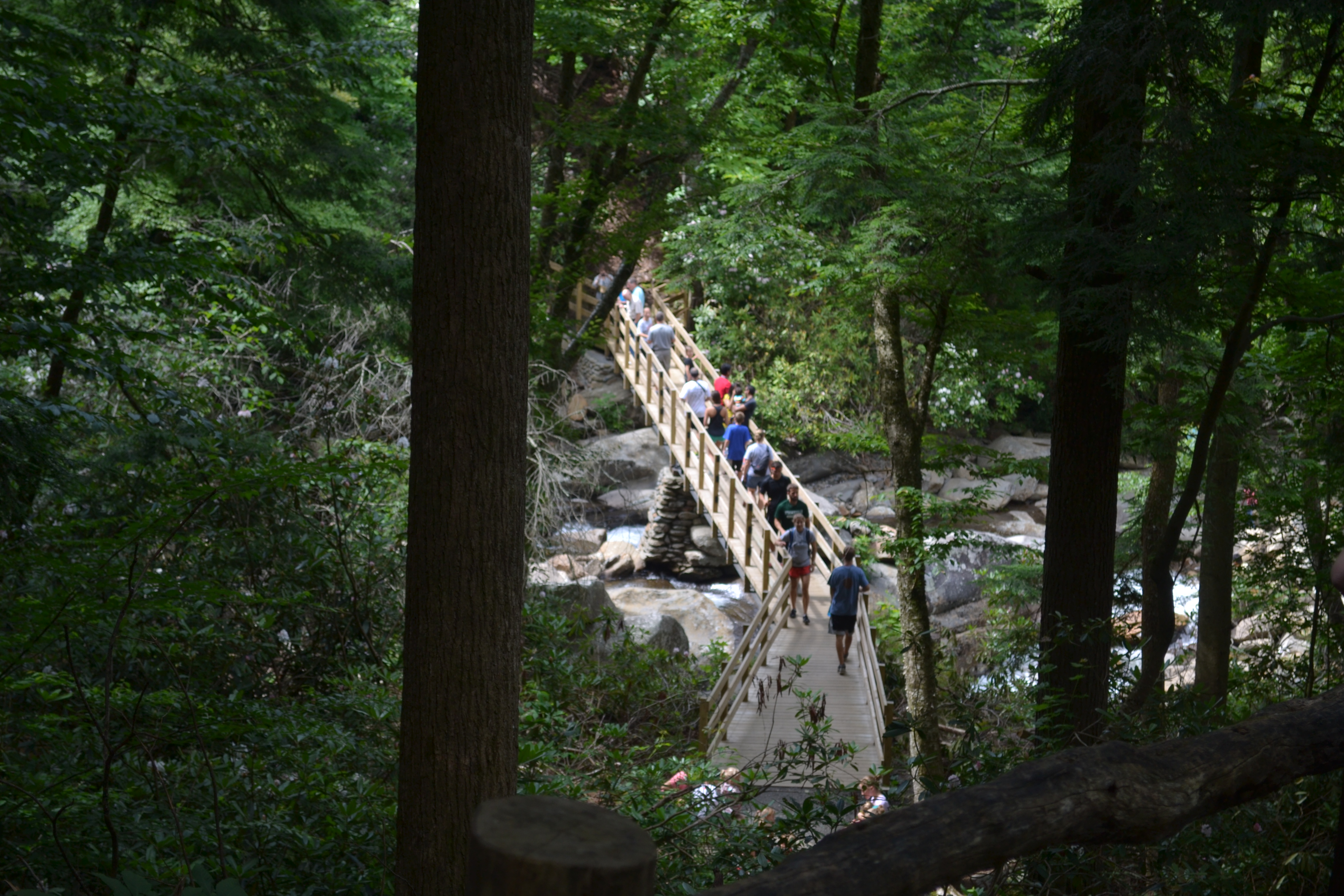


This trail is designated as strenuous. Therefore, we packed our rucksacks lightly with some juice, dry fruits, and a sandwich for the Pili-Pili. The trail is located half-way up the mountain on the singularly road to Cherokee, South Carolina. Once you pack your vehicle, the trail start slowly by descending to the bottom of the river. It was a beautiful sight and hugely deceiving of the long and uphill graded hike to come.

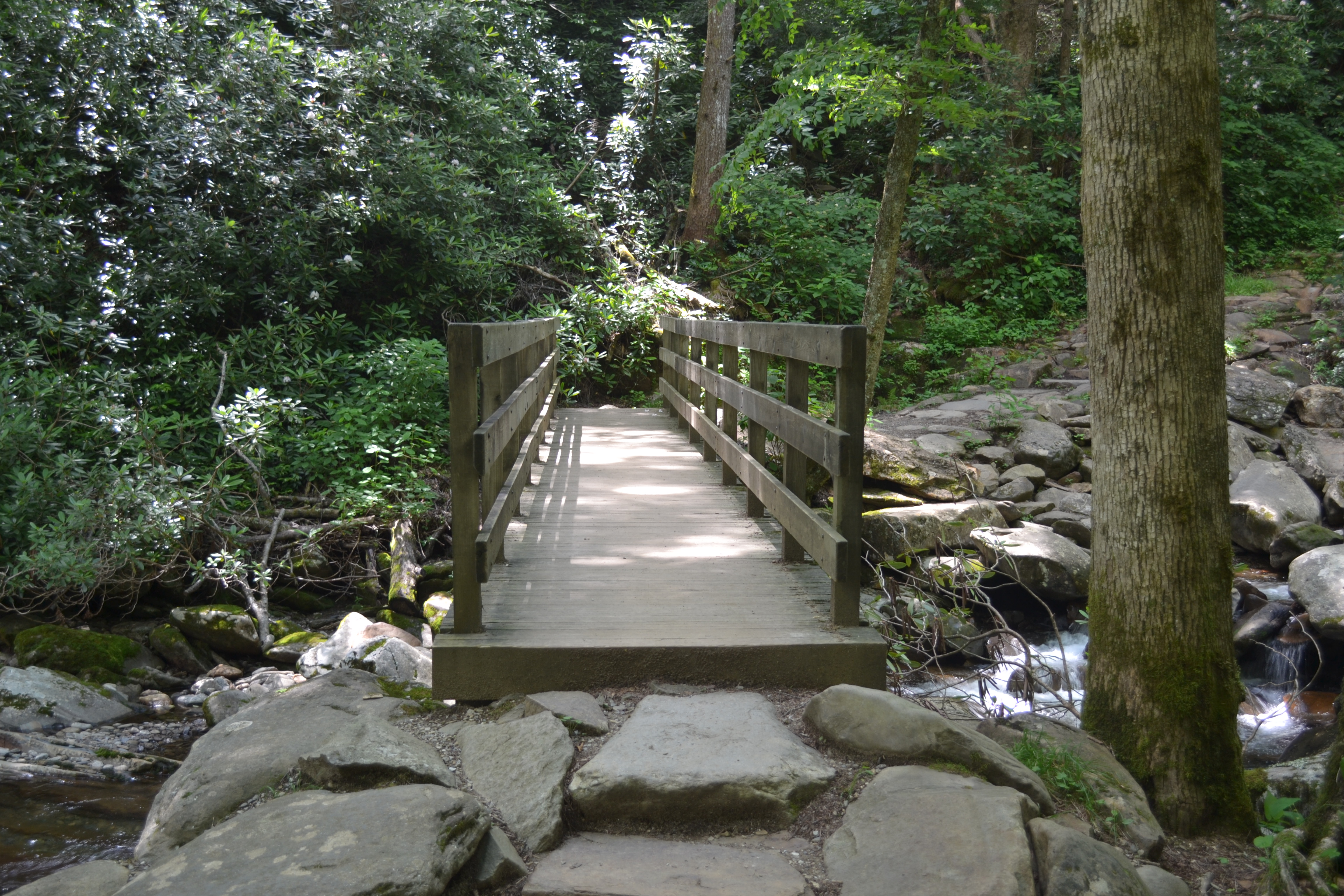
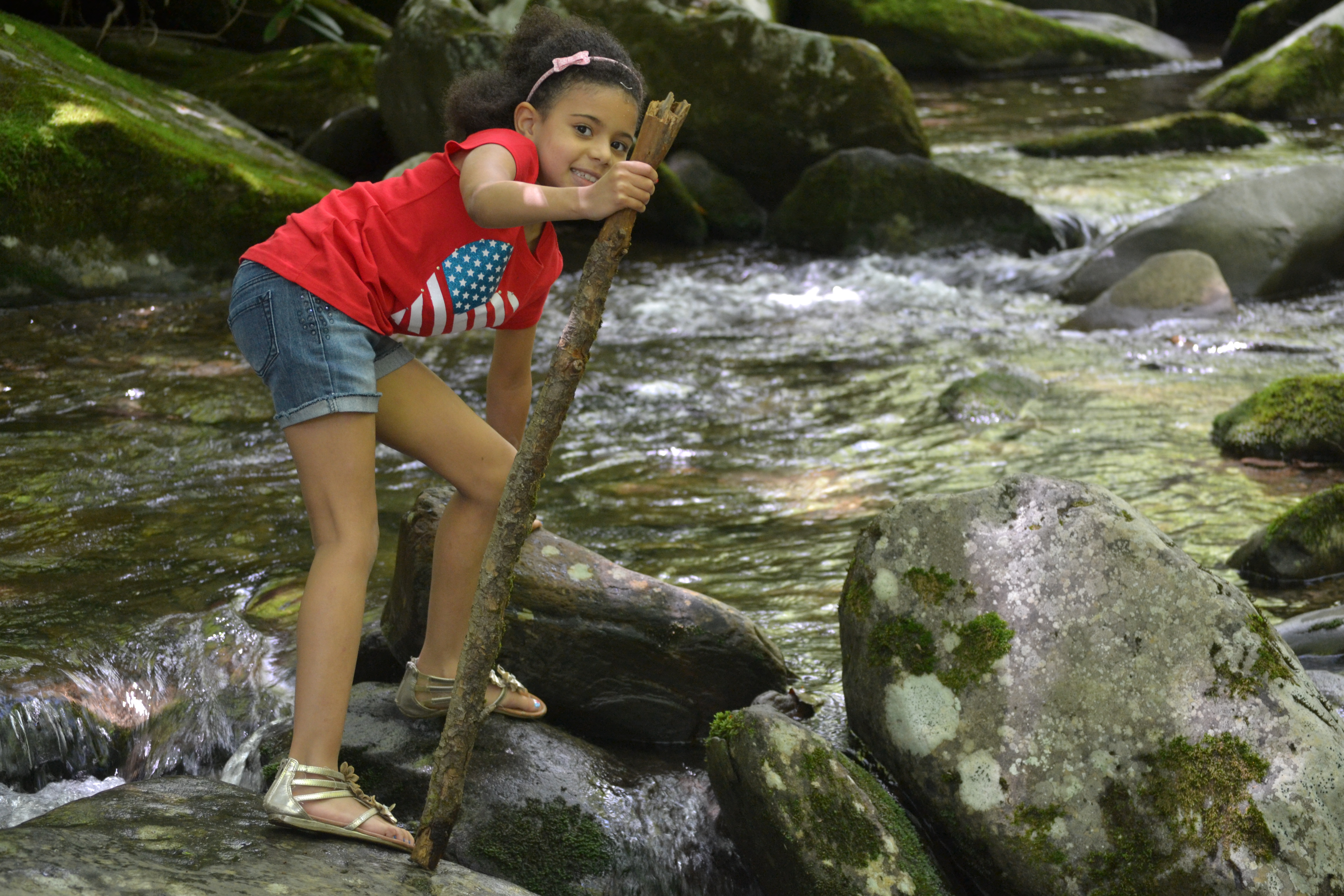
Once you cross a few bridges, steep and thoughtfully placed steps starts. There are 256 steps. Pili counted them out of boredom. The trail keeps going up, up, and up, and up again. Meandering like a giant river approaching the ocean. It’s not the hike that brings hordes of people here. It’s the amazing views on the way up and at the top of the chimneys. I know the pictures that you see here don’t give justice to the actual views there. The 2.3 miles up and 2.3 miles down was joyous as anything i have never done in a few years.





The tables have turned. Or am I seeing the work of a magician. Enough with the jokes! Seriously, Tanzania has been the laughing stock in East Africa with regards to its education system for a while. We all know that change do take time. Especially, meaningful and lasting change. Change in education doesn’t happen overnight (read here, here, and here). And quick fixes have unintended consequences (read here). However, I am happy to say that Tanzania has found a magic formula to raise student achievement in the shortest amount of time through its Big Results Now program.
Two years ago, the failure rates at the primary, secondary and high school levels were up the roofs (read here). The 2012 examination results for secondary schools was the lowest in history. However, in less than a year of BIG RESULTS NOW, we are seeing the highest jump in exam results never seen anywhere in the world of education. Has the system really changed? Or is it a mirage?
What I believe is this, for change to happen, underlying causes needs to be addressed. Has the education system in Tanzania addressed the challenges it faces? Challenges such as lack of teachers, lack of quality instruction in the classrooms, teacher absenteeism, lack of teaching resources, lack of laboratories and lab materials for science related courses. In my sane mind, I can’t believe that all these challenges have been addressed in less than a year. Unless you believe in miracles, of which I don’t, something really shady is in the works here.
As they say in Swahili “kuongeza ukubwa wa magoli” is not a genuine solution to this problem. The problems facing the education system in Tanzania are multi-faceted and needs multi-faceted solutions to address them. Quick fixes, No. They will just create a spillover effect. What I see is a disaster in the making. The consequences of which, will be difficult to remediate with simple and quick fixes.
This year we decided to chart a new course for our family summer vacation. We decided to take a path less traveled. Once you have been to the Sunshine State too many times, it becomes less difficult to choose to go elsewhere. I have no complaints with my vacations in Florida. Florida is always going to be the best destination for a summer vacation. With all the amusement parks, serene beaches, and warm weather. I love the place and I could visit there anytime. However, July’s Florida heat can be a turd too much to bear sometimes.
As we were trying to expose our daughter to other forms of summer travel adventures this year. We decided to climb the mountains. The decision was easy. While there, we saw some of the best kept secret places in the Southeastern Mountains Ranges of the United States. Gatlinburg is at the base of Smoky Mountain National Park. Next to it, is Pigeon Forge, the land of Dolly Patton. While there, you can do just anything touristy like amusement parks, you can scare your pants off by visiting many of the Ripley’s scare places or you can grab a cabin in the mountains and live a completely quiet week all to yourself. We chose the latter.
Here are a few pictures from my nature hikes at the Laurel Falls and Clingmans Dome. Enjoy.













Hello everyone. It was great to have you in my course this semester. I hope you enjoyed the experience. In my quest to make the course more enjoyable to you, I would like your input. Additionally, I hope you will find a way to use the information you learned in this course in the near future to make your lives better. As we are approaching the end of the semester, I would like for you to share your opinion about the course by clicking this link. It is my hope that you will take this opportunity seriously and that you will offer genuine suggestions to improve the course.
Here are three things I would like you to respond to:
1) what did you like about the course (think about pacing (too slow, too fast, just about right), information, field trips, out of class activities, in class activities and so forth)?
2) what did you not like?
3) what could I have done differently?
This is completely anonymous. Feel free to express your opinion to help me improve students’ experiences in the course.
Good-luck and Happy Summer Y’all!!
The article entitled “The Qualitative Method of Impact Analysis” by Mohr (1999) attempts to qualify qualitative study design as a rigorous and explicit method for impact analysis (impact evaluation purposes). In this article, Mohr discusses the problems facing qualitative methods when it is used to study impact. He asserts, impact it fundamentally is a causation type of a problem. Causation impact analysis is better evaluated if one uses a quantitative methodology. Mohr argues that the main issue here is based upon the definition of causality. The most accepted definition of causation is based solely on the counterfactual definition of causality. Therefore, if Y occurs, then, X must have occurred. This aligns perfectly with the quantitative methodology of impact evaluation. According to Mohr (1999), a more defensible version of the counter factual definition is called factual causation. Factual causation states that “X was caused by Y if and only if X and Y both occurred and, in the circumstances, if X had not occurred, then neither would Y” (Mohr, 1999; p. 71). As a result, causation is better established when variables are compared. Thus, causality is derived from the comparison of results from the experimental group to those in the control group. Without this base of combination of observations it would be impossible to determine the variance on the treatment variables. Hence, statistical analysis would not be possible.
Based on the counterfactual definition of causality it is impossible to use qualitative methodology to evaluate impact. To better determine impact, qualitative methods must rely on something other than evidence of counterfactual to establish causal inferences. Therefore it renders impossible for a qualitative methodology to show the concurrence of X and Y without the use of a treatment group and a control group that is prevalent in quantitative designs. However, Stricken (1976 as cited in Mohr, 1999) offer us an approach called the “modus operandi’ method which can be used to bypass the counterfactual definition of causality. The modus operandi method can be described as follows: it is an elimination process. For example, to demonstrate that treatment T has caused Y to occur, other possible causes of Y such as U, V, and W must be eliminated as contenders for causing T to occur through elimination. The modus operandi is commonly used in the daily works of professionals such as doctors, police, and investigators. Modus operandi does not meet the counterfactual definition of causality used in quantitative study designs. However, because of the modus operandi methods, qualitative study designs can be used to determine the programs impact using the elimination process to determine causal inferences. Therefore, no variables are needed to establish causation in qualitative designs because physical causality rather than factual causality does indeed produce compelling evidence for ascertaining the occurrence of T when Y occurred after all the other contenders have been eliminated. Thus, causal reasoning can be reliably used in qualitative designs to determine causal inferences in program and impact analysis.
I enjoyed reading this article because it offered me practical and useful insights in conceptualizing causality inferences. I have learned that the causation debate between researchers in quantitative design and those in qualitative design is based on the definition of causation. For the supporters of quantitative design, causation is defined by the counterfactual definition of causality. Thus, causation is determined by comparing two sets of variables (control and experimental values). On the other hand, the proponent in the qualitative design camp proves that causation can be established through the elimination process. The process of elimination is commonly used in our daily lives without comparisons and/or variables. I can relate this to my research. There are several similarities between my research design and the process of elimination described in this article. My research follows the quantitative design tradition, but it does not involve a control group. The causal inferences I can draw from my research design (single participant research design) are largely a result of better controls of the internal threats to validity rather than the comparison of results from the control group to that of the experimental group. There are no control groups in my proposed experimental design. Thus, as a researcher I plan to incorporate the useful, practical, beneficial insight, and steps of determining causal inferences discussed in this article.
Reference
Mohr, B. L. (1999). The qualitative method of impact analysis. American Journal of Evaluation, 20 (1), 69-84.
In this analysis, I will discuss the book review entitled “Computers, Curriculum, and Cultural Change (2rd ed.)” by Bonita Wilcox (2005). I will review the four types of literacy discussed in the book review and how to incorporate these literacies in instruction. Finally, I will conclude by discussing the lessons I learned from reading this article and how I will use some of the information in my praxis.
In her article, Wilcox reviews the book entitled “Differentiated Literacy Strategies for Student Growth and Achievement in Grades 7-12” by Gayle H. Gregory and Lin Kuzmich (2005). Ms. Wilcox begins here review with two fundamental questions: “Overwhelmed by student diversity? Too much content and too little time? I am sure that many educators can relate to that. We all are struggling to meet the needs of each and every student in our classrooms. Some of the needs we must meet to remain effective educators are student development, learning styles, learning preferences, and multiple intelligences”. Ms. Wilcox goes on to state that student diversity is one of the biggest challenges for American educators in the 21st century classroom. In their book, Gregory and Kuzmich (2005) suggest looking at these challenges through the lens of the four domains of literacy: functional, content, technological, and innovation/creative. Gregory and Kuzmich further suggest educators consider numerous differentiated learning methods while acknowledging that these methods have to be balanced against the time and resource constraints many educators face. To address these challenges, Gregory and Kuzmich offer several instructional strategies, assessment strategies, planning models, checklists, rubrics, and lesson plans based on current brain research and recommendations from prominent educators.
Gregory and Kuzmich believe, like most educators, that gathering and evaluating data is crucial in making well-informed decisions to improve learning. They also believe that diagnostic thinking must be done by teachers themselves since they work with and know all the students in their classroom. External testing and evaluation is not tailored to individual students and therefore does not offer the best diagnostic prescription for student development at the individual level. The use of differentiated instructional practices for specific learning styles, preferences, and multiple intelligences are discussed to address the functional and content area competence. These include flexible grouping, anticipation guides, SQ3R, graphic organizers (four corner, compare/contrast, and cross classification), choice boards, KWL charts, reciprocal teaching, and writing prompts. To meet the technological and innovative literacy challenges, Gregory and Kuzmich suggest best practices for promoting multidimensional thinking and multimedia production. These include useful websites for various content specific areas, search engines, search guides, website credibility measures, and some innovative methods including switch between work groups, kinds of text, and types of writing skills and media use.
In conclusion, this book review was very informative. I have learned many useful teaching and learning strategies that I will be utilizing in my daily praxis. Furthermore, it was very interesting to learn that most educators over-value the importance of external student testing and evaluation. In my view, this practice is not formative and does not help educators improve their teaching. The best diagnostic thinking is the one envisioned and implemented by the teachers themselves. This kind of test takes into consideration student diversity and can address challenges at the individual student level. The one size fits all assessment that we are currently using assumes that all students are the same. In my opinion, this is an incorrect assumption.
Reference
Wilcox, B (2005). Computers, curriculum, and cultural change (2rd ed.), English Leadership Quarterly, 28(2): 12.
The article entitled “The Challenges of Curriculum Change” by Kent den Heyer (2013) discusses an educational initiative in Canada’s Alberta Province. The purpose of the Initiative was to move from a knowledge-based curriculum to a skills- or competence-based curriculum. In this analysis, I will first discuss the author’s argument regarding curriculum change. In addition, I will discuss what is already known about change and how that can be used to facilitate the kind of change that officials in the Alberta Province sought to achieve. Finally, I will discuss the lessons I learned from reading this article.
Den Heyer starts the discussion by quoting a statement made by a 3rd year education student in his undergraduate course. He quotes, “I just want to know what I need to know; I didn’t want to have to think about it” (den Heyer, 2013). This comment, den Heyer argues, suggests that the student did not necessarily value “thinking” as an end point in her education. Instead, what she valued the most was the ability to complete tasks or skills. Den Heyer goes on to discuss how this quote relates to the ability to affect change. In order for change to occur, den Heyer suggests that we must first change the minds of the people responsible for implementing programs. In the example from Alberta, officials realized that there was a gap between the current curricula used in schools and the mission statement of the school system that promoted engagement, ethical citizenship, and entrepreneurship. An educational initiative was put forth to change the curricula to match this mission statement. However, changing how students were instructed would require more than just changing the curricula. It would also require convincing the program implementers (e.g. school administrators, teachers, etc.) on why the curriculum changes were needed.
In the article, den Heyer reviews what is already known about initiatives for programmatic school change. Research findings consistently indicate that formal curricula changes have little discernible effect on changing classroom practices. We all know that classrooms are where the rubber meets the road. If little changes happens there, the curricula change we are envisioning will have very little impact on what students learn in the classroom. Den Heyer reminds us that curriculum theory is an important aspect of curriculum change when Unfortunately, however, most curriculum changes are politically based and have little to no educational theory behind them. These symbolic curriculum changes are used to signal that something is being done but in reality these moves have little transformative potential in improving student outcomes.
According to den Heyer (2013) official curriculum change and redesigning suffers from many issues. Lack of open discussion with all stakeholders can lead to changes that are impossible to implement and/or which lack buy-in from key stakeholders needed to implement the curriculum changes (e.g. teachers, school administrators, etc.). For example, fundamental questions to curriculum changes such as classroom sizes, teaching loads, content, skills, and assessment tools may not be thoroughly discussed as part of the curriculum change process. In addition, strong curricula are based on theories of knowledge and an understanding of the relationship between knowledge and meaning construction. If curricula are not based on theory, teachers will present information and competencies as if they are inter-changeable. The danger to this will be an inability to assess students’ developed competencies.
In conclusion, most often there is a mismatch between the mission statement of school agencies and the type of knowledge they purport to advance. Therefore, a careful look is needed to make sure that the curriculum employed by an educational agency aligns with the agency’s mission statement. In addition, to advance real curriculum change, key stakeholders need to be involved in the process. Successful curriculum change happens when it is initiated from the down-up rather than from the top-down. Needs for improvement must clearly be identified and incorporated into the new curriculum and the curriculum must be based on clear theory. From this article, I gained insight into the factors required to successfully change curriculum. These insights will help me as I pursue a career in curriculum development.
Reference
Den Keyer, K (2013). The challenges of curriculum change, ATA Magazine, 93(4): 16-19
By: Shaaban Fundi
In this synthesis I will discuss my understanding of mixed method research design. I will also discuss which methods (qualitative or quantitative) that I will use to drive my research inquiry. In addition, I will discuss in detail the case study approach that I will use in my pilot study. Finally, I will discuss the lessons I learned throughout the process and discuss why a case study approach and a mixed method design are appropriate for answering my research questions.
A mixed method study uses both qualitative and quantitative research designs. In the 1990’s mixed method study design gained popularity (Creswell, 2011). Green (2007) define a mixed method study as “research in which an investigator collects and analyzes data, integrates findings, and draws inferences using both qualitative and quantitative approaches or methods in a single study or program of inquiry” (p.20). According to Creswell (2011) mixed method study increases the breadth and depth of our understanding of the research data, findings, and also corroborates the study findings. By corroborating the findings of the study, it ensures stronger validity of the study findings.
To use mixed method design, Creswell (2011) suggests that the research question must match the study design. It is important for the questions formulated to address both the needs for a quantitative and a qualitative study design. One mixed method study entitled “Merging Qualitative and Quantitative Data in a Mixed Method Research: How to and Why not” by Driscoll et al (2007) discusses both qualitative and quantitative data collection methods. In addition, Driscoll et al study discusses data interpretation methods used to assess the utility of mixed methods designs that uses both qualitative and quantitative transformative research design. In this study, the author describes two mixed method data collection procedures and two qualitative data analysis procedures. The procedures of data collection discussed in the article are concurrent and sequential data collection methods. Concurrent data collection design is used to validate one form of data collection with another. For example, qualitative data collection methods can be used concurrently with quantitative data collection methods to validate collected data and findings. On the other hand, a sequential data collection method employ either a qualitative data collection method first followed by a quantitative data collection or a quantitative data collection method first followed by a qualitative data collection method. For example, surveys could be used first to collect data. Then, the collected data could be analyzed to generate findings. However, if the findings do not tell the whole story, then, in depth interviews could be used with a segment of the study population to validate and/or augment the findings from both data collection methods.
In my study I plan to use the sequential data collection method. First, I plan to utilize in depth survey with educators to solicit their experiences using virtual labs in science education. Then, I will analyze the data from the in-depth survey to information gaps that will help me to develop a survey to help validate and corroborate the in-depth interview data and findings. Therefore, the qualitative component of the study will drive the quantitative part of the study. In other words, the qualitative research findings will help me devise a survey instrument to be used in the quantitative study.
Now I will turn my discussion on the case study qualitative approach that I plan to use in my mixed research study. According to Creswell (2013) “identifying the problem to be studied, identifying the context, using multiple sources of data collection, data analysis, and representation” are the essential components of a case study. Creswell also identifies five components that should be included as part of the introduction to a well-conducted qualitative research study. These components include: 1) a clearly defined topic, 2) a well-stated research problem, 3) a literature review justifying the problem, 4) identification of gaps and deficiencies in the existing literature, and 5) a justification and rationale for why the problem is an important area of research (Creswell, 2013; p. 132). I have developed my rationale and research questions for my exploratory qualitative study following Creswell’s five prong process. I am interested in exploring the experiences of high school science teachers when using virtual labs with their students. I am exploring this topic by using the case study approach.
Case studies are differentiated into various types based on the purpose and the size that bound the case. For example, a case study can involve (be bounded by) one individual, a few individuals, a group, and an entire program (Creswell, 2013). Based on intent Creswell (2013) identifies three approaches to conducting a case study inquiry. These approaches include: intrinsic case study, the single instrumental case study, and the collective or multiple case study. According to Stake (1995) a single instrumental case study focuses on a single issue bounded in one case. In a collective case study the researcher select one issue or concern and then select multiple case studies to illustrate the concern. A collective case study can be achieved by to study either multiple perspectives of a case within a single site or by selecting several cases from multiple sites. Finally, intrinsic case study focuses on the case itself. Some cases present unique or unusual situation. For example, evaluating an educational program that is not working as intended and then creating detailed descriptions of the unique case to illustrate the problems and how to solve those problems. In this pilot case study, I asked teachers to recall the episodes where they used virtual labs in their classrooms and to relay to me their personal experiences using these labs in their classrooms. In addition, I collected information about the teachers’ background. This information will help me to contextualize how their experiences using virtual labs were influenced by their educational background and their teaching philosophy.
During my review of the literature, I identified two qualitative studies that described the experiences of teachers who became students. Their experiences as students helped them identify strategies to improve their teaching. Mann (2003), a college professor, described her own experience as a student attending an online course. From her experience, she identified several strategies that teachers can use to foster student learning in a virtual environment. Similarly, Sinclair (2004; as cited in Case, Marshall, & Linder, 2010) spent two years as a student in a mechanical engineering program. During her time as a student, she identified several challenges that students encounter when entering a new discourse or discipline. She also identified strategies that educators can use to help their students be successful in a new discourse.
The two studies illustrate the need to understand teachers’ experiences with virtual labs since it may be one strategy to foster student learning in a virtual environment. Currently, little research has been done in this area, especially amongst high school science students. My study will address this existing gap in the literature by exploring teachers’ experience with virtual labs using a case study approach and examining the impact of virtual labs on student learning using both qualitative and quantitative methodologies. In addition, the teachers’ experiences and stories from my exploratory study will help other educators understand the challenges and opportunities associated with using virtual labs in their classrooms, including identifying best practices for integrating virtual labs into the science classroom.
Creswell (2013) describes several types of data collection techniques that can be used as part of a case study. These include in-depth interviews, personal observations, field notes, and attendance at events. In an interpretive case study entitled “An Investigation of Experienced Secondary Science Teachers’ Beliefs About Inquiry: An Examination of Competing Belief Sets”, Wallace and Kang (2004) used a variety of data collection methods. These methods include: (1) semi-structured formal interviews; (2) informal interviews; (3) field notes from observation and video tapes of classroom teaching; (4) lesson plan and student materials documents; and (5) written reflections of the teachers. For my exploratory study, I used in-depth interviews and observations with three teachers to elicit their experiences with virtual labs and I also observed how they use virtual labs in their classrooms. In my initial interview, I asked six key questions to capture the teachers’ experiences with virtual labs. These questions include:
1) Tell me about your educational and professional background;
2) What is your teaching philosophy?
3) How do virtual labs fit within this philosophy?
4) Describe the professional development that has helped you to be effective in using virtual labs for teaching?
5) What do you see as barriers and benefits to using virtual labs with your students?
6) What adaptations (if any) did you make to ensure that all students in your class benefit from virtual labs?
To collect data for the pilot case study, I purposely chose my three participants. First, two of the participants are new teachers (less than three years of teaching) in my department and because of that they have limited experience with virtual labs. One of the interviewee was a veteran educator with over 12 years of teaching experience. Thus, I will not interview the same educators during my actual dissertation study. Second, the participants and I work in the same hallway and have the same planning period; therefore, I have easy access to them. According to Creswell (2013) a researcher may select ordinary research participants due to easy access. In addition, a researcher may select participants with different perspectives on the problem to achieve a purposeful maximal sampling. In this case I choose ordinary participants based mainly on accessibility. However, during the actual study I would like to interview one veteran teacher who has extensive experience with virtual labs. This is in accordance with Creswell’s (2013) description of the single issue-single individual case study that I plan to use for my case study. During my interview with this veteran teacher, I hope to gain a deeper understanding of how she uses virtual labs in her classroom in order to provide guidance to other educators on the opportunities and difficulties of using virtual labs as a teaching tool in the science classroom. .
I started to analyze the three in-depth interviews I conducted with the educators. I have identified several major themes that arose from the teachers’ experiences. I will use the developed themes to create a detailed chronological description of each participant’s experiences with virtual labs. I will then, present a thematic analysis of the themes that have developed from the interviews to show similarities and differences between the interviewees. I realize that using just one method of data collection in my exploratory study may result in findings that are devoid of richer and triangulated data (Sinclair, 2004; as cited in Case, Marshall, & Linder, 2010). However, I hope to use the lessons learned from the interviews conducted as part of my exploratory case study to refine the interview guide and methodology that I will use for my dissertation.
The use of various data collection methods in a case study increases the validity of the study findings by offering the means to cross check the developing themes across the data collection methods (Sinclair, 2004; as cited in Case, Marshall, & Linder, 2010). In my dissertation study, I plan to use in-depth interviews, observations, and surveys as part of my mixed method study. It is my hope that this exploratory study will offer me insights on which additional methods of data collection and analysis I should use as part of my mixed method dissertation study. In addition, the exploratory study will help me to determine if the initial questions that I have developed are appropriate for collecting teachers’ experience or whether the questions need to be refined. In addition, the findings from this exploratory will help me to determine whether a mixed methods approach is an appropriate study design for my dissertation.
In conclusion, this analysis helped me to frame my research study using a case study approach in a mixed method study
design. As part of this process, I came to realize that case study alone is not sufficient to answer my research question, specifically categorizing the types of experiences that science teachers have when using virtual labs. For example, a mixed method study design could help me understand the essence of the teachers’ shared experiences using virtual labs better by corroborating the findings from in-depth interviews with surveys from a larger population of educators who use virtual labs in science education across the country. Therefore, in my dissertation, I plan to use both qualitative and quantitative study designs to sufficiently answer the questions outlined in my dissertation study. As a result, the qualitative study will drive the quantitative study.
Reference
Case, J. M., Marshall, D., & Linder, C. (2010). Being a student again: A narrative study of a teachers’ experience. Teaching in Higher Education,15(4): 423-433.
Creswell, J. W. (2013). Qualitative Inquiry and Research Design: Choosing Among Five Approaches (3rd ed). Thousand Oaks, CA: SAGE Publications, Inc.
Creswell, J. W. (2013). Designing and Conducting Mixed Methods Research (2nd ed). Thousand Oaks, CA: SAGE Publications, Inc.
Driscoll, D., Appia-Yeboah, A., Salib, P., & Ruppert, D. (2007). Merging qualitative and quantitative data in a mixed method research: How to and why not. Ecological and Environmental Anthropology, 3(1): 19-28.
Greene, J., Caracelli, V., & Graham, W. (1989). Toward a conceptual framework for Mixed-Methods Evaluation Designs. Educational Evaluation and Policy Analysis 11:255-274.
Kumu-Yeboah, A., & Waynne, J. (2012). Transformation teaching Experiences of a Novice Teacher: A narrative of an award winning teacher. Journal of Adult Learning, 23(4): 170-177.
Mann, S. J. (2003). A personal inquiry into an experience of adult learning on-line.
Instructional Science, 31, 111-125.
In this book review, I will discuss the four main educational ideologies presented in the book entitled “Curriculum Theory: Conflicting Visions and Enduring Concerns” by Michael Schiro (2013). The ideologies I will discuss include: (1) the scholar academic ideology, (2) the social efficiency ideology, (3) the learner centered ideology, and (4) the social reconstruction ideology. I will also review how my educational ideology has changed over the years and discuss how Schiro’s book has influenced my own teaching practice.
Scholar academic ideologists believe that acquiring an understanding of academic knowledge involves learning the content, conceptual framework, and ways of thinking (Schiro, 2013). Educators who subscribe to the scholar academic ideology use three main teaching methods. The three teaching methods include: didactic discourse, supervised practice, and Socratic discussions. I find myself using almost all of these teaching methodologies in my classroom. As I develop my 5E lesson plans, I normally think of the best teaching method that I can employ efficiently and effectively to convey concepts to students. For example, I may ask myself “is exploratory learning the best way to present this material to my students?” or “will power point presentation (didactic) or Socratic questioning be more helpful?”. Teaching is more than knowing the content; it also involves knowing the pedagogical processes of presenting the information to students who naturally have varied interests, abilities, learning styles, and backgrounds. Thus, to effectively teach students new concepts, you have to constantly think about the best way to present the information.
In the Social Efficiency ideology, the child’s learning is not the main focus. Instead, the focus is on helping students develop the skills necessary to become productive members of society. The Social Efficiency ideology places less emphasis on the individual needs of the child and more emphasis on the capability of the child to fulfill society’s need for skilled workers. I take issue with this approach of educating children. I believe in educating the whole child and treating children as individuals with unique needs and unique ways of learning. It is my strong belief, that the individual needs of each and every student must be addressed in the process of teaching and learning. I simply cannot view my students as a means to society’s end.
The Leaner Centered ideology’s main focus is on the learner. The child’s needs and interests are central to his/her learning and must be incorporated in the learning experience. I agree wholeheartedly with this view. As an educator, I spend a lot of time in the beginning of the semester learning my students’ interests, prior knowledge, learning styles, and abilities. I believe that in order to teach students effectively, we need to know who they are, what they like and how best they learn. Being aware of my students’ interests and ability is useful in the process of creating the experiences from which students will create their own meaning of the curriculum content and become engaged learners.
Central to the Social Reconstruction ideology is the idea that existing society is imperfect. In other words, the society in which we reside is broken. Social reconstructionists believe that education should not be used merely as a vehicle for fixing the flaws within our society, but should instead be used to transform the existing society into a new society that is just, moral, satisfying, and empowering for everyone. Social reconstructionists argue that the function of schools is not to continue reproducing the existing society. Instead schools should go beyond reflecting the wishes of the existing society by teaching students to become critical, and analytical thinkers, and to be aware of the injustices existing in our current society.
The four main educational ideologies are fluid in nature and educators may change their ideologies over time. According to Schiro (2013), educators alter their educational ideologies due to changes in their personal and/or professional lives. Most educators change their ideologies at least once every four years. During my own educational career, I have changed my educational philosophy as I have gained more experience. When I first started teaching, the Scholar Academic ideology dominated my teaching philosophy. At the time, I believed that students had to know and master the content and demonstrate their mastery through a strong performance on a standardized test. I did not realize that there was more to education and true knowledge than just test scores.
My Scholar Academic views of education were quickly put to test during my first teaching assignment in an urban school in Baltimore. Many of my students came to school hungry and the school environment was the only place where they received two meals a day. School also allowed them to avoid violent situations that were prevalent in their neighborhoods. Most of my students did not have a nuclear family living in the home with them. I would say approximately 85% of my students lived with their grandparents because their biological parents were either in jail or had substance abuse issues. As an educator, I was fondly looked at by my students as a role model. As such, I had to teach my students, through example, that education was a doorway to possibilities and opportunities for a better life. Therefore, I was not just teaching content to my students. Instead, I had to assume many roles: I was a father, a counselor, and an advisor.
I soon encountered the Student Centered and Social Reconstruction ideologies of education. The needs of my student necessitated that I adapt my educational philosophy to incorporate these ideologies. There was need to meet the students where they were and to educate them on how they might be able to reconstruct what they viewed as a broken society. There was a constant friction between my views of education and the views of education held by most educators and administrators at this urban school. I had to learn and adjust my educational philosophy to fit within the context that I was experiencing. My work as educator was to help students cope with their home situations and also to provide them with the skills necessary to escape poverty and build a better life for themselves. This included teaching them how to work cooperatively with others and how to resolve their differences through communication and not through violence. I was expected to show students that there was a whole world beyond the confines of their current neighborhoods and to empower them to change their circumstances.
When I relocated to a suburban school in Atlanta, the societal expectations changed. My new school was in an upper middle income neighborhood. School was viewed as a place where students learn the skills they need to be productive and successful members of society. I was expected to help my students earn good grades and prepare them to attend prestigious universities across the country. This was more in line with the Social Efficiency ideology of education, and I again found myself needing to adjust my educational philosophy. No longer was I trying to change my students’ view of society. In this context, there was no need to change society for the better. Society was better already. Instead, I just needed to prepare my students to become productive members of society.
To conclude, as I was reading Schiro’s book, I found myself in agreement with many of the reasons why educational ideologies may change. Sometimes educators may change their ideologies to fit the trends in society. For example, I had to change my views of education to fit the needs of the student populations with which I was working. It is also true that changes in your own life, such as having children or starting a new degree program, can change your views on the purpose of education. In my experience, changes in one’s personal and professional life often translate into changes in one’s educational ideology. Overall, I enjoyed Schiro’s book as much of what he had to say resonated with my own experience as an educator.
Reference
Schiro, S. M. (2013). Curriculum Theory: Conflicting Visions and Enduring Concerns (2nd ed). Thousand Oaks, CA: SAGE Publications, Inc
In this video I interviewed a science special education educator regarding his experiences with virtual labs in science education. I started the interview by asking him to describe his education background and how he became an educator. In addition, I asked him to describe his educational philosophy and how that philosophy fit in with the use of virtual labs. Furthermore, I asked him to describe a professional development he had received to help him use virtual labs effectively with his students. I concluded the interview by asking him to describe what he sees as the benefits and barriers of using virtual labs in science education and what adaptations he uses to ensure all students in her class benefited from virtual labs.
In this video I interviewed a physics educator regarding his experiences with virtual labs in science education. This was my first interview with teachers. I started the interview by asking him to describe his education background and how he became an educator. In addition, I asked him to describe his educational philosophy and how that philosophy fit in with the his use of virtual labs in science. Furthermore, I asked him to describe a professional development he received to help him use virtual labs effectively with his students. I concluded the interview by asking him to describe what he saw as the benefits and the barriers of using virtual labs in science education and what adaptations he employs to ensure all students in his class benefited from virtual labs.
The article entitled “Principles of Effective Change: Curriculum Revision That Works” by Johnson (2001) describes a study conducted to determine factors for successful curriculum revision for teachers and school administrators in southern Iowa, United States. The purpose of the study was to determine the key elements that will affect the success of curriculum revisions at the school and district levels. In this analysis, I will describe the study design, findings, and recommendations. I will also discuss the lessons I learned from the findings and the approach that I will apply to in my role as a curriculum specialist.
Johnson (2001) used a Likert Scale Response Checklist in a mixed method study designed to solicit educational practitioners’ perspectives on factors they thought contributed to successful curriculum revisions. The Likert Scale Responses Checklist consisted of 28 response questions with six constructed response questions. In addition, four focus group interviews were conducted to substantiate and corroborate the themes and patterns developed from the Likert scale responses. The response rate from the interviews was 77%. 73% were from classroom teachers and 27% were from building level and central office leaders.
Several conclusions were derived from the study. First, participants considered in-service training to be an important component of the overall success of a curriculum revision process. Second, teachers and school administers emphasized that the importance of specific training in the curriculum revision process and a deeper understanding of the process was crucial to the success of the project. Third, consistent review and on-going training was a key component to a successful curriculum revision. The one-shot in-service training program was deemed inadequate by both educators and administrators. Fourth, it was also found that the participants’ ownership of the curriculum revision process was vital to the process.
From the study results, Johnson (2001) came up with six recommendations for successful curriculum revisions for schools and districts:
Lessons Learned
I found the study to be thorough. In addition, I found similar factors for successful curriculum revision in the two previous articles I analyzed. It seems that the most important factor in any curriculum revision and/or change process is the teachers’ participation. According to Blanchard (1978) and Ramparsad (2002) teacher participation in adapting curriculum increases the likelihood of a “buy-in” during the curriculum implementation phase. I wonder why curriculum change in my school district happens without utilizing this previously established empirical fact. It’s a no brainer that most curriculum changes utilizing the top-down approach fall flat during the implementation phase. In my leadership as a curriculum manager for a school district, I will make sure that empirical evidences for successful curriculum development and implementation are incorporated in the curriculum development process in order to increase the likelihood of success of curriculum adoption at the school and district levels.
References
Blanchard, L. J. (1978). Creating a climate of rapid response to needs for change. Journal of Educational leadership, 37-40.
Johnson, A. J. (2001). Principles of effective change: Curriculum revision that works. Journal of Research for Educational Leaders, 4, 5-18.
Ramparsad, R. (2001). A strategy for teacher involvement in curriculum development. South African Journal of Education, 21(4): 287-292.
In this reflection I will discuss the article entitled “Creating a Climate of Rapid Response to Needs for Change” by Blanchard (1978). I will present the steps that Blanchard used to develop an alternative curriculum (model) for a high school. This curriculum addressed the school’s current and future needs that were identified during discussions with the teaching staff. Finally, I will present the lessons I learned while reading this article.
Blanchard (1978) describes change as “exciting, refreshing, distressing, frightening, and disorienting at times.” According to Blanchard (1978), people react differently when encountering the pressure for change. In particular, curriculum specialists typically have one of three reactions when encountering the pressure to change a curriculum. First, curriculum specialists may oversimplify the situation. Oversimplifying the situation generally occurs when there is a lack of sufficient information to clearly determine how the curriculum needs to change. This lack of sufficient information may lead to adopting customized solutions (ready-made curricula) or it may lead to adopting simple solutions for complex situations such as additions to curriculum that are not necessarily needed.
The second way curriculum specialists may react is to maintain the status quo. Most times, curriculum specialists may decide to keep the curriculum in place without evaluating the changing needs of society, the teachers, and the students. For example, the demographic profile of the school(s) may change and this can have a major impact on the appropriateness of the curriculum. In this situation, curriculum specialists may decide to keep the status quo because they feel like “if it isn’t broke, why fix it?” However, specialists who adopt this attitude miss the opportunity to ensure the curriculum keeps pace with the changing demographics and meets the needs of the students and teachers in the school system.
Finally, curriculum specialists may opt for what Blanchard refers to as “bandwagonism”. Under this scenario, curriculum specialists may adopt a curriculum because it has already been adopted by other schools and districts and not because it fit the needs of the school(s) where the specialist works.
To facilitate a climate accommodating to change, Blanchard suggests that curriculum specialists should believe in the worth and contribution of individual teachers as part of the curriculum development process. According to Blanchard, teachers are integral members of the curriculum change process. Curriculum specialists must empower teachers by giving them the opportunity to identify and respond to curriculum needs within their schools and community. Furthermore, Blanchard argues that allowing teacher participation may also reduce suspicions and ensure that the curriculum is widely adopted. It may also help to avoid an atmosphere of resistance that could result from bringing a ready-made curriculum to schools and/or communities without adequate participation of teachers in the process.
In her article, Blanchard presents a case study from her work with teachers at a secondary school to develop an alternative program curriculum that reflected present and future needs of the school. With the teachers, she developed a process model for creating this alternative curriculum. The process model included: the data collection phase, the data analysis phase, the synthesis phase, the commitment phase, and the planning phase. In the first three phases, teachers identify the current and future needs of the school that are not being addressed with the current curriculum. In the commitment phase, the teachers select curriculum ideas that match the needs of the school. Finally, in the planning phase, teachers identify guidelines for measuring the success of the new curriculum. The specialist then takes all of the information from these five phases and develops a curriculum that incorporates input from the teachers.
The lessons I learned from this article are that: 1) it is important for future curriculum specialists/managers such as myself to involve stakeholders in the decision making process while developing a new or an alternative curriculum; 2) the developed curriculum must be based on present and future needs of the school system; 3) involving stakeholders in decision making improves the likelihood that there will be“ buy in” to the agreed decisions and resulting curriculum; 4) flexibility in time and schedule is paramount to ensure that there is adequate time to solicit teachers’ input; 5) it is important to trust the answers that teachers provide during the process; and 6) it is important to be there to learn from and not supervise teachers during the process. This article has given me a good model to follow for developing curriculum in my future work as a curriculum supervisor.
Reference
Blanchard, L. J. (1978). Creating a climate of rapid response to needs for change. Journal of Educational leadership, 37-40.
According to Creswell (2013), a phenomenological study, “describes the common meaning of several individuals of their lived experience of a concept or a phenomenon.” There are two types of phenomenological studies. The first type is a heuristic phenomenological approach which brings to the fore the personal experience of the researcher (Moustakas, 1990b:9, as cited in Patton; 2002b). The second type is a transcendental phenomenological approach that involves the researcher bracketing themselves through acknowledging their experiences with the phenomenon under investigation (Creswell, 2013). I will use the transcendental phenomenological approach for my pilot study.
There are seven main features in a transcendental phenomenological study. These features include: a) deciding on a phenomenon to be explored, b) identification of a group of individuals who have experienced the phenomenon, c) a discussion of the theoretical framework guiding the phenomenological study, d) a discussion by the researcher regarding their personal experiences with the phenomenon (known as bracketing), e) a data collection procedure commonly involving interviewing individuals who have experienced the phenomenon, f) data analysis procedures that move from narrower significant statements to broader units and, g) a description of the essence of the individuals ‘shared experience.
In the next several paragraphs, I apply these seven steps to my dissertation topic. The phenomenon to be explored in my dissertation project is to investigate teachers’ shared experience using virtual labs in their classrooms. In my initial interview, I would like to ask six main questions to capture teachers’ experiences with virtual labs. These questions include:
1) Tell me about your educational and professional background.
2) What is your teaching philosophy?
3) How do virtual labs fit within this philosophy?
4) How did you learn about virtual labs?
5) What do you see as barriers and benefits to using virtual labs with your students?
6) What adaptations (if any) did you make to ensure that all students in your class benefit from virtual labs?
While conducting the pilot study, teachers’ experiences with virtual labs will be the main focus or what Creswell (2013) calls “the phenomenon to be explored.” I intend to use a sample size of two teachers who have experience using virtual labs with their students to explore this phenomenon. This number is well below what Creswell (2013) suggests in his book. Creswell (2013) advises that a phenomenological study should be conducted with a heterogeneous group of at a minimum 3 to a maximum of 15 individuals. Given time constraints, I will only be able to interview two teachers. I am concerned that this sample size will not be sufficient for me to determine the essence of the lived and shared experiences of teachers who have used virtual labs in their classroom. In addition, the teachers I have chosen are both new to the profession. They each have two years of teaching experience and therefore they have only two years of using virtual labs with their students. I am afraid that the two teachers I have chosen may present a homogeneous rather than a heterogeneous group. Therefore, the teachers I have chosen may not provide a comprehensive picture of teachers’ experiences using virtual labs. In other words, a larger sample size (more than two individuals) consisting of teachers with varied amount of experiences would have given me a richer understanding of teachers ‘experiences using virtual labs. Despite these limitations, I feel that conducting this pilot study will give me the experience and skills I need to conduct a rigorous qualitative exploration using a phenomenological approach as part of my dissertation..
An example of a well-conducted study using a phenomenological approach can be found in the article entitled “A Phenomenological Study –Cognitive Representations of Aids” by Anderson and Spencer (2002). In this study, the authors wanted to “describe AIDS patients’ cognitive representation of their illness.” The authors used a purposive sample of 41 men and 17 women. To be eligible for the study, participants had to: have an AIDS diagnosis, be 18 years or older, be able to communicate in English, and have a mini-mental status exam score of greater than 22. This study shows the rigor that must be met to conduct a phenomenological study. In my study, I have also set clear inclusion criteria. To be eligible for my study, teachers must have at least two years teaching experience, be currently using virtual labs in their classroom, be a high school science teacher, be able to communicate in English. The sample size used by Anderson and Spencer (2002) is more aligned with the guidance given by Creswell (2013). As previously mentioned, I plan to interview just two teachers for my pilot study. If I use a phenomenological approach in my dissertation, I will need to increase the number of teachers that I interview in order to get a clearer picture of the range of teacher experiences’ using virtual labs.
Since I am a researcher and also an educator who uses virtual labs in my classroom, it will be necessary for me to acknowledge and bracket these experiences during my study. Creswell (2013) states in conducting a phenomenological study it is necessary for the researcher to acknowledge their experiences, especially when the researcher has experienced the phenomenon under investigation. Anderson and Spencer (2002) acknowledged in their article that they provided health care to persons living with HIV and AIDS. In addition, they explicitly stated that none of the participants in the study were and/or had been their patients. I found myself in a similar position with these researchers in my attempts to conduct this pilot study. First and foremost I am an educator. I have a lived experience with virtual labs. Second, I am a researcher. I will be interviewing people that I work with on a daily basis. Therefore, it is essential for me to acknowledge these experiences so that I will be able to approach the lived virtual labs experience with a sense of newness (Patton, 2002b). This will help me to set aside the feelings and perceptions I have experienced with this phenomenon to be able to reach a better understanding of other teacher experiences’ using virtual labs in the high school setting.
During the data collection phase, I plan to interview high school teachers who have used virtual labs in their classroom. These interviews will be my only source of data collection. Creswell (2013) suggests using varied sources of data in a phenomenological study including poems, observations, and documents in addition to interviews. Anderson and Spencer (2002), in their phenomenological study with AIDS patients, used several methods of data collection including interviews, paper-and-pencil questionnaires, drawings, journals, music, and other forms of documentation. These varied methods of data collection helped them to triangulate and validate their findings. Furthermore, it helped them to describe the essence of the lived experience for persons living with HIV/AIDS in a much richer way. I have learned from Anderson, Spencer, and Creswell that I must include varied methods of data collections to capture the essence of teachers’ lived experience with virtual labs in their science courses. In my actual dissertation, I plan to use a combination of data collection methods including in-depth interviews, paper-and-pencil questionnaires, and observations to increase my understanding of teachers’ experiences using virtual labs.
To analyze the data from my pilot study, I will transcribe the interviews verbatim. On the transcripts of these interviews, I will highlight significant statements, quotes, and sentences. I will then use these statements, sentences, and quotes to build my understanding of how the teachers experienced virtual labs. Finally, I will write a composite description of the similarities and differences in how the teachers experienced the use of virtual labs in their science classrooms.
In summary, there are many lessons learned from this analysis. First, the best sample size for a phenomenological study is between 5 to 25 participants. My pilot study only includes a sample size of two teachers. Thus, I will need to increase the sample size of teachers that I interview for my dissertation. Second, I am relying on a single method of data collection for my pilot study. However, I will need to use a variety of data collection methods during my dissertation to gain a richer understanding of teachers’ experiences with virtual labs. Third, since I will be using the transcendental phenomenological approach, it is imperative that I acknowledge my experiences with virtual labs (bracketing) so that I can be able to look at the participants’ experiences with a fresh set of eyes or what Patton (2002b.9) calls looking with “a sense of newness.” Fourth, to elicit a deeper and richer understanding of teachers’ experiences with virtual labs the set of questions I have developed needs to be streamlined. My questions are a little too broad and may need some refining for my actual dissertation study. I got some ideas for how to refine these questions during the interviews I conducted as part of my pilot study.
For my next analysis, I will use a case study approach to guide my qualitative inquiry. This analysis will help me determine if a case study approach is better suited to explore teachers’ shared and lived experiences with virtual labs.
References
Anderson, E., & Spencer, M. (2002). A phenomenological study: cognitive representation of AIDS. Qualitative Health Research, 12(10), 1338-1352.
Creswell, J. W. (2013). Qualitative Inquiry and Research Design: Choosing Among Five Approaches (3rd ed). Thousand Oaks, CA: SAGE Publications, Inc.
Patton, M. Q. (2002b). Variety in qualitative inquiry: Qualitative research and evaluation methods (3rd ed.). Thousand Oaks, CA: SAGE
The article entitled “A Strategy for Teacher Involvement in Curriculum Development” by Ramparsad (2001) discusses effective strategies for involving practitioners in curriculum development. Ramparsad begins the article by providing a brief history of the educational system in South Africa. Historically, South Africa was an apartheid state and all educational systems and curricula were centrally controlled. Ramparsad argues that this centralized model of educational delivery, with its centrally created and disseminated curricula, led educators to become technicians rather than professionals. In 1994, after the collapse of apartheid, South Africa held free and fair elections for the first time. These elections ushered in majority rule and led to a new focus on creating an egalitarian society. The educational system under apartheid had been geared toward educating the white minority. However, with the collapse of apartheid, the need arose to address the shortcomings in the existing educational institutions and curricula in order to achieve a more egalitarian educational system and society.
As part of this effort, in 1996, the government of South Africa developed a new ten year curriculum known as the “2005 curriculum” to replace the curricula used under apartheid. As part of developing this curriculum, the government sought greater teacher participation during all four phases of curriculum development including the design phase, the dissemination phase, the implementation phase, and the evaluation phase. To assess the level of teacher participation in developing the “2005 curriculum”, Ramparsad (2001) conducted interviews with foundational grade one teachers. The purpose of these interviews was to assess whether teachers had the necessary skills and training to effectively engage in the curriculum development process and their feelings and anxieties during the development and implementation of the “2005 curriculum”. Ramparsad used the findings from these interviews to inform the adaptation of the national “2005 curriculum” by Provincial level authorities in the Gauteng Province Department of Education (the province where Pretoria and Johannesburg are located).
Ramparsad’s study identified three main recommendations for the Gauteng Province Department of Education to improve teacher involvement in the curriculum development process. First, the Province needed to dedicate time to train teachers on curriculum development in order to give them the knowledge and skills necessary to participate in all four phases of the development process and to be able to meaningfully contribute to the process. It was evident from the study that educators did not have the required skills for developing curriculum and training was therefore required to address this skills gap. To develop this training, Ramparsad (2001) recommended that the Province:
1) assess what skills and knowledge teachers’ already possessed in terms of curriculum development,
2) provide teachers with formal training on the curriculum development process during semesterized courses to address identified gaps, and
3) ensure that the courses offered to teachers were accredited by the National Qualifications Framework.
Ramparsad also recommended that the Province invest in formal in-service training at the schools to familiarize teachers with the new curriculum in order to facilitate widespread adoption of the new curriculum. Finally, Ramparsad’s study found that teachers reported limited involvement in the evaluation phase of the curriculum development process and so special effort would be needed by the Province to engage teachers during this phase.
Overall, I think this study was very informative and provided clear recommendations for successfully engaging teachers in the curriculum development process. The researcher touched on all necessary phases of curriculum development: design, dissemination, implementation, and evaluation. He also offered useful recommendations for each phase which I found to be very useful. However, I felt that Ramparsad placed an over emphasis on training. While I agree, that it is essential that teachers have the knowledge and skills necessary to participate in the curriculum development process, I do not believe that training alone is sufficient to fully engage teachers throughout the process. Given the historical context in which this curriculum was being developed – the end of apartheid and the beginning of a new democratic country – teachers should have had greater input into what information the new curriculum would contain.
In my opinion, offering training courses to teachers on curriculum development is a top-down-approach that does not allow teachers to fully input into the design of the new curriculum. This is what Bennis and colleagues (1969; as cited in Kelly, 2009) call a “power-coercive” strategy. The researcher is looking at educators as deficient in the curriculum process and therefore through training their deficiencies will be addressed. In my view, a bottom-up approach would be more successful in this case. The bottom up approach would involve asking teachers as professionals to articulate what they believe should be included in the post-apartheid curriculum through a participatory approach. This approach, along with training, would more effectively engage teachers in all aspects of curriculum development.
References
Kelly, A. V. (2009). The Curriculum Theory and Practice (6th ed.) Southern Oaks, CA: SAGE Publication, Inc.
Ramparsad, R. (2001). A strategy for teacher involvement in curriculum development. South African Journal of Education, 21(4): 287-292.
In this synthesis of narrative qualitative inquiry, I will review the readings that I have done on narrative inquiry. I will also present my plans for using the narrative inquiry tradition to develop my exploratory study. Finally, I will provide lessons learned throughout the process and discuss whether a narrative inquiry approach is appropriate for answering my research questions.
Creswell (2013) states that “introducing and focusing the study, data collection methods, and data analysis and representation” are the essential components of a narrative inquiry. Creswell also identifies five components that should be included as part of the introduction to a well-conducted qualitative research study. These components include: 1) a clearly defined topic, 2) a well-stated research problem, 3) a literature review justifying the problem, 4) identification of gaps and deficiencies in the existing literature, and 5) a justification and rationale for why the problem is an important area of research (Creswell, 2013; p. 132). As I start to develop my rationale and research questions for my exploratory qualitative study, I found Creswell’s five prong process to be helpful. I am interested in exploring the experiences of high school science teachers when using virtual labs with their students. I am planning to explore this topic using a narrative inquiry approach.
Creswell (2013) identifies several approaches to conducting a narrative inquiry. These approaches include: biographical studies, auto-ethnographies, life histories, and oral histories. In my exploratory study I plan to use a life story narrative approach. I am not, however, trying to portray the person’s entire life history. Instead, my questions will focus on capturing a defined time period in the lives of two teachers, namely their experiences using virtual labs as a teaching tool in their high school chemistry course. This life story narrative approach will take the form of a personal experience story. Denzin (1989a; as cited in Creswell, 2013) states that a personal experience story may be used to study an individual’s personal experience in a single episode and/or in multiple episodes. In this pilot study, I will be asking the teachers to recall the episodes where they used virtual labs in their classrooms and to relay to me their personal experiences using these labs in their classrooms. In addition, I will collect information about the teachers’ background. This information will help contextualize how their experiences using virtual labs were influenced by their educational background and their teaching philosophy.
During my review of the literature, I identified two qualitative studies that described the experiences of teachers who became students. Their experiences as students helped them identify strategies to improve their teaching. Mann (2003), a college professor, described her own experience as a student attending an online course. From her experience, she identified several strategies that teachers can use to foster student learning in a virtual environment. Similarly, Sinclair (2004; as cited in Case, Marshall, & Linder, 2010) spent two years as a student in a mechanical engineering program. During her time as a student, she identified several challenges that students encounter when entering a new discourse or discipline. She also identified strategies that educators can use to help their students be successful in a new discourse.
The two studies points to the need to understand teachers’ experiences with virtual labs as it may be one strategy to foster student learning in a virtual environment. Currently, little research has been done in this area, especially among high school science students. My study will address this existing gap in the literature by exploring teachers’ experience with virtual labs using a narrative inquiry approach and examining the impact of virtual labs on student learning using quantitative methodology. In addition, the teachers’ experiences and stories from my exploratory study will help other educators understand the challenges and opportunities associated with using virtual labs in their classrooms, including identifying best practices for integrating virtual labs into the science classroom.
Creswell (2013) describes several types of data collection techniques that can be used as part of a narrative inquiry. These include in-depth interviews, personal observations, field notes, and attendance at events. In their study entitled “Transformational Teaching Experiences of a Novice Teacher”, Kumi-Yeboah and Waynne (2012) use a combination of in-depth interviews, observations of teacher-student interactions, field notes, and follow-up interviews to trace the evolution of a teacher from a novice to an expert. For my exploratory study, I also plan to use a variety of data collection techniques including in-depth interviews with two teachers to elicit their experiences with virtual labs and to observe how they use virtual labs in their classrooms. In my initial interview, I would like to ask six main questions to capture teachers’ experiences with virtual labs. These questions include:
1) Tell me about your educational and professional background;
2) What is your teaching philosophy?
3) How do virtual labs fit within this philosophy?
4) Describe the professional development that has helped you to be effective in using virtual labs for teaching?
5) What do you see as barriers and benefits to using virtual labs with your students?
6) What adaptations (if any) did you make to ensure that all students in your class benefit from virtual labs?
In my data collection phase, I am purposely choosing my two participants for the following reasons. First, the participants are new teachers (two years of teaching) in my department and because of that they have limited experience with virtual labs. Thus, I will not interview them during my actual dissertation study. Second, the participants and I work in the same hallway and have the same planning period; therefore, I have easy access to them. However, during the actual study I would like to interview just one veteran teacher who has extensive experience with virtual labs. This is in accordance with Creswell’s (2013) description that narrative inquiries are best suited for studying the lived experiences of a single individual. During my interview with this veteran teacher, I hope to gain a deeper understanding of how she uses virtual labs in her classroom in order to provide guidance to other teachers on the opportunities and difficulties of using virtual labs as a teaching tool in the science classroom. .
Finally, in my data analysis phase, I intend to identify and interpret the major themes arising from the teachers’ stories. This is where the information gathered from the interviews will help create developing themes regarding the participants’ experiences with virtual labs. I will then, present a visual comparison of the themes that may have developed from the interviews to show similarities and differences between the interviewees. I realize that including just two participants in my exploratory study may result in findings that are devoid of richer and triangulated stories (Sinclair, 2004; as cited in Case, Marshall, & Linder, 2010). However, I hope to use the lessons learned from the interviews conducted as part of my exploratory study to refine the interview guide and methodology that I use for my dissertation.
The use of various data collection methods in a narrative study increases the validity of the study findings by offering the means to cross check the developing themes across the data collection methods (Sinclair, 2004; as cited in Case, Marshall, & Linder, 2010). I plan to use both in-depth interviews and observations as part of my exploratory study. It is my hope that the exploratory study will offer me some insights on what additional methods of data collection and analysis I should use as part of my dissertation study. In addition, the exploratory study will help me to determine if the initial questions that I have developed are appropriate for collecting teachers’ experience or whether the questions need to be refined.
In conclusion, the synthesis for this week has helped me to frame my research study using a narrative inquiry approach. As part of this process, I came to realize that other approaches may be more appropriate to answer my research question, namely categorizing the types of experiences that science teachers have when using virtual labs. For example, a phenomenological inquiry could help me understand the essence of the teachers’ shared experiences using virtual labs. Therefore, in synthesis two, I will explore these same questions using a phenomenological approach of qualitative inquiry. This will help me to determine which approach, narrative or phenomenological, is best suited to help me answer the questions outlined in my dissertation study.
References
Case, J. M., Marshall, D., & Linder, C. (2010). Being a student again: A narrative study of a teachers’ experience. Teaching in Higher Education,15(4): 423-433.
Creswell, J. W. (2013). Qualitative Inquiry and Research Design: Choosing Among Five Approaches (3rd ed). Thousand Oaks, CA: SAGE Publications, Inc.
Kumu-Yeboah, A., & Waynne, J. (2012). Transformation teaching Experiences of a Novice Teacher: A narrative of an award winning teacher. Journal of Adult Learning, 23(4): 170-177.
Mann, S. J. (2003). A personal inquiry into an experience of adult learning on-line.
Instructional Science, 31, 111-125.
This week’s supplemental reading was very informative and added to my overall understanding of chapter five of the book entitled “Qualitative Inquiry and Research Design: Choosing Among Five Approaches” by Creswell. Chapter five of Creswell (2013) details the five qualitative inquiry types: Case Study, Ethnography, Phenomenology, Narrative Study, and Grounded Theory. I, however, will not dwell on the five types of qualitative lines of inquiry in this reflection. I will mainly discuss two ideas that I found to be interesting in the supplemental reading. First, I found the post-structural theoretical approach to be very interesting and trans-formational. I have always had an inclination that inclusion practices in education were a problematic endeavor since my first encounter with the idea. My doubts for inclusion may have been caused by conflicting educational ideologies. My upbringing and the schooling philosophies I studied under while growing up in Tanzania were very different from the ones I found myself working under in the American schools.
I struggled with the inclusion ideology a lot in my first few years of teaching in Baltimore, Maryland. I do understand the importance of mainstreaming disabled students, students with color, and others in the general education classroom. However, I was somehow dismayed by the fact that administrators will put students who were 3 to5 grade levels below in reading, writing, and mathematics in the same classroom with those who are on or above grade level. The inclusion idea is a brilliant one in theory, but in practice, it is flawed in many levels. It is a challenge for teachers to differentiate instruction to 30 plus students who are 3 to 5 below grade level and who also happen to have varied learning styles. Dunne (2001) points out that inclusion is seen as fundamentally a good idea in the inclusive education arena. However, post-structuralism lens provides us with the tool to question the practice. Post structuralism also helps us realize that inclusion is laden with many problems in practice. For me it was heartwarming to realize that there are qualitative research methods such as post structuralism and discourse based qualitative inquiries that can be used to illuminate/or critique the fallacies of inclusive education.
In addition, I found the article entitled “The Q Standards and Initial Teacher Training: The Discursive Formation of Teachers and their Trainers” by Bartle (2011) quite interesting. It had never crossed my mind that text can be hegemonic. According to Derrida (1978, as cited in Bartle; 2001) deconstruction is a useful means of understanding text and the world. Using Derrida’s deconstruction method we will be able to deconstruct the binary opposition in the text for instance, power/powerlessness, groups/individuals, knowledge/ignorance and so forth. A good example of current education policies text that is embedded with hegemonic languages is the No child Left Behind and the Race to the Top. The Race to the Top is littered with the language of power (the county, the state, and the nation) and the language of powerlessness for the teachers. The undemocratic nature of the Race to the Top policy is clearly laid out in its language regarding the teacher evaluation system that is tied to student achievement. The document leaves no room for teachers to be knowledgeable and empowered professionals. All the power is allotted to the politicians. Thus, deconstruction and post-structural methods of qualitative inquiry can be a powerful tool in understanding meanings embedded in text that perpetuate and promote hegemony.
Reference
Bartle, P. (2011). The ‘Q’ standards and initial teacher training: The discursive formation of teachers and their trainers. In J. Adams, M. Cochrane & L. Dunne (Eds). Applying theory to educational research: An introductory approach with case studies (pp. 31-46). New York, NY: Wiley.
Creswell, J. W. (2013). Qualitative Inquiry and Research Design: Choosing Among Five Approaches (3rd ed). Thousand Oaks, CA: SAGE Publications, Inc.
Dunne, L. (2011). How applying a discourse-based approach. . In J. Adams, M. Cochrane, & L. Dunne (Eds). Applying theory to educational research: An introductory approach with case studies (pp. 123-138). New York, NY: Wiley.
Reading through chapters 4 and 5 of the book entitled Curriculum Theory: Conflicting Visions and Enduring Concerns by Schiro (2011), I gained an in-depth understanding of what the Learner Centered and the Social Efficiency ideologies represent. In this week’s brief reflection of the two chapters, I will base my discussion on how the two ideology views the child/learner and the teacher.
In the Social Efficiency ideology, the child is not the main focus. The focus is to develop skills necessary for society’s needs. The child’s is viewed as potential adult members of the society. The Social Efficiency ideology places less emphasis on the individual needs of the child. It places more emphasis on the capability of the child to fill social needs of the society. I take issue with this approach of educating children. I believe in educating the whole child and that other aspects of the individual child are equally as important as the capability to fulfill social needs of society. Individual needs of the child need to be addressed in the process of teaching and learning.
On the other hand, the Leaner Centered ideology’s main focus is on the learner. The child’s needs and interests are central to his/her learning and needs to be incorporated in the learning experiences. I agree wholeheartedly with this view. As a teacher, I spend quite sometime in the beginning of the semester to learn my students’ interests, prior knowledge, and abilities. I believe that in order to teach students (kids) effectively, we need to know who they are and what they like. Being aware of students’ interests and ability is useful in the process of creating the experiences from which students will create their own meaning of the curriculum content.
The Social Efficiency ideology views a teacher as a “manager of the conditions of learning (Gagne, 1970, p. 324; as cited in Schiro, 2011). In essence the teacher’s role is to implement curriculum developed by developers with little or no input of their own. As a teacher I feel that the role of the teacher in the Social Efficiency ideology is misguided. Teachers should be able to make needed changes to the curriculum to meet students’ needs and interests. This will help students to learn, create meanings, and the skills necessary to be fully functioning members in a democratic society.
The role of the teacher in the Learner Centered ideology is to provide consultations to the child. The consultation that will help the child to reach whatever destination s/he needs to go. I am in favor of this teaching and learning approach. I see myself in this role while teaching my courses. I create experiences and put myself in the background to watch and admire as my students create their own meaning from the experience. In conclusion, I see the value on both ideologies and I tend to borrow the goods from both in my praxis.
Reference
Schiro, S. M. (2013). Curriculum Theory: Conflicting Visions and Enduring Concerns ((2nd ed). Thousand Oaks, CA: SAGE Publications, Inc.
By: Shaaban Fundi
Growing up in the East African country of Tanzania, attending school was the only way I knew to escape poverty. My parents and teachers emphasized to me from an early age the importance of remaining in school so that I could gain the skills necessary to get a high-paying job. In my view, the main socio-cultural factor driving this belief was the lack of a social safety net for the elderly. This was especially true for individuals working in informal sectors like agriculture and day labor. Since 70% of Tanzanians are subsistence farmers, including my parents, there was a strong belief that you had to earn as much money as you could during your prime working life to have the money and resources you needed when you could no longer work. Culturally, children were also expected to help take care of their elderly parents. Therefore, educating your child was seen as an investment not only for the child’s future, but also for the parents’ golden years.
Moreover, as a child, the only people I knew who were not subsistence farmers, and who appeared to be “rich” to me, were those who went to school and were able to secure lucrative positions with the government. Thus, when I read the quote from Spring (2011, p 141) that “schools can help people escape from poverty by teaching the knowledge and skills needed for employment and instilling values of hard work and discipline”, I knew it to be true from my own life experience. What was interesting to me after reading Spring’s book (2011) was that since my early childhood, I had been indoctrinated to embrace a conservative view regarding the human capital ideology of education.
Human capital ideology is very appealing to parents, politicians, and business leaders. It assumes without question that teaching students the skills they need to be competitive in the world market is the primary reason for education. However, Spring (2011, p 11) posits that education has many objectives including “nationalism and patriotism; active democratic citizenship; progressive education; social justice; environmental education; human rights; arts education; cultural studies; consumer and critical media studies; and the social reconstruction of society. I agree with Spring’s argument and would further state that if we center the purpose of education and schooling only on the human capital ideology, we miss the opportunity to raise the next generation to be well-rounded with strong grounding in ethical, moral, cultural, and patriotic values.
Other criticisms of the human capital ideology center on the fact that there are “not enough jobs in the knowledge economy to absorb school graduates into skilled labor presently” (Brown & Lauder, p 320; as cited in Spring, 2011). In addition, Hacker (p.38; as cited in Spring, 2011) argues that capital education ideology has been oversold, and that “the number of jobs operating high-tech instruments will outnumber jobs requiring college trained scientists and engineers in the future.” These jobs require only a high school graduation diploma or associate’s degree.
The No Child Left Behind Act (NCLB) of 2001 introduced data-driven decision management. The NCLB legislation “sought to close the achievement gap between the rich and the poor students by creating common curriculum standards, closing failing schools, and introducing the public reporting of student test scores” (Spring, 2011, p 36). In my 8 years as an educator, I have witnessed the pendulum shift introduced by the NCLB. Before the Act was introduced, educators had the ability to choose instructional strategies for their classroom, to create their own lesson plans, and to design appropriate evaluations to test student knowledge and understanding. While teacher accountability may have been difficult to measure under that system, the pendulum has swung so far over that I now feel, like Spring, that the current model of teaching consists of “scripted lessons created by some outside agency” and that teachers are increasingly forced to teach to the requirements of standardized tests (Spring, 2011, p 11).
This is what I refer to as the “standardization of the curriculum”. In my view this standardization has narrowed the focus from educating students to be thoughtful, productive citizens with the skills necessary to successfully compete in the global marketplace to teachers concentrating on “teaching to the test”. The consequences for teachers who fail to reach the targets outlined in NCLB are dire including job loss or failure to receive a pay raise under the newly proposed teacher merit pay system that ties students’ scores to teachers’ salary. I fear that one unintended consequence of NCLB may be that teachers will lose the ability to utilize alternative teaching styles and strategies that actively engage students in the learning process and that are fundamental to the development of skills that students need to be successful in the 21st century (i.e., critical thinking, analytical, problem solving, etc.). America may then lose its historical advantage in producing the world’s technological entrepreneurs and innovations.
Another issue that Spring (2011) discusses in his book is the idea of brain gain, brain drain, and brain recirculation. Before reading this book, I was unaware of how the human capital ideology had impacted the relationship between developed and developing countries. I did not know, for example, that the World Bank – an organization that provides loans to resource limited countries from capital provided by resource rich countries – was supporting education in poor countries to create a skilled labor force. This is known as “brain gain”. Unfortunately, the motive behind these loans was not entirely altruistic as this skilled labor force was meant to help supplement the dwindling workforce seen in many resource rich countries due to declining birth rates. The resulting “brain drain” has led many of the brightest, most highly educated citizens from resource limited countries to seek opportunities in resource rich settings, leaving behind indebted nations unable to compete in the global workplace without their skilled laborers.
Countries hit hard by the brain drain phenomenon in sub Saharan Africa include Sierra Leone (52.5%), Ghana (46.9%), Mozambique (45.1%), Kenya (38.4%), Uganda (35.6%), Angola (33.0%), and Somalia (32.7%). These are countries from “a region that is struggling with poverty, health problems, and wars” that have lost most of their educated population to resource rich countries including the United Kingdom, the United States, Australia, and Canada (Spring, 2011, p 233). However, there is evidence that instead of a “brain drain” there may be a “brain recirculation” as many migrants are beginning to travel back and forth between the richer countries and their countries of origin as the economies of their home countries grow. Upon their return, these migrants pass the knowledge and wealth they gained during their years abroad with their fellow citizens.
The “brain drain” discussion hit especially close to home for me since I was educated in both Tanzania and the United States and I currently live and work in the United States. I see myself as a “brain gain” for the United State and a “brain drain” for Tanzania. I received my undergraduate education in Tanzania free of charge since the government pays all college tuition. I then immigrated to the United States and have lived and worked here for over a decade while pursuing three graduate degrees. Eventually, I would like to be part of the “brain recirculation” by returning to Tanzania and sharing the knowledge and skills I have acquired during my time in the United States. In the meantime, I have already started a program in my home village called the Kibogoji Experiential Learning Center. Each summer, I go back to Tanzania and provide seminars for teachers on the latest evidence-based teaching and learning strategies (e.g. experiential learning and project based learning) so that they can utilize this information to teach the next generation of Tanzanians.
In his book, Spring (2011) also discusses how local education standards are increasingly being supplanted by global standards, leading to the rise of multinational companies seeking to exploit this burgeoning market. Moreover, in developing countries like Tanzania, the ability to speak and write English is viewed as essential for securing high paying employment. In many former British colonies in sub-Saharan Africa, the primary language of instruction and of commerce is English. As a result, students learn math and science and all other subjects in English. The local language is taught as a subject. Parents support their children learning English as they view it to be a necessary skill to help their child compete successfully in school and in the marketplace, a view based on human capital ideology.
Many multinational corporations have seized on this demand for English as a Second Language to develop curricula, computer-based instruction, and resource books that are marketed globally. According to Spring (2011) global testing producers such as “Pearson, McGraw-Hill, and Educational Testing Services benefit from educational systems that rely on standardized testing for promotion, graduation, and college entrance, and on English as a Second Language commerce”. Multinational Corporations promote the idea of human capital ideology and the standardization of curricula and standards so that they can create and market textbooks, tests, and other resources not only to American schools but also to education systems throughout the World. In my view, these for-profit educational companies are contributing to the over-emphasis on “teaching to the test” as it benefits them financially. However, unless the pendulum begins to swing towards a balance between accountability through standardized testing and utilization of teaching strategies that provide students with the high level skills necessary to compete in the global marketplace (e.g. synthesis, analysis, problem solving), I fear that the options for teachers will continue to be limited and our students will be increasingly unprepared to be true global citizens.
In summary, my take home messages from reading the “Politics of American Education” (Spring, 2001) are that: (1) education is very complex; (2) politics and commerce play a major role in our current education system; (3) human capital ideology is flawed; and (4) multinational for-profit corporations have an interest in maintaining and even increasing the use of standardized curricula and testing both in the United States and globally. As an educator, I now realize that I will have to plan and develop curricula that meet the needs of diverse stakeholders including students, teachers, administrators, politicians, parents, and Multinational Corporations. I also realize that I will have to continue to advocate for student-focused teaching strategies (e.g. experiential and project based learning) in my lecture hall and in other classrooms across the country to ensure my students leave my classroom with a love of learning and with the skills they need to be productive global citizens. I will end with words of wisdom from Freire and Macedo, 1987 (as cited by Wink, 2011) “reading the world is as important and more so as reading the word.”
Reference
American Psychological Association. (2010). Publication manual of the American Psychological Association (6th ed.). Washington, DC: American Psychological Association.
Spring, J. (2011). The Politics of American Education. New York, NY: Taylor & Francis.
Wink, J. (2011). Critical Pedagogy: Notes from the Real World (4th ed). New Jersey, PA: Pearson Education, Inc.

We usually take our June vacation somewhere by the beach in the hot and swampy Florida. This year I was in for a change. Not changing the beach scene, but changing the vacation location altogether. It gets boring going down to the Sunshine State when you have already seen and done all the beaches and coastal towns. We made a decision to go to the beach off course, but in the home state of Georgia. So, we decided to go for a week at St. Simons Island.
 Deciding where to go was easy, but not enough in and by itself. We had to also decide on where we would stay for the whole week. The house or hotel where we would stay had to be next to the beach and also had to have an easier access to other places in our hit list (i.e., Savannah, Jekyll, and St. Simons Islands). We ruled out hotels, condos, and apartment complexes. The reason for ruling out these places was simple—too much traffic (tourists) as we needed a secluded place just for ourselves.

We decided to rent a house. There are many rental house options in St. Simons. We wanted a house that had a pool to sock in after long bike rides in the hot afternoons. We were able to get a house three blocks from the beach which was really nice. The house had an authentic island vide with bougainvillea drapes and the best part of all it was three blocks from a serene beach. We could watch the sunset by the beach every night just by taking a shot five minutes walk. The atmosphere was very relaxing, romantic, and secluded.
So, we spent about two days in each of our hit locations. The first day, which was a Saturday, we just lounged at the pool and made some barbeque for dinner. The next day (Sunday), we went to the main street St. Simons and spent a couple of hours there riding bikes, walking at the fishing pier, saw the lighthouse, saw the bloody marsh, and then we retreated for a swim at the main attraction swimming pool next to the Atlantic Ocean. It was so much fun.

We spend the next two days visiting Jekyll Island. It is a very small version of St. Simon but packed with a lot of activities. We did the wharf boat tour. We were able to see tones of dolphins along the way. We also did the Sea Turtle Center where we saw firsthand the work that the center does to protect the marine environment and its creatures. As a marine scientist I was very impressed with the center and with the types of sea turtle species they had there. Then, we decided to see the Summer Waves Water Park. This park is kind small but the waves are worth all the money. It was really fun to hit the water again. And to finish off, we went took a tour of the historic Jekyll Island. Now I know why the rich and famous loved this island in the early 20th century.


Wednesday and Thursday, we went to Savannah. Unlike St. Simon and Jekyll Islands, Savannah is a big city. It was not possible to cover the entire city of Savannah in a single day. We had to be strategic. We decided to only do two things: 1) take the bus tour and a walking tour in the first day, 2) do shopping along the river the next day. The bus tour was fantastic. Savannah is rich of history and culture. Later on we walked the trail following the civil war battles that ended in Savannah. Tired and ready to sleep we drove back to St. Simon for our night. We concluded our vacation by seating back and relaxing at the pool.

Till next time………
 www.kibogoji.com