Celebrating?!!? 30 years of HIV.


As we celebrate 30 years of HIV and Aids (Did I say celebrate?) this year, stigma is still a major issue for those affected or infected with this horrible disease. Check out www.thebody.com website for more information on the treatment advances and other cutting edge developments in the treatment and care for those with HIV.

Click on the link below to watch a video of someone who has lived with HIV for over 20 years explaining her encounter with stigma, sex and other issues related to living positively with HIV/AIDS. The title of the video is: Laurie: Overcoming Stigma and Fear

http://www.thebody.com/content/art61172.html#top

The Ironicalness of Loliondo, Tanzania.


Obama Family
Mr. President, I hope you are doing great and continuing to lead this huge and cumbersome nation. I am writing this not because of those huge responsibilities that you presently have (you know the drama in Libya, Afghanistan and the rest). I am writing because your neighbors on the southern border (I don’t mean Mexico, but south of Kenya) have discovered a miraculous cure for many of the incurable diseases. Diseases such as HIV, Diabetes, Hepatitis, Cancer and many more can now be cured by Babu’s (grandpa’s) cup of the miraculous cure in Loliondo, Tanzania.

I know you are a very busy man (with what is happening here at home and abroad) and you cannot spend your very limited time to indulge yourself on some crazy stories happening in Africa.

This is nothing like other stories coming out of Africa. I want you to pay attention to this one because there is a potential for money to be saved on your Global Aids Programs. If the retired Pastor in Tanzania (which the Tanzania Government has said the drink is safe for human consumption) can cure all these incurable diseases just for 500Tshs (.30$, 20p) a cup, I think it is imperative that the US Government cut or reduce the Global Aids Funds for Africa and use that money here to implement the universal health care for all Americans.
(By the way, how many good and hard working Americans who do not have or cannot afford a health Insurance? Oooh!! And most of them cannot afford to travel all the way to Loliondo either).

Or you can actually call those IRS people today and instruct them to lower my taxes as the money for global aids funds will no longer be needed. I assure you, I will spend the extra money to stimulate the local economy in my neck of the woods so that a “brother” somewhere on the Westside-or-Eastside of the city can have a job. Many of them don’t have one as I write this. The implications of joblessness are serious and are breaking down the fabrics of the “blacks” togetherness everywhere.

I am sure you already know how that will help to eliminate (not too fast, maybe just reduce) the thuggish image of black folks in the old US of A. When black people have a decent job and can provide for their families, there will be less gang related killings, divorce rates will go down, and many of our brothers will not be shown on TV every evening “News Hour” Killing one another at our dinner table time. You know we really hate seeing that!! Don’t you?

To help them (Tanzanians) fast track the distribution of grandpa’s cup miraculous cure, you can build them a plastic bottle packing facility (with a fraction of the global aids funds) so that the cup content can be easily stored and distributed throughout Africa. Imagine what an ingenious idea that would be? Tanzania can even turn that village into a tourist destination and capitalize on tourist dollars as well. The lack of toilet facilities and places to sleep at the village will be a major attraction for the tourists. A win-win situation indeed!!!

If you beg to differ with my sarcastic views on the Loliondo saga, leave a comment!! You know I will be waiting to hear from you.

East African Fellows Program


The Acumen Fund has opened up a fellowship program specifically for the East Africa Region. If interested click this link

Julius Nyerere: A critical look at Nyerere’s Leadership


JULIUS NYERERE: THE LEGEND OF AFRICA’S ELDER STATESMAN.

Compiled by Nina Mbabazi Rukakaire

PART 3: The move to the left of Center.

In March 1959, Governor Turnbull proposed an increase in TANU’s role in the government. His first move was to appoint five members to the twelve man cabinet. Julius Nyerere of course was against this. He insisted that since Tanganyika majority were blacks, the majority cabinet must be held by black Tanganyikans. Turnbull conceded and Nyerere’s gamble before the elections vis a vis Mtemvu’s position paid off. The wisdom to know what fight to pick was one of Nyerere’s strengths. When asked by JR Bailey about independence Nyerere’s response was; “It is up to the people of Tanganyika – Europeans and Africans and Asians – to say when and in what form. We want to set an example from which Rhodesia and Kenya can learn” And with this spirit, he set on the task of designing Tanzania’s way forward. “You are my brother” the words that they said carried an age old message of love and hope. Nyerere certainly believed in those four words and it would shape his message to Africa. With the mindset that Africa had a lot to offer, Nyerere designed what he thought would be Africa’s gift to the world. An African socialist state where every person was a worker, equal in stature and able to contribute equally.

“Our first step must be to re-educate ourselves” he wrote “To regain our former attitude of work. We took care of the community and the community took care of us”. We neither needed or wished to exploit our fellow man – the basis of Ujamaa must be that a member of society is entitled to a piece of land on condition that he uses it. True socialism is an attitude of mind” And with those words, movement towards the Ujamaa began.

Tanganyika’s greatest problem towards movement to Ujamaa was the fact that the rural population was greatly dispersed and Nyerere’s new ideology was not coherent. His message also came at a time when Kawawa was emphasizing party discipline and was not speaking the same language as Nyerere. His (Nyerere) heart was in the right place, but he didn’t have the mental faculty to design it properly. He was after all a simple man. The ideology was a great hit among the people of Tanzania. By early 1964 the Tanganyikans on their own initiative and from what they perceived as the word of delivery from the President formed 300 embryonic collective farms. Within a year, almost all had collapsed. The problem? There seemed to be no clear plan to follow other than the call by the President to Ujamaa.

Nyerere in turn responded by setting up the rural settlement commission whose duty was to approve plans for new schemes and finance those new schemes. Israeli experts were brought in to help make these village cooperatives viable. The village settlement program was key in the first five year plan for the move towards prosperous Tanzania. But by 1966, it had failed.

Nyerere said “ To burden the farmer with heavy debts at the outset and at the same time to make it appear that government can provide all services is not the best way of promoting activity.” In 1966 he abandoned the idea of village settlement schemes.

Why did the scheme fail, the design of the scheme though simple would not have been so disastrous? Well, what Nyerere designed between 1962 and 1965 was what we called development committees and ten house party cells. In Uganda we still use this system in Northern Uganda. It is called “Nyumba Kumi”. Nyerere wanted to build a two way all weather road between the political centre and the rural masses. What happened was the reverse, with government dictating to the villages what they thought best and ignoring the requests by the farmers. What government failed to understand is that every society grows with its own science and if they are not allowed to explore their own homegrown solutions, the ideas that they are asked to implement will fail.

It didn’t help that in January 1964, Zanzibar was held hostage by a raving Ugandan lunatic calling himself Field Marshal John Okello whose origins are in Lira. So Nyerere was implementing a scheme while having difficulties settling Zanzibar’s political issues. He was also beset by a mutiny in the army in 1964 that was to rock his government.

While the Ujamaa was failing, the Tanzanian economy was growing. Nyerere had also embarked on an industrialization plan whose main focus was import substitution. The plan was to be financed through the sale of agricultural goods coming out of the Ujamaa villages, foreign direct investment (FDI) and aid. However, Tanzania was not able to attract that much needed FDI because of the risk factor attached to our African states at that period of time. Also the fact that world prices in sisal had dropped drastically, probably a European attempt to destabilize the African economies that were no longer providing markets for their goods, but still, because of Nyerere’s message of import substitution, they registered a balance of payment surplus and were able to cushion some of the Ujamaa failings. But few jobs and private investment were forthcoming.

Nyerere said in 1966; “The amount of private investment which has taken place over the past year is quite frankly a disappointment to us. We have special tax concessions to encourage new investments; we have investment guarantees for bringing capital into the country; and we have many arrangements designed to encourage private enterprise of a character which will serve our nation. Yet the level of private investment does not appear to be as great as that provided for in the plan” A very honest speech from the leader.

Tanzania at this time was heavily dependent on aid and Nyerere felt that his vision of an egalitarian and democratic African society was slipping away. President Nyerere then called a party conference and on 5th February, 1967 unveiled a carefully written document that had far reaching implications. Written in his very blunt and vivid style, Nyerere unveiled the Arusha Declaration. The Arusha declaration introduced a move to nationalize all Industry and productive institutions. The justification in Nyerere’s words? “ the major means of production and exchange to be under the control of the peasants and workers”.

The plan was for a radical reform of the rural areas, improvement of rural standards of living, improved productivity by collective villagisation and increased productivity through self help groups. It was no longer voluntary villagisation like before but was now compulsory. By mid 1970’s most citizens had been moved to these villages and Tanzania’s food production had taken a drastic drop. Tanzania then had no choice but to import staple foods to stave off hunger.

Nyerere in the Arusha declaration asserted: Socialism is a way of life, and a socialist society cannot simply come into existence, a socialist society can only be built by those who believe in, and who themselves practice, the principles of socialism. The first duty of a TANU member and especially of a TANU leader is to accept these socialist principles and to live his own live in accordance with them. In particular, a genuine TANU leader will not live off the sweat of another man nor commit any feudalistic or capitalistic actions.

Because of our emphasis on money, we have made another big mistake. We have put too much emphasis on industries. Just as we have said, “without money , there can be no development, we also seem to say, Industries are the basis of development” without industries there is no development. The mistake we are making is to think that development begins with industries. It is a mistake because we do not have the means to establish many modern industries in our country. We do not have either the necessary finances or the technical know-how.The development of a country is brought about by people, not money. Money and the wealth it represents, is the result and not the basis of development”

Thousands marched though Dar Es Salaam in support of the declaration. The old Ujamaa model as well as colonialism had bred a state of haves and have nots; Foreigners still owned a large section of Tanzania’s economy.

The Black Tanzanians rejoiced; the Europeans and Asians were not happy, but for once Nyerere saw how deeply impoverished his people were and it shook him to the bone. He hated the kind of leaders that TANU leaders had become, each owning shares in business in foreign companies, he stated that rich men can’t be asked politely to give up their shares, it must be taken away from them. No foreign aid was coming; people had to work hard if they wanted to improve themselves. How could TANU allow the repatriation of funds anyhow? Unemployed had to be sent back home to the rural area, the government made it clear; there was no room for slackers. The youth were turned into “Green guards” to ensure the success of socialism. The people were happy more so with the new leadership code that forbade and leaders of government from doing business and earning two salaries.

Although the idea was wonderful and welcomed by all, nobody had planned for the communal income. How as it supposed to be shared? What was the milestone for a day’s work? What happens if someone does not meet the desired target? If they are lazy? What about those who decided to work privately after work. How would they share income? The response to this new Ujamaa was slow despite the incentives of building schools, running water, clinics and investment.

In 1973 due to the slow response, TANU committed themselves to actively relocating people into villages. Nyerere said; “This huge task TANU committed itlsef to involved the forced relocation of millions of people” The response of the people was not so nice. Nyerere used the police, army, national service and militiamen to move people to the villages. This they did with brutality.

By 1974, 2 million out of Tanzania’s 9 million were in Ujamaa villages and in 1976 they were 13 million. What happened next was catastrophic. In 1970 Tanzania exported 540,000 tons of surplus maize, in 1974, it imported 300,000 tons of maize. TANU had been exposed as being ignorant of what the citizenry wanted.

But for all the failure to understand the peasantry, Ujamaa had done four wonderful things. There were drugs in the hospitals, and the classrooms had been built. The people of Tanzania were no longer 120 ethnicities; they were now one people, united for the good of country. Ujamaa paved the way for a brighter prosperous Tanzania and Nyerere built the Tazara railway to tap the potential. It was called “Freedom railway”. The Nationalization of industry had yielded tremendous achievements for Tanzania and for this Nyerere had reason to smile; Government parastatals had increased from 64 to 139. But 1979 was to see the beginning of a six year drought that would rock Nyerere’s faith in himself. It did not help that the neighbor Uganda was misbehaving.

Nyerere described the achievements in Agriculture as such; “Since the Arusha Declaration was passed, we have talked a very great deal about rural development and the expansion of agriculture as the basis for Tanzania’s future. And we have spend large sums of money on rural development. However, the truth is that the agriculture results have been very disappointing”

Nyerere’s speech to celebrate ten years of the Arusha Declaration was not only sincere, it was telling in what he was going to do. His speech showed a leader who had grown with country and who was willing to accept where he had gone wrong. His speech showed that despite all his efforts, he had realized that country was bigger than him and he had brought them thus far, but would not lead them to the Promised Land. He had set the foundation for a prosperous Tanzania but the time had come for him to advance Tanzania one step further on its democratization goal.

As Nyerere prepared for a new future, he quietly relieved Kawawa of his duties. He had used Kawawa as a scapegoat for his failings but Chama Cha Mapinduzi was all too aware of where the real problem lay and by 1983, it was very clear that Nyerere would not be seeking re-election.

As he announced a new leader of government business, Mr. Sokoine took over as Prime Minister. Sokoine stated quite clearly ; “ In Tanzania, it is the party which is supreme” and with his speech began a movement towards a new leadership in Tanzania, and change in regional policy towards other East African countries.

With a solid leader in charge of government business, strong critics in Oscar Kambona, Babu and Bibi Titi Mohammed, Julius Nyerere moved to build a great legacy in his foreign policy that would earn him worldwide title of “unblemished hero”. What was his foreign policy?

As written by various contributing critics. JR Bailey, Mohamed Amin, Kanyama Chiume, Sir Thomas Hopkinson, Haji Konde, GR Naidoo, Alan Rake, Abdulla Riyami, Robert Ryamamu and others.

Julius Nyerere: A Ugandan Perspective.


By Nina Mbabazi Rukikaire,

JULIUS NYERERE: THE LEGEND OF AFRICA’S ELDER STATESMAN.
PART 1: How he saw it in the end.

Julius Kambarage Nyerere, founding father of Tanzania and often times defined as the “Elder Statesman” of Africa was by far the most interesting of all African leaders. Not only did he lead Tanzania to independence and unification of Tanganyika and Zanzibar, he set upon a path of equality among the citizens or Ujamaa; that was to produce the greatest policy disaster in Tanzania history since the departure of the Germans in World War I.

But through this disaster came a higher conscientious of what needed to be done to put Tanzania on the right path. Nyerere had the wisdom to lead his country to this path of steady growth before bowing out. By putting country and party first, he was able to speak with such openness and sincerity to his people in what is probably one of his greatest speeches. This speech defined his entire legacy and achievements as head of state. Nyerere said;

I am a very poor prophet. In 1967 a group of youth who were marching in support of the Arusha declaration asked me how long it would take Tanzania to become socialist. I thought 30 years. I was wrong. I am sure it will take us much more than that… Ten years after the Arusha declaration Tanzania is certainly neither socialist nor self–reliant. The nature of exploitation has changed, but it has not been altogether eliminated. There are still great inequalities between citizens. Our democracy is imperfect. A life of poverty is still the experience of the majority of our citizens.

We have not reached our goal; it is not even in sight. But that is neither surprising nor alarming….We have made reasonably good progress towards providing basic health, education and transportation facilities for all the people of this country…The measure of our success is that these fundamental achievements are generally taken for granted. We are now much more conscious of the difficulties in our daily lives than of fundamental exploitation….Today such difficulties and frustrations make us forget where we came from, and even make a reminder seem like an irrelevant impertinence. It is quite true that when our shops were full of a large variety of goods, the vast majority of people had no money to buy them…But people have now developed a little; they have higher expectations of life.

Over the last ten years we have done quite well in spreading basic social services to more and more people in the rural areas. More remains to be done; but we shall only be able to do it if we produce more wealth. And we have not been doing very well on that front.

Political and public service leadership has undoubtedly improved over the past ten years, in both commitment and efficiency. But still leader too often forget the purpose of government and party and of ALL the laws and regulations in this country to serve people….The truth is that despite our official policies, and despite all our democratic institutions, some leaders still do not LISTEN to people. They find it much easier to tell people what to do. Our leaders at all levels must make more effort to reach decisions by discussion. They must encourage the people to criticize mistakes which have been made, and they must be willing to work with people in rectifying past mistakes and avoiding new ones. Leadership by intimidation is not leadership. And it will work for a short time only.

The real danger to Ujamaa in this country does not come at all from people’s criticism of leaders. It is arrogance, incompetence, and slackness among leaders which we have to guard against, and we must do so. Every leader should privately examine his own behavior to see where he/she has fallen down. Leaders are not gods; they are able to be effective and to serve the people; only on the basis of mutual respect between themselves and those who have entrusted them with responsibility.

We have cause for great satisfaction in our achievements of the past ten years. But we have no cause at all for complacency….As we celebrate the tenth anniversary of the Arusha Declaration, let us determine that the twentieth anniversary (of his leadership) will find us more productive, and therefore more free as a nation and as individuals.

And with these words, Julius Nyerere began the end of his chapter of leadership in Tanzania. As he moved to unify Tanganyika and Zanzibar in his final decade of leadership, Nyerere who was obsessed with the cult like image of Chairman Mao Zedong, prepared to build for himself the greatest legacy of leadership in Africa.

Nyerere led his people quite successfully to independence. From the onset, he was beset with all sorts of conflicting interests in the country. His vision of a prosperous socialist Tanzania had failed. Ujamaa had yielded more hunger and anger from the public and a level of disillusionment that he could not fix. Nyerere had survived two coup attempts, hostilities from Kenya and Uganda, bloodshed on the Island, still his people loved him.

He had displayed a tendency to wobble on important issues and though the people that started the struggle with him had left him, it was of his own making and his own character weaknesses. But still through all of this, Julius Nyerere recognized his pivotal role in the history of a nation that he had helped build and he gracefully bowed out.

This is the beginning of a serialization of Nyerere’s leadership. As we reflect upon his leadership, let us understand just how effective he was in preparing Tanzania for the current prosperous state that it is today. His weaknesses notwithstanding, understanding his depth of commitment to country is important in any assessment of political development in East African Federation, because his vision still defines Tanzania’s social, political and economic policies and their perception of an East African Federation.

Mwalimu as he so fondly was called once said; “We have learnt this hard fact of life, that there are no shortcuts to our aspirations”

What was it that drove the elder statesman of Africa?

Jenerali Ulimwengu’s Kind Words to Poor Ugandans


While I agree wholeheartedly with Generali Ulimwengu’s words of wisdom to poor Ugandans, the same words need to go around to Kenya with their political families as well as Tanzania.

Jenerali, your own neck of the woods is indeed practicing the same in case you haven’t noticed. Or was this just a way of sending home a message through a neighbour? Just wondering.

If you take a carefully look to what is happening in Tanzania, the BMWs are replicating everywhere. There is no need to mention names here; majority of the Tanzanian knows who these people are. If one of your parents worked as a Minister in the past, you will have a ministerial position, Ubunge, Mkuu wa Wilaya and so forth.

To quote Mr. Ulimwengu “ The uncreative mind of the African ruler — creative only when devising means of looting — limits him to the immediate family as a source of both continuity and security”.

But, why do these leaders resort to doing all this? The answer lies on the fact that they are not doing a good job for the majority of their people. If you do a good job, you don’t have to have anybody (croonies or otherwise) to watch your back when your term is over.

The—Presidents–wa—Muyaya-types and political genetic incumbency all over Africa are just ways for these ruler to protect themselves for underperforming or looting public funds.

To read Jenerali Ulimwengu’s article click here.

I am just telling like it is!!!

Leave a comment…………………..

Tanzania: Nyamwezi Ngoma Festival


Tanzania-Born Freelance Journalist Based in Atlanta.


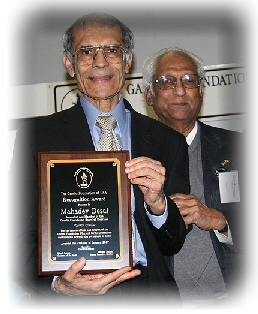
Mr. Mahadev Desai Receiving Gandhi Foundation Award from late Giriraj Rao
I had a virtual conversation with Mr. Mahadev, Desai over the week-end here in Atlanta. He is a prolific Tanzania (Tanganyika) born writer and a freelance journalist of Indian decent. He writes for various Atlanta newspapers including the Atlanta Dunia magazine, Khabar magazine or NRIPULSE newspaper. To read more about Mr. Mahadev’s biography and the numerous accolades he has received over his long career, please click here.

Mr. Mahadev told me in one of his e mails “I left Tanganyika in 1942 when I was nine years old. I have not visited Tanzania since.” I wish Mr. Mahadev could have the opportunity to visit Tanzania and see for himself the contribution of Tanzanian of Indian decent to the economy, education and political system in Tanzania. Dar Es Salaam of 1942 would be quite different from today’s Dar Es Salaam, I can imagine.

In Addition, Mr. Mahadev recently reviewed the inspiring memoirs of J.K.Chande a Tanzanian of Indian descent who was born and raised in Bukene, Tabora, in Tanzania. Such a coincidence, as I myself was born in Mabama, Tabora and was raised both in Tabora and Morogoro.

To read more about the review of Mr. J.K. Chande and his magnificent contribution to Tanzania click here. By the way, the book is called A Knight in Africa: Journey from Bukene. I have ordered a copy for myself from Amazon.com. Anyway, my book just arrived today.

This book is something. If you like reading books about Africa, don’t miss this one. It is an incredible memoir.

The Headline You Won’t See in the Tanzanian Media Today!!!


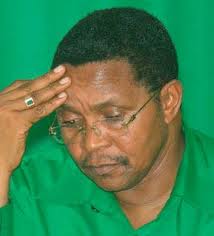
President Jakaya M Kikwete

“The headline you won’t see in the Tanzanian media today, “JK Sack Defense Minister and Army Chief.” And what you will see is JK visits “Munitions Victim in a Hospital”. With photo of His Excellence kissing an injured baby. BUTIAMA TUMEZIKA MENGI.” A quote from- Henry Suffa.

The leadership in Tanzania is very predictable. Meetings will be held over this incident but none of the top people responsible will have a sweat over what happened twice over the course of two years. Nobody will voluntary resign or be sacked over their own incompetence, and/or gross irresponsibility.

What you will hear from these meetings are empty promises of never to happen again, “return to your homes…..the place is very secure now”…..the same words heard two years ago. Did it not happen again just the day before yesterday?!?

It is understandable that terrorist acts are actually pretty rare in this part of the globe except for the 1998 Embassy bombings in Dar Es Salaam and Nairobi, but incompetence, irresponsibility and ignorance are horrifyingly common place.

I will end with this quote I saw on one of the daily news channels here “I guess when we sold them the weapons we forgot to include instruction manuals on how to store ammunitions”. It really cracked me up despite the seriousness of the whole issue

Dar Blasts: Atleast 20 Reported Dead.


Still smoking in Dar

The toll from last night’s blasts at the army amory in Mbagala military base in Dar Es Salaam, Tanzania, is 20 people dead and 184 injured. Similar incident like this one happened in 2009, in which dozens of people were killed and several more were seriously injured.

I guess it is time to start asking questions. Who is reponsible here? And, who dropped the ball twice? Does someone in the ranks need to resign or at-least held accountable? The “it was an accident” excuse is so yesterday and lame. This is how people avoid their responsibilities by blame allah, jesus and/or god. Kazi ya Mungu (god’s will) has nothing to do with repeated and avoidable incidences.

I am Tired of Same Old Stories. Aren’t You?

RWANDA MINISTER RESIGNS OVER “PLAYBOY” PICTURES.


By Charles Onyango Obo

Rwandan Minister Enjoying the Girls!!!
Rwanda’s Minister of Culture and Sports, Joseph Habineza, resigned yesterday after pictures of him in suggestive positions with women were published on the Internet.
There have been a spate of these pictures recently. First, with Tanzania President Jakaya Kikwete playing hanky panky. Then there was that Liberian minister, in his naked magnificence–except that one was published in a newspaper in the country.

Meanwhile, Italian prime minister Silvio Berlusconi, is to be tried for consorting with an underage prostitute, and when she got in trouble later, good old Silvio used his office to spring her from a police jail! That Berlusconi must be an African president in white skin.

Having said that, I think in some of these cases, like Habineza’s, there is too much puritanical hysteria. He is shown dancing with a grown woman, holding her close, then with a larger group of women all squeezing him. At no point is any of them naked.

Well, here is the link, you be the judge:

http://www.leprophete.fr/actualit%C3%A9s-ad/joseph-13-02-11/

Investigating gold


Evan Rubara Speaking in the U.S.
As an investigative journalist in Dar es Salam, Tanzania, Evans Rubara deals mostly with social justices and human rights. He is most passionate about his work with the mining industries in Tanzania. The multinational mining industries use potent cyanide to flush out the gold specks, and even have their own private airstrip to take the gold straight out of the country, he says. Tanzania is soaked with profitable natural resources: diamonds, gold, rubies, and tanzanite which is only found in Tanzania. With all these riches in the soil of their land, why is Tanzania a Third World country?

“It’s not about African pride. It’s about heritage. That’s what we’re fighting for,” Evans Rubara says. The answer lies within Western multinational companies like Barrick Gold Mines, Anglogold Ashanti, and a corrupt government, he says. “Colonial attitude has carried over, like they were the king-makers,” Rubara says. Corporations have re-instilled rule through colonization, he suggests. These companies are looting our country and killing our people, Rubara says. “We do not have a history in Tanzania of fighting with ourselves, but it is coming,” he says. “If we are not careful, we will have a civil war.”

There are many gold mining companies in Tanzania, but Rubara only takes issue with the inhumane. The worst is Canadian-owned company Barrick Gold, Rubara says. Amnesty International accused Barrick of killing 70 miners by burying them alive. The company has denied the claims, but Rubara isn’t satisfied. “I say allegedly because of my journalism demands,” he says, “but personally I know it’s true.”

Natural resources are a nation’s pride; and, when you take this away, you unclothe the nationals of their pride and heritage, Rubara says. “I get pissed off when I talk about mining issues,” Rubara says. “They [mining companies] rape everybody—economically and culturally speaking; they take our wealth to build their own country.”

A voice for the voiceless

When Rubara was 15 years old, he was orphaned, left to care for himself and his two younger brothers. Rubara held several odd jobs so he could send his brothers to school. He taught himself all that he could before getting involved with missionaries who helped send him to school in Kenya. He underwent some journalism training, but got an intensive six-month training on investigative journalism while working for an Tanzanian investigative paper. “I became a journalist to speak on behalf of the voiceless,” he says.

Rubara says not much has changed in the policies of Tanzania since he began his investigations. He admits, however, a lot of the cases he reported on are either in court or the people at fault have stopped. The article that landed Rubara in jail was picked up by the Legal and Human Rights Centre; it dealt with the illegal eviction of six villages for a rich Arabian investor looking to start a farm. Land is the only equity Tanzanians have; when it is taken away there is nothing left to do but to beg, Rubara says. “It’s not about African pride,” Rubara says. “It’s about heritage. That’s what we’re fighting for. Good heritage is when all is equal in the face of the law.”

A few weeks ago an executive of Barrick approached Rubara at a seminar and said, “Evans, I want you to stop talking,” according to Rubara. Rubara has been thrown into custody, received death threats, and been beaten for his investigative reporting, but still says he will never stop. “If the liberation of my country will come from my death, I would rather not see results than die begging on my knees,” Rubara says. Tanzanian land is being raped and plundered while the majority in Tanzania are unemployed, Rubara says.

Due to extremely high unemployment, prostitution is prevalent for men and women, Rubara says. This creates a dangerous situation for the rapid spread of HIV/AIDS. In 2005, Tanzania had the highest HIV/AIDS prevalence rates in East Africa, Rubara says. “[The unemployed] have nothing else to do, they are hopeless,” Rubara says. “They are waiting for their death

To read more stories about Evans Rubara go to AfricaJournalists.org

Tanzania Form IV 2010 Results: More of the Same.


Continue reading “Tanzania Form IV 2010 Results: More of the Same.”

Busara Music Festival in Stone Town, Zanzibar.


Audience Enjoying The Festival.

This is a once a year event that brings the best of African artists from across the continent at the Old Fort, in Stone Town, Zanzibar. This year’s festival will start on February 9th and commencing on February 13th, 2012.

The festival’s slogan for this year “african music under the african sun and skies” will have more than 40 musical bands from accross the continent. The festivity this year will also include parades, other nicer and more enhanced entertainments in Stone Town.

If you live in the east African countries (Tanzania, Kenya, Uganda, Burundi, Rwanda, Zambia, Malawi, and Mozambique) or planning to visit the region around those dates make all efforts not to miss this incredible opportunity to listen to the great sounds and voices that Afrika has to offer.
Check the life-in-dar.com blog for more details on the event or you can click here to access the Busara Music Festival official website.

Fancy Nkuhi, New Manyoni D.C….Fresh from College!!!


The New D.C., Manyoni District, Singida.Fancy Nkuhi has been appointed to be the new D.C. for the Manyoni District in the Singida region, Tanzania. It’s great to see the youth rubbing elbows with the old in the Tanzanian leadership positions.

I am pleased to see a young woman taking a public position, hopefully the youth in Tanzania will have some hope for a great future. What are your views in the president’s decision to appoint a fresh from college lady to lead Manyoni District?

Is this freedom of expression or something else?


The definition of freedom of expression goes like “ The right to express one’s ideas and opinions freely through speech, writing, and other forms of communication but without deliberately causing harm to others’ character and/or reputation by false or misleading statements. Freedom of press is part of freedom of expression’’.

But, do some people go overboard with their interpretation of freedom of expression? Look at the picture below and don’t forget to let me know what you think?

Drinking Safari In Tanzania


http://www.hulu.com/embed/NuQLf6jEKTMQPO1_EI-h2w

Cell phones could help fill the technology gap in Tanzania classrooms.


By Shaaban Fundi,

I was in a meeting yesterday and what came up in the agenda? Cell phone use in the classrooms. I was like, are these people out of their minds or what? I have heard a lot of ideas tossed up in these meetings before but none had made my mind to start racing and thinking like this one. The potential benefits are vast and the cost of implementation would be very low. After a careful analysis of the pros and cons of having cell phone as technology support for the best practice delivery of instruction, I came to the conclusion that it might as well be a very good idea indeed.

http://www.youtube-nocookie.com/v/zhAH6nncCKw?fs=1&hl=en_US&rel=0

Have you thought about what a cell phone (smart phones) can do these days? My goodness!! Other than the obvious uses of cell phones like communication during emergency situation, cell phones are more like computers, you can search the World Wide Web to complement course instruction, you can use them for gizmos, tests, instructional videos, quizzes, polling purposes and the potential usage are limitless.

In addition, cell phones are much cheaper comparing to computers—for countries like Tanzania this would be very cost effective. It could potentially be a game changer in terms of technology catch up for Tanzania. It could eliminate the need to go through the computer age to catch up with other nations. Instead of buying computers for each school, you can cut the cost tremendously by buying cell phone mobile labs for each school, cutting the cost for shipping huge computers and the cell phones would provide the same experience as computers.

There are a few pitfalls of cell phone use in classrooms. Some people say it might create an environment that would be conducive for students to cheat during testing. For example, students could easily Google for answers while testing. Classroom management especially for issues like texting, sexting, and cyber bulling can potentially be difficult to manage for the seasoned and the less seasoned educators alike.

What do you think about adopting cell phone technology in the Tanzanian education system? Will it work and save money that the government does not have? What do you foresee to be the main challenges? Opportunities?

Till then, Take care!!!

When Is Summer Coming Back?


When is summer coming back? My daughter kept asking all week long. Yes, It is winter time and I am definitely cool with that? Mmmh!!! I guess not. It is cold, snowing now and then and definitely nothing much to do outdoors. The whole of last week, we were snowed in, the roads were first covered with snow, then ice and there was no way you could drive and/or walk anywhere. It sounds terrible doesn’t it?

I feel you Pili. I, myself thought moving from Baltimore, Maryland to Atlanta, Georgia, the south, I will be able to run away from this KIND OF WEATHER but the snow keeps following me. Next time I will move all the way to Florida…follow me then, SNOW!!!!

Believe me the first two days were fun…no work, yeah, sledding, building a snow man and all that cool winter stuff. But after those initial two days, the whole perspective changes and it starts to dawn on you.

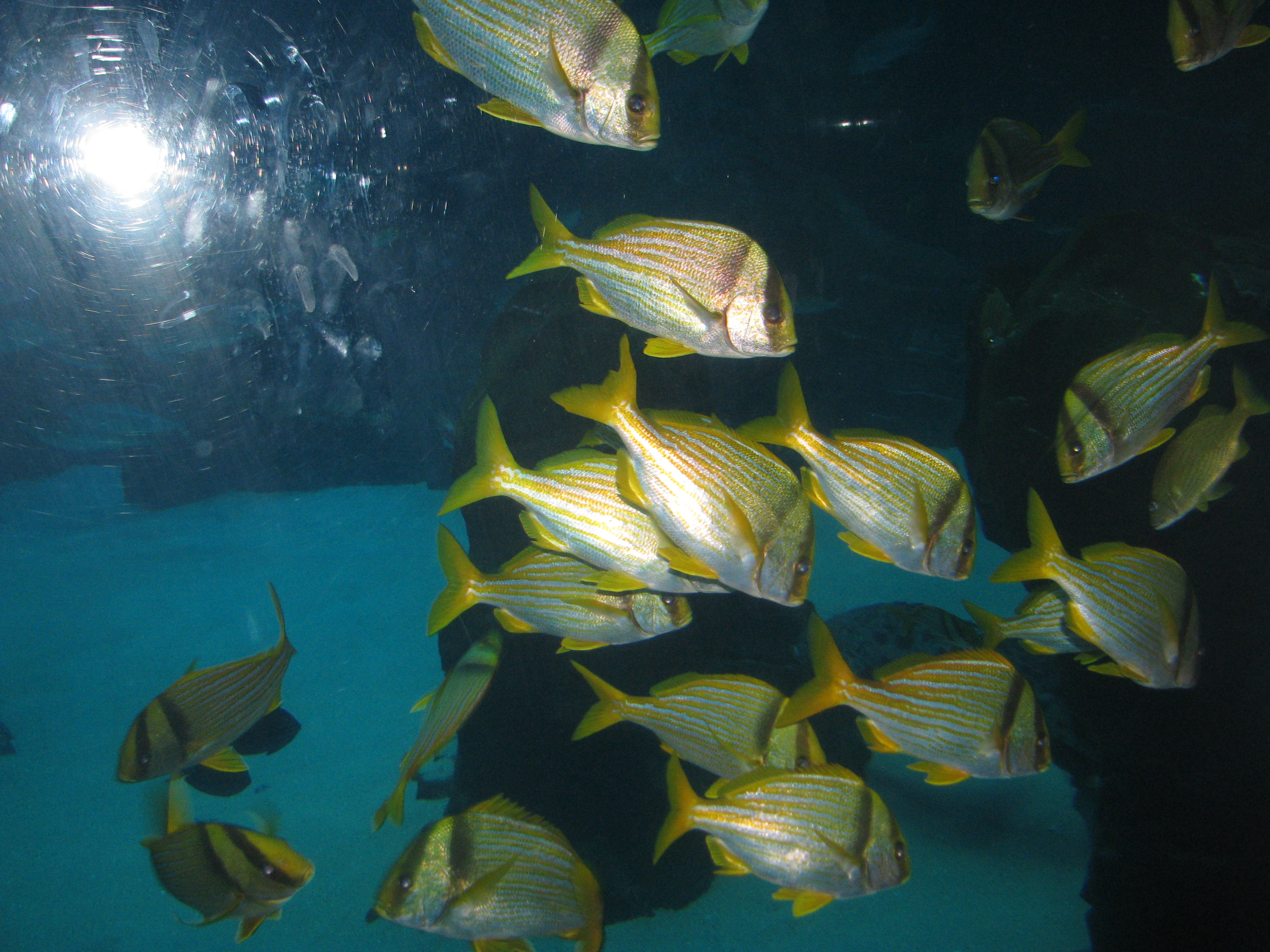
To brighten the winter mess, I took my daughter to the Georgia Aquarium today. How fun it was to see all the tropical fish again. It reminded me of all the good times I spent in the scotching African hot sun diving 2-3 times a day in Mtwara Bay, Mnazi Bay, Kilwa, Mafia Island and Nungwi. It was so cool to see the fishes again.

Here are a few pictures from the GA aquarium to warm you up for those in the northern hemisphere. Those in the tropics, just enjoy the pictures….there is no way I can make the January HEAT disappear FOR YOU!!!

Happy Birthday Martin Luther King, Jr.


By Shaaban Fundi,
As I seat here reflecting on the life of the great African American Civil Rights leader Dr. Martin Luther King, Jr., I cannot stop wondering how righteous and selfless this guy was. At the tender age of thirty-five, Martin Luther King, Jr., was the youngest man to have received the Nobel Peace Prize. He turned over the prize money of $54,123 to the furtherance of the civil rights movement. He accomplished so much in his short life than many people who have had the opportunity to become centenarians.

This weekend, people of all colors across America and beyond are celebrating the life and work of this incredible worlds’ figure. I was not born or raised in America, but I am benefiting from the work MLK and other civil rights leaders did and died for. I appreciate all you have done to stop (reduce) segregation in America and for that I will always be grateful. Thank you!!!!

There is still a lot of work that needs to be done in the post civil rights America. In black communities across many cities in America i.e. Baltimore, Philadelphia, Washington DC, Detroit Los Angeles and many other, life for black people is unbearable. There is anger and frustration that boils beneath the surface in some of these communities that manifest it-self through violence, gangs, school drop-outs, incarcerations and drugs.

There are also many positive things that came out of the civil rights movement such the increased participation of blacks and other minority groups in politics, in the movie industry, and in many aspects of the American life.

Truly Tanzanian


Author: Unknown.

Three contractors were bidding to fix a broken bridge at the Ministry of Transportation in
Dar Es Salaam, Tanzania. One was a Kenyan; another was a Tanzanian and the
third, from Uganda.

They went with a Tanzanian Ministry official to examine the bridge.

The Kenyan contractor took out a tape measure and did some measuring,
then worked some figures with a pencil. “Well”, he said, I figure the job
will run to about $90,000. $40000 for materials, $40000 for my team and $10000
profit for me.

The Ugandan contractor also did some measuring and figuring, and then he said, I
can do this job for $70000. $30000 for materials, $30000 for my team and $10000
profit for me.

The Tanzanian contractor didn’t measure or figure anything, but he leaned over to the
ministry official and whispered, $270,000.

The official said, incredulous, You didn’t even take any measurements like the other
guys! How did you come up with such a high figure?

The Tanzanian contractor whispered back, $100000 for me, $100000 for you, and
we hire the guy from Uganda to fix the bridge.

“Done!” replied the government official.

Rufiji Basin for Rent….in Tanzania.


By Shaaban Fundi,

Click on the link below to watch Mr. Aloyce Masanja’s Interview on this issue.

http://i.cdn.turner.com/cnn/.element/apps/cvp/3.0/swf/cnn_416x234_embed.swf?context=embed&videoId=international/2010/12/24/mpa.facetime.aloyce.masanja.cnn

The leasing of the Rufiji Basin to South Koreans on the surface makes perfect sense. It is a win-win situation. The South Koreans brings in agricultural machinery, capital and great technology to improve rice farming and boom….high rice yield and Tanzania says good-bye to hunger and food insecurity.

Not so fast. We have heard of these Public-Private-Partnership Adventures or what I call African government wild-goose chases. It is very easy to say, quoting the Rufiji Basin Director Mr. Aloyce Masanja, ‘’the Rufiji Basin Land is an idle and unused land” if you don’t live and are not from that area. The last time I travelled down to Mtwara, what I saw in the Rufiji basin was nothing close to being idle and/or unused. I saw a lot of people who called the Rufiji basin their home and they used the land to promote their own interests.

Some expert in rural development argues that the main issue to be considered is whether rural dwellers in Tanzania can effectively and efficiently leverage on the productive capabilities of the arable land at their disposal. If the answer is no then clearly it is a waste of an extremely valuable productive resource to leave it fallow or (at best) productive on a subsistence scale.

In addition, Tanzania import considerable quantities of foods stuffs (both raw produce and processed foods) as a result of the underdevelopment of its agricultural and industrial sectors. Therefore, the introduction of this sort of Public Private Partnership some experts in developmental issues argue will have several positive effects to Tanzania including:
1.To boost employment opportunities for rural dwellers
2. Encourage steady Inflows of Foreign Direct Investment (FDI) into the economy (not just agricultural but also food processing.
3. Facilitate the transfer of modern productive techniques and technologies
4. Lead to the transfer of Skills and knowledge which in turn will lead to increases in the earning capacity of rural dwellers and thus positively impact on their standard of living
5. Contribute to towards infrastructural development of rural areas as amenities such as bore holes, pipe borne water, electrification, access roads.
6. Potentially lead to more partnerships in other areas of the economy.

As much as I agree with this outlook, I have my own reservations. It is my belief that PPP are a great thing only if properly executed. The locals should have a say on what is going to be happening around them. It will be a huge change for them from being owners to renters or workers. This could potentially be very explosive source of conflict if the people on the land now are not thoroughly involved in the decision process and in understanding the fact that, when everything goes they will be trespassers in what used to be theirs.

Several questions beg for answers in this arrangement. What will happen to the local Rufijians? Where are they going to move to? What kinds of compensations will they receive? What on –going support will they receive? The marine and environmental scientist in me will also wonder to what will happen to the ecological system down stream the Rufiji basin and into the Rufiji delta once this very intensive agriculture is in operation? There are many other questions in this issue that needs to be addressed before the PPP can proceed.

Make sure that what happened to the Maasai in Loliondo in July 4th 2010, does not repeat itself in the Rufiji Basin. It would be very helpful if the officials involved in this put the contract details out for public consumption and comments.

From Arusha Killings…. to Mwangosi!


By Shaaban Fundi,

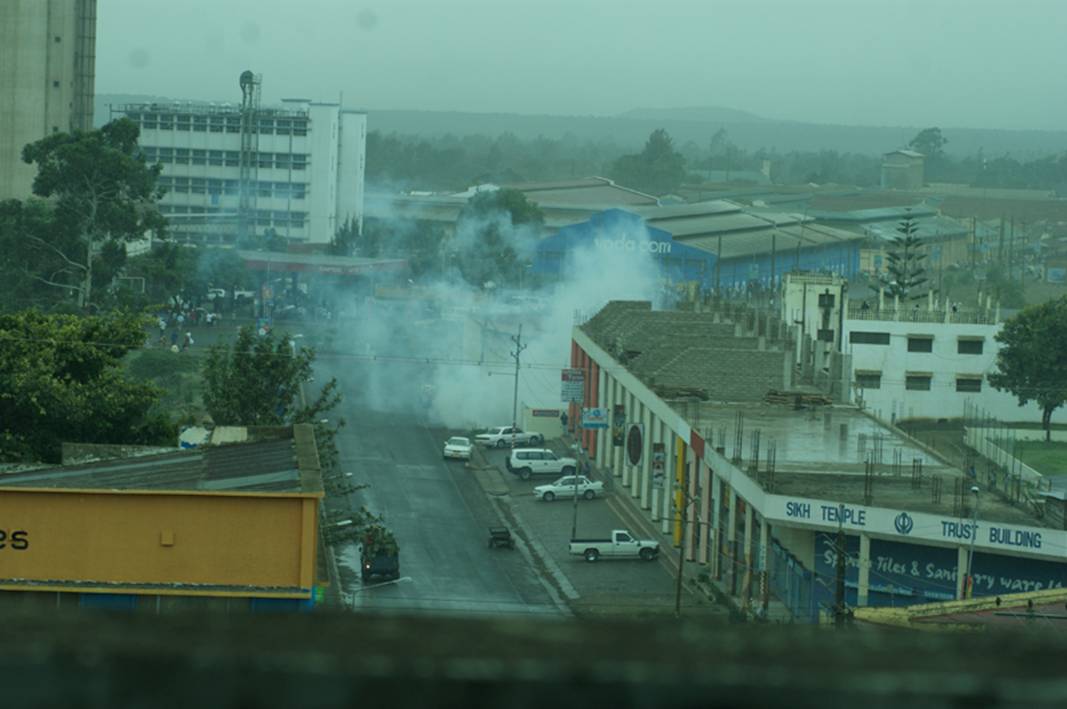
Arusha smoking................Is this what amani has turned into?The news that came out of the Town of Arusha in Tanzania last year was very unfortunate. The Tanzanian police force and its Field Force Unit (FFU) have been using excessive force for years. In the late 1990 a score of innocent citizens were beaten and killed with live bullets in Magomeni, Dar-Es-Salaam. In the early 2000s, several incidence of police brutality and killings of innocent citizens were circulated through youtube videos and in international news channels all over the world from an election that had gone sour in Zanzibar. Last October, several innocent villagers were killed in Tabora, Arusha, Morogoro, Songea and now Iringa.

This shows a pattern of orchestrated events and it is not isolated as the President want us to believe.

I am calling those killed innocent citizens just for the mere fact that they were not convicted beyond any reasonable doubt in any court of law. Demonstrators of any kind should be afforded their day in court to prove their innocence without being shot at as criminals. The main job of the police force is to protect citizens and their properties, to arrest individuals and hand them to the court system to prosecute them. Not to render justice.

It is due time for a new constitution, a constitution that will allow the balance of power….giving individual citizens the right to sue the government when they are wrongly killed, wrongly removed from their land and wrongly maltreated by their own government. Tanzania has in the last 20 years been pursuing capitalist economic policies, therefore the constitution need to reflect those policies as well. We cannot continue to be a socialist country, while all the economic sectors prescribe to a capitalist ideology. Let’s just call a spade a spade and pay dues to the wrongfully killed or injured.

The grabbing of land in the Rufiji Basin by the Tanzanian and the South Koreans government sets a horrible precedence. The so-called idle land, unused land by the Tanzania official Mr. Masanja. This land will come back to haunt the people involved. At-least be truthful to your own people when entering these kinds of joint ventures….so that they can be rightfully compensated and to avoid future land conflicts.

I will look at the land issue in more details in my next piece……..please come back and leave a comment.

Below you can read Kitwete’s regret statement over what happened in Arusha.
By the NewsTimeAfrica.com

Tanzanian President Jakaya Kikwete has expressed deep regret over recent violence in the country’s northern town of Arusha where four people were killed by police fire during an opposition rally.
”This is very unfortunate. I believe it is an isolated case and the government will make sure that harmony is restored,” Kikwete told ambassadors and heads of international organisations based in Dar es Salaam late Friday.
”We will make sure such incidents never happen again. This is the first and should be the last of its kind to happen in our country,” he said at a New Year’s party he hosted for the envoys at State House.
On Wednesday several leaders and supporters of the main opposition party, CHADEMA, were arrested after an anti-government protest and demonstration. On the following day they were charged with unlawful assembly before a resident magistrate’s court. They were released on bail. ”While pursuing the law we will not be oblivious of other avenues to restore harmony,” Kikwete said.
Kikwete reiterated that October 31 elections had been generally peaceful. ”Democracy is taking root and becoming more vibrant though still fragile,” he said, adding: “I am delighted with the election in Zanzibar and its outcome. ”Last year’s polls were smooth. Zanzibar is calm and peaceful.”
Kikwete also expressed concern over the situation in Madagascar, Somalia and Ivory Coast. ”I hope President Laurent Gbagbo will see reason and heed appeals by the UN, African Union, African leaders as well as other world leaders to respect the will of the people (Ivorians),” he said. He further talked about Southern Sudan, saying the forthcoming referendum will determine their destiny and that of Sudan as a whole.

WikiLeaks Cables: Tanzanian Official Investigating BAE ‘fears for his life’


WikiLeaks cables: Tanzania official investigating BAE ‘fears for his
life’

Prosecutor Edward Hoseah voiced safety fears over inquiry into ‘dirty
deal’ involving sale of radar system to government

By: David Leigh
Monday December 20 2010
The Guardian
http://www.guardian.co.uk/world/2010/dec/19/wikileaks-cables-tanzania-bae-fears
The Tanzanian prosecutor investigating worldwide misconduct by BAE,
Britain’s biggest arms company, confided to US diplomats that “his
life may be in danger” and senior politicians in his small African
country were “untouchable”.
A leaked account [http://www.guardian.co.uk/world/us-embassy-cables-
documents/116436
” title=”] of what the head of Tanzania’s anti-
corruption bureau, Edward Hoseah, termed the “dirty deal” by BAE to
sell Tanzania an overpriced radar system, is revealed in the US
embassy cables.
BAE is to appear in court in London tomorrow, when their system of
making secret payments to secure arms contracts, exposed by the
Guardian, will be officially detailed for the first time.
Every individual involved in the BAE scandal in Britain and Tanzania
has escaped prosecution.
But the arms giant agreed with the UK Serious Fraud Office (SFO) to
pay ?30m in corporate reparations and fines, provided the word
“corruption” did not appear on the indictment. A corruption conviction
would debar the company from EU contracts.
The former overseas development secretary, Clare Short, said at the
time: “It was always obvious that this useless project was corrupt.”
Hoseah met a US diplomat, Purnell Delly, in Dar es Salaam in July
2007, and claimed (unrealistically it turned out) he would be able to
prosecute guilty individuals in the BAE case. The US cable reports:
“He called the deal ‘dirty’ and said it involved officials from the
Ministry of Defence and at least one or two senior level military
officers.”
Hoseah spoke gloomily about the prospects for Tanzania’s anti-
corruption struggle and his original hopes to prosecute the “big fish”
of corruption.
“He told us point blank … that cases against the prime minister or
the president were off the table …” The cable then details
allegations against former leaders and their inner circles, saying
they would be “untouchable”.

“He noted that President Kikwete does not appear comfortable letting
the law handle corruption cases which might implicate top-level
officials.” The cable then says Kwitke “does not want to set a
precedent” by going after any of his predecessors.

There were “widespread rumours of corruption within the Bank of
Tanzania”, Hoseah said, and the island region of Zanzibar was also
“rife with corruption”.

The diplomat noted: “Hoseah reiterated concern for his personal
security … saying he believed his life may be in danger … He had
received threatening text messages and letters and was reminded every
day that he was fighting the ‘rich and powerful’.”

He might have to flee the country. He warned: “He said quietly: ‘If
you attend meetings of the inner-circle, people want you to feel as if
they have put you there. If they see that you are uncompromising,
there is a risk.’ ”

The US embassy noted in a “cynical” aside, that probably the only
reason Hoseah felt obliged to attempt a BAE prosecution was because
the SFO had presented him with “a fully developed case file, brimming
with detailed evidence”.

Today’s court appearance by BAE is the culmination of lengthy attempts
to bring the company to justice since the Guardian exposed its
worldwide secret payment system.

The prime minister at the time, Tony Blair, intervened in 2006 to halt
an SFO investigation into payments to members of the Saudi royal
family.

The US department of justice has had more success than the SFO,
forcing BAE to pay $400m (?260m) in penalties under the US Foreign
Corrupt Practices Act.

?28m radar deal ‘stank’
Tanzania, on Africa’s east coast, is one of the poorest states in the
world, formerly controlled in turn by Arab slavers, German colonists
and the British.

At the time of the radar deal, life expectancy was 45.

Tanzania was forced to apply for debt relief from the west and was
heavily dependent on aid. It is ravaged by HIV/Aids and its GDP per
head is just $723 (465).

President Benjamin Mkapa, whose regime did the deal, was succeeded in
2004 by his political colleague Jakaya Kikwete.

Tanzania, which has no air force, bought the military air defence
radar from BAE in 2001 for ?28m.

It was claimed the Commander system, which was portable and festooned
with anti-jamming devices, could also be used for civilian air traffic
control.

The country borrowed the cost from Barclays, adding to its debt
burden. Both the World Bank [http://www.worldbank.org/” title=”World
Bank] and the International Civil Aviation Organisation [http://
www.icao.int/” title=”International Civil Aviation Organisation]
called the purchase unnecessary and overpriced.

In London, the then development secretary, Clare Short, temporarily
blocked aid payments in protest. “It stank,” she now says of the sale.

She urged an export licence be withheld, but was overruled by Tony
Blair himself. Robin Cook, then foreign secretary, recorded bitterly
in his diary that Dick Evans [of BAE] seemed to have “the key to the
garden door of No 10 [Downing St]”.

In January 2007 the Guardian disclosed that BAE had used an offshore
front company, Red Diamond [http://www.guardian.co.uk/world/2007/jan/
15/bae.armstrade?INTCMP=SRCH
” title=”Guardian disclosed that BAE had
used an offshore front company, Red Diamond], to secretly pay ?8.4m,
30% of the radar’s ostensible price, into a Swiss account.
The account was controlled by Tanzanian middleman Sailesh Vithlani.
His “consultancy” agreement was, it is alleged, formally signed off in
London by Evans.
guardian.co.uk Copyright (c) Guardian News and Media Limited. 2010

Will Uranium Mining Be a Natural Resource or Curse to Tanzania?


Dr. Shaaban Fundi

Will Uranium Mining Be a Natural Resource or Curse to Tanzania?

Tanzania will soon be joining African countries like Namibia, Niger, and Malawi as uranium exporters if proposed uranium mining projects are approved by the government. Short term benefits of uranium mining include job opportunities for thousands of Tanzanians and tax income for the Tanzanian government. These benefits cannot be ignored. However, the long-term health and environmental consequences associated with uranium and all other mining activities also need to be seriously evaluated.

One important environmental consequence of uranium mining is that the process uses enormous amounts of water. A recent estimate by a mining company in Namibia, Canadian Forsys Metal Company, suggested that its mining operation utilizes 1 million liters of water per day. One of the proposed areas for Uranium mining in Tanzania is in Manyoni District in Singida region. Water is already a scarce commodity in this region and it would be very unwise to let one company consume so much water at the expense of current inhabitants.

In addition to using enormous amount of water, uranium mining relies on open-pit operations which leave huge craters once mining activities have ceased. The soils in the remaining craters are usually contaminated with radioactive materials and therefore the soil become useless for many years in the future.Furthermore, radioactive dust particles can travel by wind to larger areas and affect the health of communities surrounding the mining areas. It has been documented that exposure to even relatively low levels of radiation over a long period of time can be extremely harmful to the health of workers and communities living around uranium mines. What plans are currently in place to ensure that the workers and people already living in these areas are protected and will be taken care of if this radioactive contamination should occur?

Current estimates suggest that Tanzania has about 53.9 million pounds of uranium oxide deposits and at the current price of $41 per pound, these deposits are worth an estimated $2.2 billion. Despite the estimated large sum of dollars, Tanzania has no control over uranium pricing variability on the world market. Demand and supply does. Yet very few countries can actually use uranium for energy generation and bomb creation due to its high cost of operation, need for skilled personnel, and international restrictions on development of nuclear programs. If global demand for uranium were to decrease, the estimated value of these deposits would also decrease. Thus, it is unclear how much revenue uranium mining would really bring to Tanzania.

Furthermore, the Tanzania Mining Act of 1998 gives a disproportionate amount of revenue benefits to mining companies. This has meant that the average Tanzanian citizen has seen limited benefit from current mining projects while the vast majority of profits go to mining companies based in other countries.  Take gold, for example. Tanzania is the fourth largest producer of gold in sub-Saharan Africa behind Ghana and South Africa. Yet Tanzanians have failed to benefit from the gold mining ventures in the country. What assurances do Tanzanians have that it will be different for the proposed uranium mining ventures? Given the serious environmental and health impact associated with uranium mining, Tanzania needs a Mining Act that will address the health and environmental concern of its citizens and that will ensure local communities also profit from mining activities. Without a comprehensive legislative framework to deal with all the implications of uranium mining, Tanzania opens itself up to abuse by companies who pursue an agenda of short-term profits and pay very little attention to the long-term health and environmental consequences for the host country and its citizens. Tanzania needs to develop a legislative framework and monitoring program to ensure these companies will protect the welfare of their workers and the environment before allowing mining to start. These tasks require a high level of technical competence and strong political will.

The decision whether or not to proceed with uranium mining in Tanzania should be discussed thoroughly with all stakeholders including the mining companies, the government and the local people residing in the proposed mining areas and in the transit routes. The locals should be told about the potential benefits and consequence of the proposed mining including the increased risk for developing cancer associated with living or working in uranium mining areas. Who will be responsible for their health once they start to develop cancer related illnesses? The water issues also need to be looked at carefully. How can the community and the uranium mines share the water resources so that there is enough water for everyone? How can the community share in the revenue generated by the uranium mines? And finally, who will be responsible to remediate the contaminated soils in the crater that will remain after mining operation ceases? These issues need to be decided before the Tanzanian government approves uranium mining in the country.

Neglecting the poor population will come at a price.


The fact that I am a Tanzanian at heart is something that I value immensely. I do feel that we Tanzanians have been blessed with the openness to discuss contentious issues pertaining to our personal and nation existence with little to no violence. This type of tolerance does not exist in a lot of our neighboring friends and their countries.  It is with this openness and tolerance; I would like to discuss the emerging middle class issue that is currently not openly discussed by many of us young Tanzanians.

Many of young people and some of the well to do old folks think that we are where we are in our careers because of hard work only. Often times we forget to think that the people our parents or relatives knew and/or know and some that we don’t know at all have something to do with it in some ways.

You may ask: What about the sleepless nights from secondary schools through college, does all that not count? Well, they actually do. But so do the hard work and back-breaking work the peasants and most of the poor in our society are doing everyday and getting mostly nothing tangible from their labor.

I have had a flashback recently about the words of wisdom by Baba wa Taifa that used to be ubiquitously displayed in most secondary school dining halls across the country in the 70s and 80s. The words went like “Those who received this privilege have a duty to repay the sacrifice others have made for them. They are like a man or a woman from a remote village……..and it goes on and on to end with …they are betraying our nation” … Do you remember it??.

It is not a coincidence that the political families and the civil servants families are where they are today and the rest are nobody. If you know anything about the theories of social networking you will agree with me. The so-called middle class we are in is hugely a product of our connections as it is of our hard work. Don’t get me wrong, we do need a middle class, a middle class based on the content of our character rather than based on the people we know. The relatively privileged groups who are increasingly seeing themselves and are seen by others as the driver of change whatever that change maybe are not going to exclusively change the status quo of poverty in Tanzania.

We as Tanzanians need to seriously think about evening out the playing field such that a peasant and his/her children can be able to compete with people in the elite and civil servants groups, like it used to be. The peasant group work sunrise to sunset, hard and back-breaking work every day with no vacations, no week ends and very little return from their labor. The fact that they are not represented at the decision table makes it harder for their grievances to be heard and adequately addressed. We make decisions for them without a thorough understanding of their problems and needs. We need their representation at the decision table to create solutions to their unique set of problems. As our policies toward their problems seem to be detached and/or not care enough about their plights any longer.

Kilimo Kwanza is a step in the right direction. We need to embrace policies like Kilimo Kwanza i.e. having Bwana Shambas in the villages, tractor lending stations, and subsidized agricultural inputs to help our peasants’ population produce enough to feed themselves and to generate income. To provide quality education for all children so that they will be able to progressively change their status quo and competently compete with the elite children who go to private/international schools and to colleges abroad. To create equitable systems for buying agricultural produce at competitive prices. Prices that reflect the actual cost of producing the products and that leave the farmers with a profit to invest in farm inputs for the following years. Maybe we can go even further to allow for policies that will facilitate the long-awaited needs for Wakulima to have title deeds to their land and use it to borrow capital to advance agriculture in Tanzania.

These are the right policies in my humble opinion that we need to embrace and put forth to address the fundamental issues of inequity in our society. Inequalities in education, health care, income, power, water na mengine mengi.

The middle class that is currently being promoted and reproducing itself everywhere is entirely based on who knows who and in my views will not uplift the nation and our ‘poor’ people but rather it will uplift itself narrowly and exclusively.

My worries are that many people in the middle class we have today have forgotten those words of wisdom by Mwalimu Nyerere and feels as though they don’t owe anybody for their successes and fortunes. This in itself is entirely not true, because most if not all of us went to school on the shoulders of the Tanzanians peasants agricultural exports based market economy.  As the gap between the haves and have not continue to increase, I am afraid the poor in our society will no longer remain silent as they have been for the past 49 empty promise filled years. The shangingis ”that you feel like you earned by your hard work and Ujasilimali” will be nothing when they finally come asking for a piece of their long-awaited nation’s pie.