Dar Blasts: Atleast 20 Reported Dead.


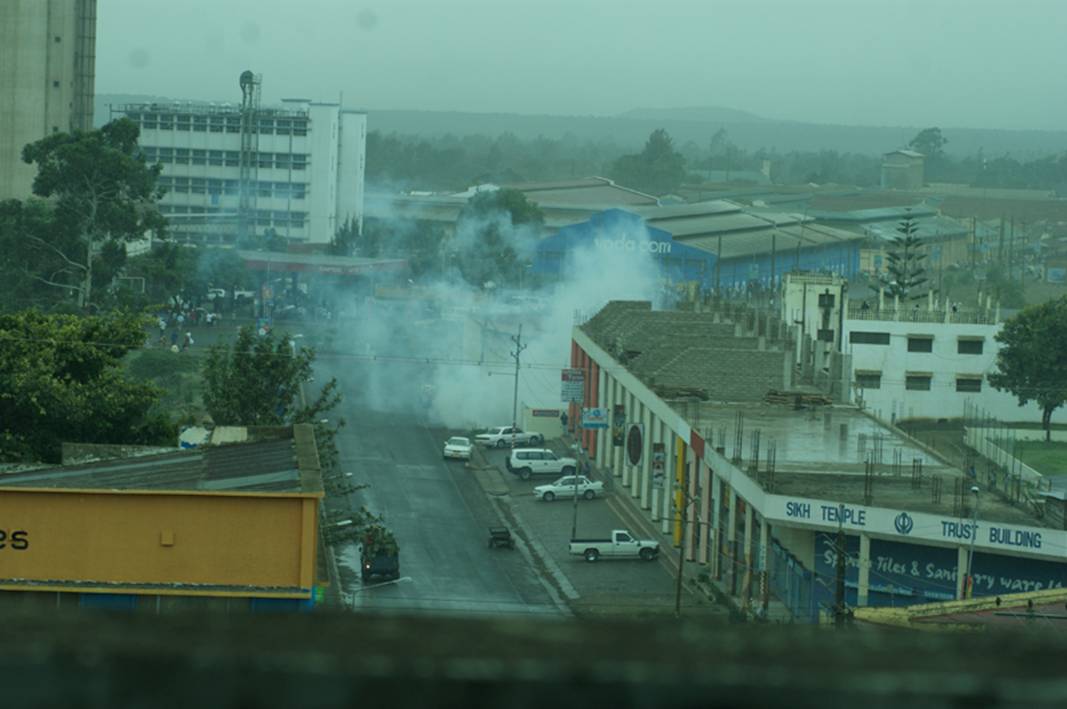
Still smoking in Dar

The toll from last night’s blasts at the army amory in Mbagala military base in Dar Es Salaam, Tanzania, is 20 people dead and 184 injured. Similar incident like this one happened in 2009, in which dozens of people were killed and several more were seriously injured.

I guess it is time to start asking questions. Who is reponsible here? And, who dropped the ball twice? Does someone in the ranks need to resign or at-least held accountable? The “it was an accident” excuse is so yesterday and lame. This is how people avoid their responsibilities by blame allah, jesus and/or god. Kazi ya Mungu (god’s will) has nothing to do with repeated and avoidable incidences.

I am Tired of Same Old Stories. Aren’t You?

Dar Bomb Explosion Picture


Click the link below to see a pic of exploding bombs by cnn ireport from Dar Es Salaam, Tanzania. If you are in Dar don’t hesitate to share your experience here even in Swahili. We would like to hear first hand account from people living in Dar and especially those close to Gongolamboto and other closest spots to the bomb explosions. I hope everyone survived these never ending explosion in that part of town.

http://ireport.cnn.com/themes/custom/resources/cvplayer/ireport_embed.swf?player=embed&configPath=http://ireport.cnn.com&playlistId=556758&contentId=556758/0&

RWANDA MINISTER RESIGNS OVER “PLAYBOY” PICTURES.


By Charles Onyango Obo

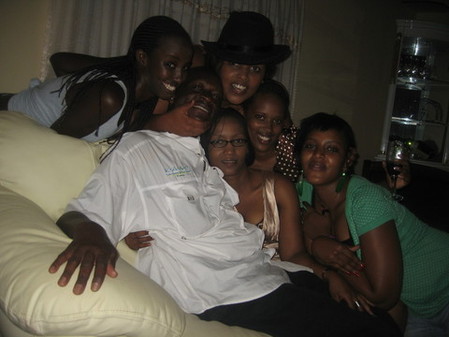
Rwandan Minister Enjoying the Girls!!!
Rwanda’s Minister of Culture and Sports, Joseph Habineza, resigned yesterday after pictures of him in suggestive positions with women were published on the Internet.
There have been a spate of these pictures recently. First, with Tanzania President Jakaya Kikwete playing hanky panky. Then there was that Liberian minister, in his naked magnificence–except that one was published in a newspaper in the country.

Meanwhile, Italian prime minister Silvio Berlusconi, is to be tried for consorting with an underage prostitute, and when she got in trouble later, good old Silvio used his office to spring her from a police jail! That Berlusconi must be an African president in white skin.

Having said that, I think in some of these cases, like Habineza’s, there is too much puritanical hysteria. He is shown dancing with a grown woman, holding her close, then with a larger group of women all squeezing him. At no point is any of them naked.

Well, here is the link, you be the judge:

http://www.leprophete.fr/actualit%C3%A9s-ad/joseph-13-02-11/

Investigating gold


Evan Rubara Speaking in the U.S.
As an investigative journalist in Dar es Salam, Tanzania, Evans Rubara deals mostly with social justices and human rights. He is most passionate about his work with the mining industries in Tanzania. The multinational mining industries use potent cyanide to flush out the gold specks, and even have their own private airstrip to take the gold straight out of the country, he says. Tanzania is soaked with profitable natural resources: diamonds, gold, rubies, and tanzanite which is only found in Tanzania. With all these riches in the soil of their land, why is Tanzania a Third World country?

“It’s not about African pride. It’s about heritage. That’s what we’re fighting for,” Evans Rubara says. The answer lies within Western multinational companies like Barrick Gold Mines, Anglogold Ashanti, and a corrupt government, he says. “Colonial attitude has carried over, like they were the king-makers,” Rubara says. Corporations have re-instilled rule through colonization, he suggests. These companies are looting our country and killing our people, Rubara says. “We do not have a history in Tanzania of fighting with ourselves, but it is coming,” he says. “If we are not careful, we will have a civil war.”

There are many gold mining companies in Tanzania, but Rubara only takes issue with the inhumane. The worst is Canadian-owned company Barrick Gold, Rubara says. Amnesty International accused Barrick of killing 70 miners by burying them alive. The company has denied the claims, but Rubara isn’t satisfied. “I say allegedly because of my journalism demands,” he says, “but personally I know it’s true.”

Natural resources are a nation’s pride; and, when you take this away, you unclothe the nationals of their pride and heritage, Rubara says. “I get pissed off when I talk about mining issues,” Rubara says. “They [mining companies] rape everybody—economically and culturally speaking; they take our wealth to build their own country.”

A voice for the voiceless

When Rubara was 15 years old, he was orphaned, left to care for himself and his two younger brothers. Rubara held several odd jobs so he could send his brothers to school. He taught himself all that he could before getting involved with missionaries who helped send him to school in Kenya. He underwent some journalism training, but got an intensive six-month training on investigative journalism while working for an Tanzanian investigative paper. “I became a journalist to speak on behalf of the voiceless,” he says.

Rubara says not much has changed in the policies of Tanzania since he began his investigations. He admits, however, a lot of the cases he reported on are either in court or the people at fault have stopped. The article that landed Rubara in jail was picked up by the Legal and Human Rights Centre; it dealt with the illegal eviction of six villages for a rich Arabian investor looking to start a farm. Land is the only equity Tanzanians have; when it is taken away there is nothing left to do but to beg, Rubara says. “It’s not about African pride,” Rubara says. “It’s about heritage. That’s what we’re fighting for. Good heritage is when all is equal in the face of the law.”

A few weeks ago an executive of Barrick approached Rubara at a seminar and said, “Evans, I want you to stop talking,” according to Rubara. Rubara has been thrown into custody, received death threats, and been beaten for his investigative reporting, but still says he will never stop. “If the liberation of my country will come from my death, I would rather not see results than die begging on my knees,” Rubara says. Tanzanian land is being raped and plundered while the majority in Tanzania are unemployed, Rubara says.

Due to extremely high unemployment, prostitution is prevalent for men and women, Rubara says. This creates a dangerous situation for the rapid spread of HIV/AIDS. In 2005, Tanzania had the highest HIV/AIDS prevalence rates in East Africa, Rubara says. “[The unemployed] have nothing else to do, they are hopeless,” Rubara says. “They are waiting for their death

To read more stories about Evans Rubara go to AfricaJournalists.org

Tanzania Form IV 2010 Results: More of the Same.


Continue reading “Tanzania Form IV 2010 Results: More of the Same.”

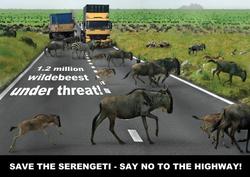
Kikwete Did It Again: Serengeti Road gets a go ahead!!


Serengeti High Way
I am not going to discuss the pros and cons of the recently approved road that will cut through the Serengeti Nation Park in Tanzania. This road (the northern circuit road) is only projected to serve about 2 millions Tanzanians compared to the Southern route which will serve about 10-12 millions Tanzanians. If the main reason for building the road is to impact a bigger segment of the Tanzanian population, then why not build the southern route? It’s a no brainer to me.

If you want to learn more about the negative impacts this road will have on the Serengeti and Maasai Mara National Parks, click here and here and here. These websites have a collection of the projected pros and cons and I do not see the reasons to waste my energy duplicating the same information.

One serious impact of the just approved Mara-Arusha Road through the Serengeti would be the cutting off of the wildebeest migration. This is one of the major factors that attract tourists across the globe to come and spend their hard-earned cash in Tanzania and Kenya every year. The road will not only impact the Serengeti ecosystem and tourism industry in Tanzania but also in Kenya. I am just wondering what the Kenyans are doing to influence a different outcome?

I thought we are building an East African community that is going to embrace and protect the interests of its fellow members. Building this road will not help to foster the East Africa integration which is the aspiration of many East Africans. It will actually damage Tanzania’s standing on that regard….. Period!!!

Tanzania’s SEDC Phase II Started: Emphasis on Quality!!!


Happy Faces.
It took me a minute to organize the Kibogoji Educational Resource and the About Kibogoji pages of the blog today. It’s a work in progress therefore keep visiting these pages in the future for more updates. If you are in College/University or have relatives, sons, daughters and/or friends who are still in secondary schools, high schools——direct them to these pages as they contain information that might be useful for them. And it’s all free.

Anyhow, I was surfing various blogs and came across a beautiful post about the starting of the second phase of the secondary education initiative in Tanzania last week. Click here to learn more from the lenana.net blog. The questions the author poses in this post are very interesting and could open the door for freedom of information for the citizens of Tanzania.

Finally, thank you my readers for commenting on the posts and for your participation on the social vibe banner. You helped me raise close to 80 hours for the Invincible Child Charity Organization that help pay school fees for displaced children in northern Uganda. I will appreciate if you could take a few minutes of your time today…and play a few activities in the social vibe banner to raise more money for those kids. Asante Sana!!!!!!

I welcome your ideas on various issues pertaining to the lives of our brothers and sisters in Tanzania and the rest of East Africa.

Drinking Safari In Tanzania


http://www.hulu.com/embed/NuQLf6jEKTMQPO1_EI-h2w

Cell phones could help fill the technology gap in Tanzania classrooms.


By Shaaban Fundi,

I was in a meeting yesterday and what came up in the agenda? Cell phone use in the classrooms. I was like, are these people out of their minds or what? I have heard a lot of ideas tossed up in these meetings before but none had made my mind to start racing and thinking like this one. The potential benefits are vast and the cost of implementation would be very low. After a careful analysis of the pros and cons of having cell phone as technology support for the best practice delivery of instruction, I came to the conclusion that it might as well be a very good idea indeed.

http://www.youtube-nocookie.com/v/zhAH6nncCKw?fs=1&hl=en_US&rel=0

Have you thought about what a cell phone (smart phones) can do these days? My goodness!! Other than the obvious uses of cell phones like communication during emergency situation, cell phones are more like computers, you can search the World Wide Web to complement course instruction, you can use them for gizmos, tests, instructional videos, quizzes, polling purposes and the potential usage are limitless.

In addition, cell phones are much cheaper comparing to computers—for countries like Tanzania this would be very cost effective. It could potentially be a game changer in terms of technology catch up for Tanzania. It could eliminate the need to go through the computer age to catch up with other nations. Instead of buying computers for each school, you can cut the cost tremendously by buying cell phone mobile labs for each school, cutting the cost for shipping huge computers and the cell phones would provide the same experience as computers.

There are a few pitfalls of cell phone use in classrooms. Some people say it might create an environment that would be conducive for students to cheat during testing. For example, students could easily Google for answers while testing. Classroom management especially for issues like texting, sexting, and cyber bulling can potentially be difficult to manage for the seasoned and the less seasoned educators alike.

What do you think about adopting cell phone technology in the Tanzanian education system? Will it work and save money that the government does not have? What do you foresee to be the main challenges? Opportunities?

Till then, Take care!!!

Rufiji Basin for Rent….in Tanzania. (via www.kibogoji.com)


This is a post I wrote a couple of weeks ago. Land issues are very sensitive in Africa and all over the world. What are your thoughts on this plan…Public Private Partnership with South Korea? Do you think it is a golden opportunity for Tanzania as the officials involved are taunting it? What will happen to the people who are currently residing in the Rufiji Basin? What kind of support and compensation will they need to let their land go? Click the link on the post to listen to the interview. Leave a comment to let others know what your views are on this issue. Enjoy Reading!!!!!!!!!!!!!!

By Shaaban Fundi, Click on the link below to watch Mr. Aloyce Masanja's Interview on this issue. http://i.cdn.turner.com/cnn/.element/apps/cvp/3.0/swf/cnn_416x234_embed.swf?context=embed&videoId=international/2010/12/24/mpa.facetime.aloyce.masanja.cnn The leasing of the Rufiji Basin to South Koreans on the surface makes perfect sense. It is a win-win situation. The South Koreans brings in agricultural machinery, capital and great technology … Read More

via www.kibogoji.com

When Is Summer Coming Back?


When is summer coming back? My daughter kept asking all week long. Yes, It is winter time and I am definitely cool with that? Mmmh!!! I guess not. It is cold, snowing now and then and definitely nothing much to do outdoors. The whole of last week, we were snowed in, the roads were first covered with snow, then ice and there was no way you could drive and/or walk anywhere. It sounds terrible doesn’t it?

I feel you Pili. I, myself thought moving from Baltimore, Maryland to Atlanta, Georgia, the south, I will be able to run away from this KIND OF WEATHER but the snow keeps following me. Next time I will move all the way to Florida…follow me then, SNOW!!!!

Believe me the first two days were fun…no work, yeah, sledding, building a snow man and all that cool winter stuff. But after those initial two days, the whole perspective changes and it starts to dawn on you.

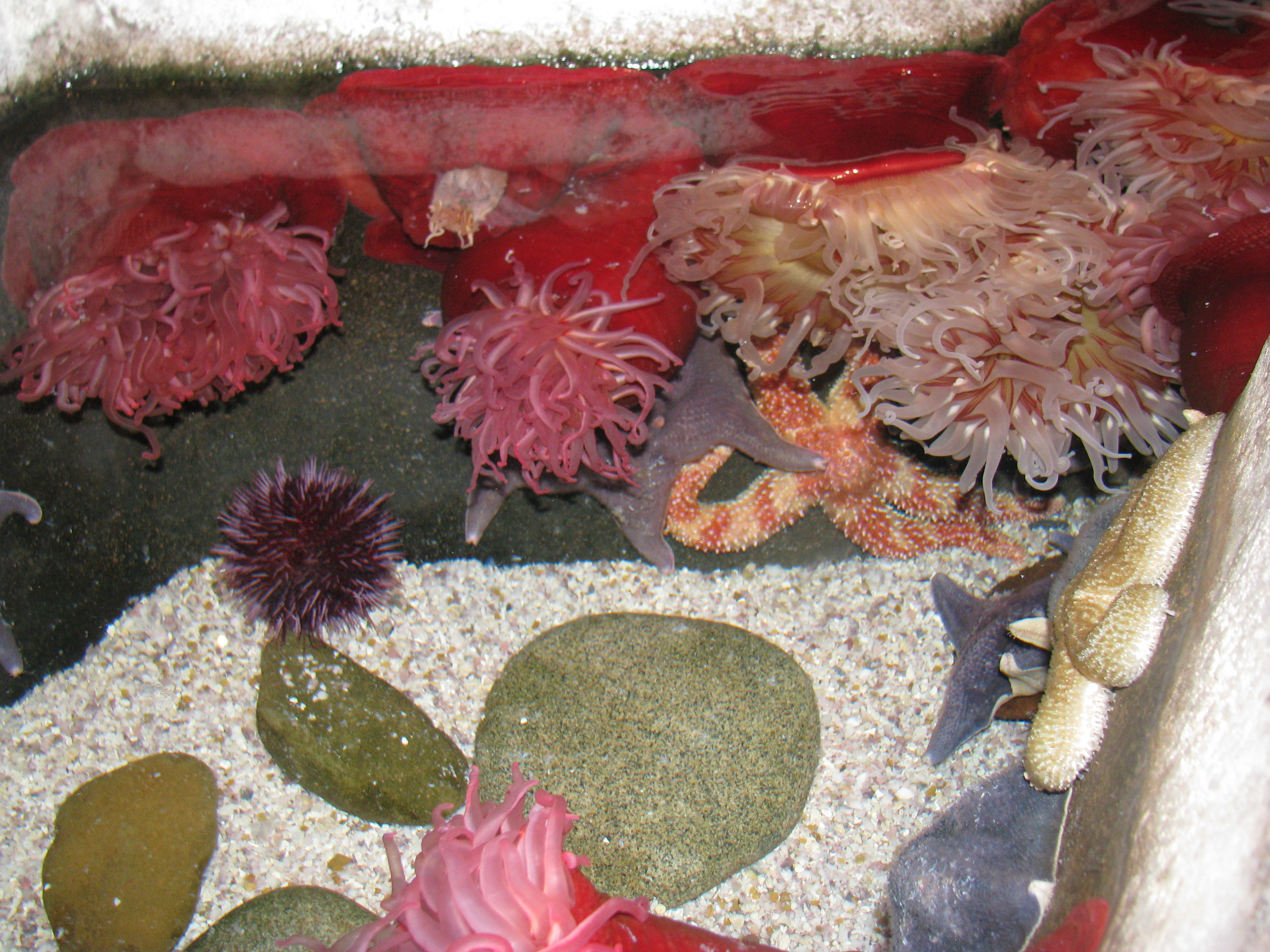
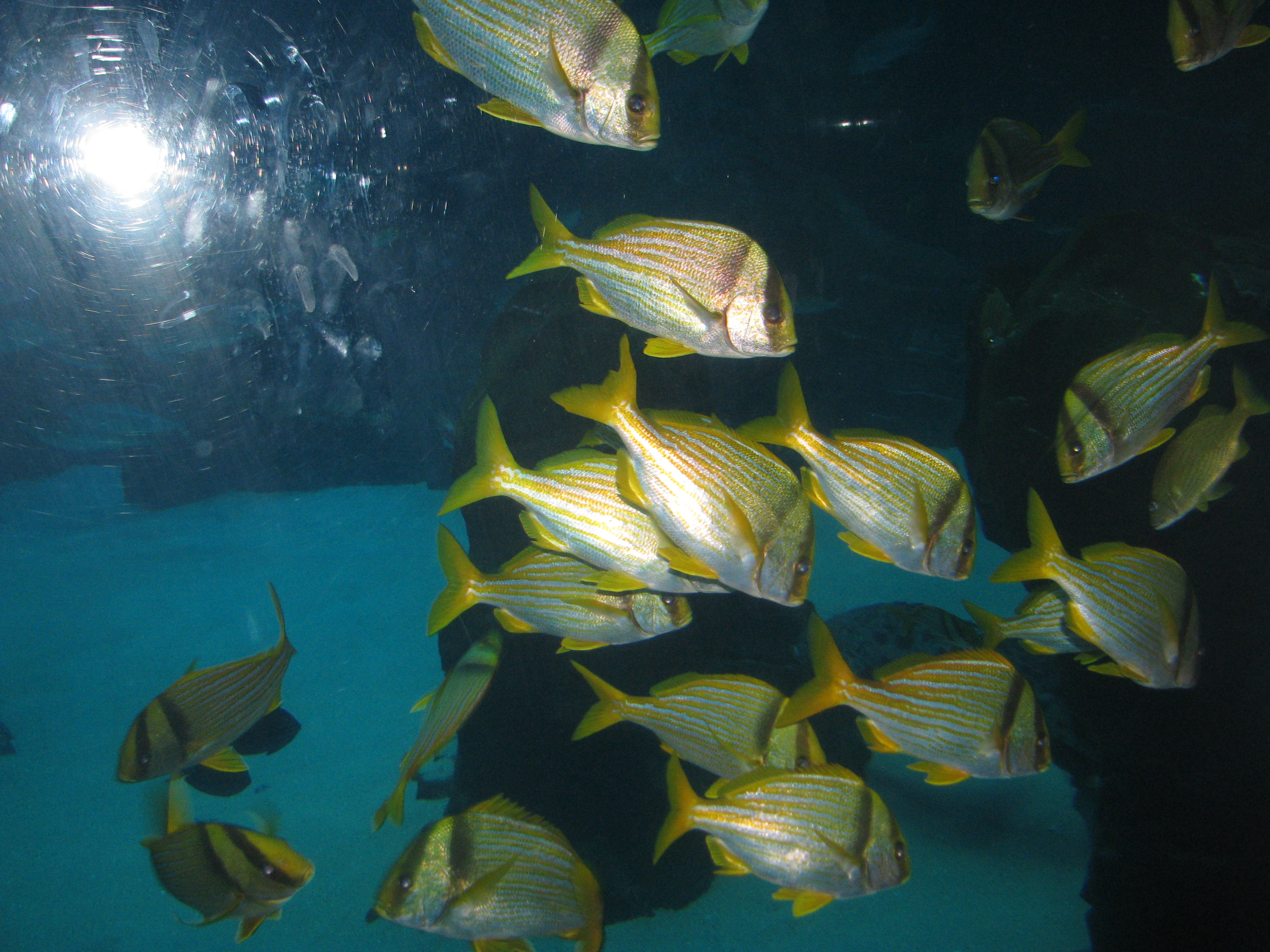
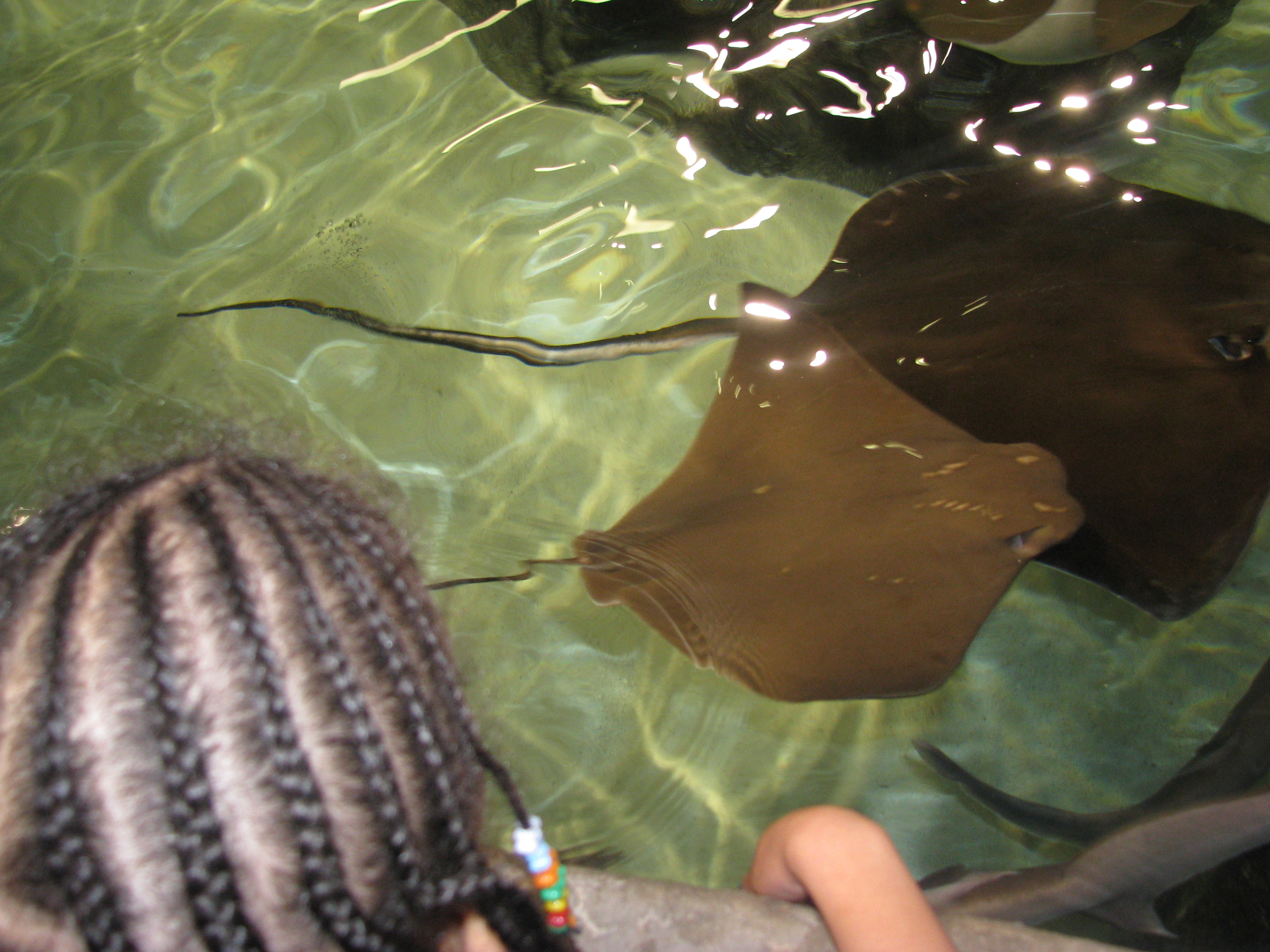
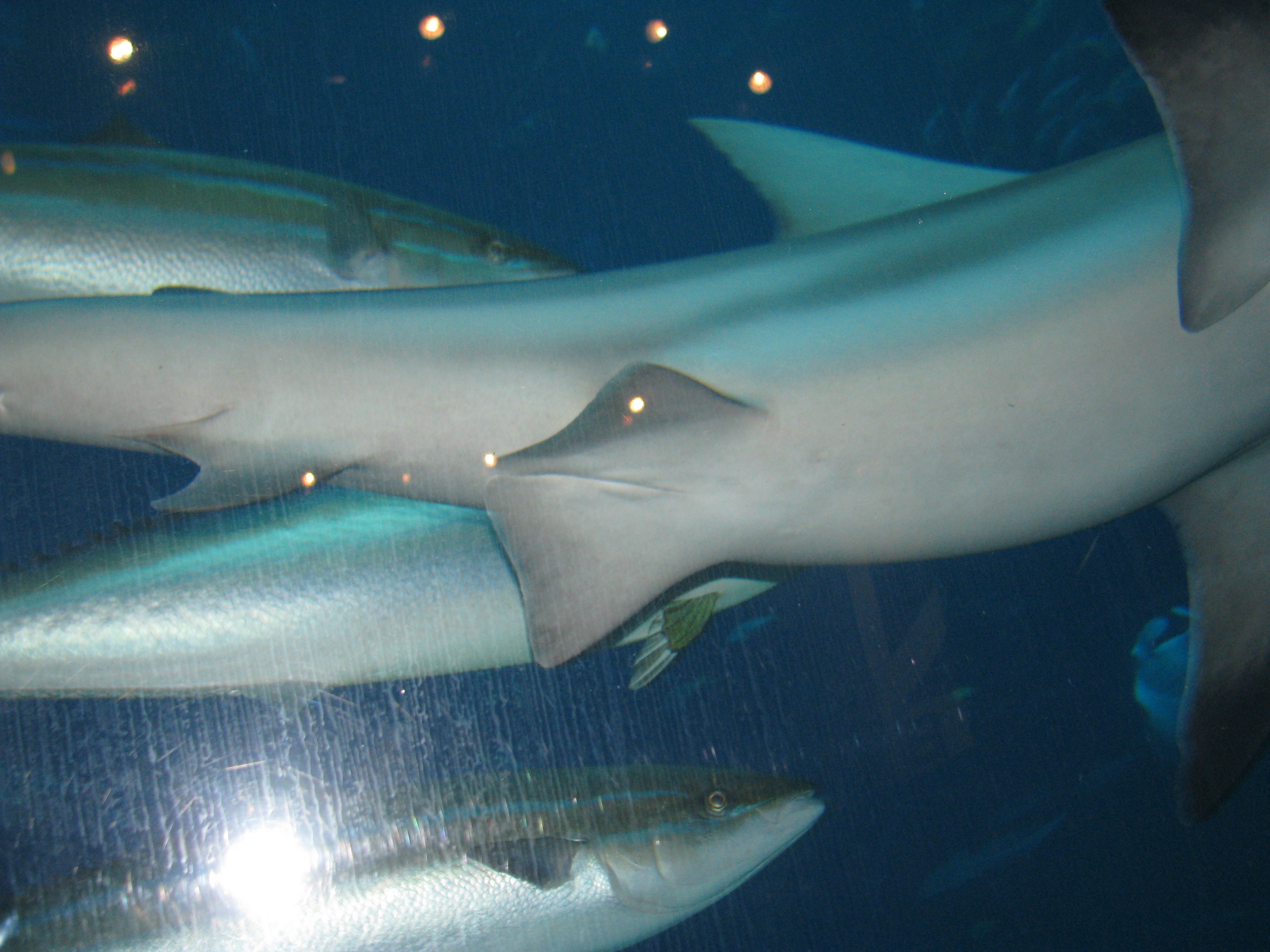
To brighten the winter mess, I took my daughter to the Georgia Aquarium today. How fun it was to see all the tropical fish again. It reminded me of all the good times I spent in the scotching African hot sun diving 2-3 times a day in Mtwara Bay, Mnazi Bay, Kilwa, Mafia Island and Nungwi. It was so cool to see the fishes again.

Here are a few pictures from the GA aquarium to warm you up for those in the northern hemisphere. Those in the tropics, just enjoy the pictures….there is no way I can make the January HEAT disappear FOR YOU!!!

The weight am carrying


By Shaaban Fundi,

I have been thinking about the issues related to obesity lately. I was reminded about this with my doctor in my last annual check-up. He said, you have no other lingering issues to worry about “young man” except for the fact that you need to exercise regularly and make sure you wear your seat belt whenever you drive. Receiving that seal of health approval from my doctor was reassuring but living in North America provides you with a constant reminder of obesity every second of every minute.

I have gained some weight over the years and that has left me incapacitated in my own body. I can’t run like I used to. I can’t walk like I used to and I can’t play soccer anymore (as if I used to previously lmao!!!!). This sedentary life we live in, is a major contributor to our own body demise. Fast foods, 30 minutes dinners, video games, the cheap and unbalanced diet we eat increasingly perpetuate the situation.

This is a major cultural problem in America and it is, quite literally, killing all of us. This is not a tsunami, a famine or a flood over which we have no control this is something that only WE, each and every person, can change…or not!!

Here are some data about this issue in North America. According to a new study released this week by the Society of Actuaries (SOA), the total economic cost of overweight (BMI between 25.0 –29.9) and obesity (BMI of more than 30) in the U.S. and Canada reaches $300(1) billion per year, with 90 percent of the total – $270 billion – attributed to the U.S.

While much research has been conducted on obesity, the SOA study looked at the economic costs of overweight and obesity caused by increased need for medical care, and loss of economic productivity resulting from excess mortality and disability. In the study, the SOA also divided the $300 billion finding into specific causes of economic costs. The figure breaks down into the following economic costs per year:
Total cost of excess medical care caused by overweight and obesity: $127 billion.
Economic loss of productivity caused by excess mortality: $49 billion.
Economic loss of productivity caused by disability for active workers: $43 billion.
Economic loss of productivity caused by overweight or obesity for totally disabled workers: $72 billion.

In sum, let us just get outside…run some more, walk some more, drive less, ride bicycles some more and make some real dinners and lunches too. Maybe that will help.

Snowed in, can you repeat that?


This is me trying to solve my food crisis.
Yes indeed the ATL is snowed in today. We had a couple of inches of snow last night which resulted for everything to come to a standstill. It is seriously cold and the roads are impassable, therefore has been a good day for staying inside…catching up on movies, writing, sledding, making snow men and other winter activities.

I heard about the winter weather warnings the whole day yesterday. But because I am inclined to experiential learning, I did not head the call to stock up on supplies. I woke up this morning to mountains of snow outside and an empty fridge. The fact that the roads are not drivable made my situation even worse.

Penye nia, pana njia as the Swahili saying goes. I had to be creative to get my refrigerator re-supplied.

Rufiji Basin for Rent….in Tanzania.


By Shaaban Fundi,

Click on the link below to watch Mr. Aloyce Masanja’s Interview on this issue.

http://i.cdn.turner.com/cnn/.element/apps/cvp/3.0/swf/cnn_416x234_embed.swf?context=embed&videoId=international/2010/12/24/mpa.facetime.aloyce.masanja.cnn

The leasing of the Rufiji Basin to South Koreans on the surface makes perfect sense. It is a win-win situation. The South Koreans brings in agricultural machinery, capital and great technology to improve rice farming and boom….high rice yield and Tanzania says good-bye to hunger and food insecurity.

Not so fast. We have heard of these Public-Private-Partnership Adventures or what I call African government wild-goose chases. It is very easy to say, quoting the Rufiji Basin Director Mr. Aloyce Masanja, ‘’the Rufiji Basin Land is an idle and unused land” if you don’t live and are not from that area. The last time I travelled down to Mtwara, what I saw in the Rufiji basin was nothing close to being idle and/or unused. I saw a lot of people who called the Rufiji basin their home and they used the land to promote their own interests.

Some expert in rural development argues that the main issue to be considered is whether rural dwellers in Tanzania can effectively and efficiently leverage on the productive capabilities of the arable land at their disposal. If the answer is no then clearly it is a waste of an extremely valuable productive resource to leave it fallow or (at best) productive on a subsistence scale.

In addition, Tanzania import considerable quantities of foods stuffs (both raw produce and processed foods) as a result of the underdevelopment of its agricultural and industrial sectors. Therefore, the introduction of this sort of Public Private Partnership some experts in developmental issues argue will have several positive effects to Tanzania including:
1.To boost employment opportunities for rural dwellers
2. Encourage steady Inflows of Foreign Direct Investment (FDI) into the economy (not just agricultural but also food processing.
3. Facilitate the transfer of modern productive techniques and technologies
4. Lead to the transfer of Skills and knowledge which in turn will lead to increases in the earning capacity of rural dwellers and thus positively impact on their standard of living
5. Contribute to towards infrastructural development of rural areas as amenities such as bore holes, pipe borne water, electrification, access roads.
6. Potentially lead to more partnerships in other areas of the economy.

As much as I agree with this outlook, I have my own reservations. It is my belief that PPP are a great thing only if properly executed. The locals should have a say on what is going to be happening around them. It will be a huge change for them from being owners to renters or workers. This could potentially be very explosive source of conflict if the people on the land now are not thoroughly involved in the decision process and in understanding the fact that, when everything goes they will be trespassers in what used to be theirs.

Several questions beg for answers in this arrangement. What will happen to the local Rufijians? Where are they going to move to? What kinds of compensations will they receive? What on –going support will they receive? The marine and environmental scientist in me will also wonder to what will happen to the ecological system down stream the Rufiji basin and into the Rufiji delta once this very intensive agriculture is in operation? There are many other questions in this issue that needs to be addressed before the PPP can proceed.

Make sure that what happened to the Maasai in Loliondo in July 4th 2010, does not repeat itself in the Rufiji Basin. It would be very helpful if the officials involved in this put the contract details out for public consumption and comments.

From Arusha Killings…. to Mwangosi!


By Shaaban Fundi,

Arusha smoking................Is this what amani has turned into?The news that came out of the Town of Arusha in Tanzania last year was very unfortunate. The Tanzanian police force and its Field Force Unit (FFU) have been using excessive force for years. In the late 1990 a score of innocent citizens were beaten and killed with live bullets in Magomeni, Dar-Es-Salaam. In the early 2000s, several incidence of police brutality and killings of innocent citizens were circulated through youtube videos and in international news channels all over the world from an election that had gone sour in Zanzibar. Last October, several innocent villagers were killed in Tabora, Arusha, Morogoro, Songea and now Iringa.

This shows a pattern of orchestrated events and it is not isolated as the President want us to believe.

I am calling those killed innocent citizens just for the mere fact that they were not convicted beyond any reasonable doubt in any court of law. Demonstrators of any kind should be afforded their day in court to prove their innocence without being shot at as criminals. The main job of the police force is to protect citizens and their properties, to arrest individuals and hand them to the court system to prosecute them. Not to render justice.

It is due time for a new constitution, a constitution that will allow the balance of power….giving individual citizens the right to sue the government when they are wrongly killed, wrongly removed from their land and wrongly maltreated by their own government. Tanzania has in the last 20 years been pursuing capitalist economic policies, therefore the constitution need to reflect those policies as well. We cannot continue to be a socialist country, while all the economic sectors prescribe to a capitalist ideology. Let’s just call a spade a spade and pay dues to the wrongfully killed or injured.

The grabbing of land in the Rufiji Basin by the Tanzanian and the South Koreans government sets a horrible precedence. The so-called idle land, unused land by the Tanzania official Mr. Masanja. This land will come back to haunt the people involved. At-least be truthful to your own people when entering these kinds of joint ventures….so that they can be rightfully compensated and to avoid future land conflicts.

I will look at the land issue in more details in my next piece……..please come back and leave a comment.

Below you can read Kitwete’s regret statement over what happened in Arusha.
By the NewsTimeAfrica.com

Tanzanian President Jakaya Kikwete has expressed deep regret over recent violence in the country’s northern town of Arusha where four people were killed by police fire during an opposition rally.
”This is very unfortunate. I believe it is an isolated case and the government will make sure that harmony is restored,” Kikwete told ambassadors and heads of international organisations based in Dar es Salaam late Friday.
”We will make sure such incidents never happen again. This is the first and should be the last of its kind to happen in our country,” he said at a New Year’s party he hosted for the envoys at State House.
On Wednesday several leaders and supporters of the main opposition party, CHADEMA, were arrested after an anti-government protest and demonstration. On the following day they were charged with unlawful assembly before a resident magistrate’s court. They were released on bail. ”While pursuing the law we will not be oblivious of other avenues to restore harmony,” Kikwete said.
Kikwete reiterated that October 31 elections had been generally peaceful. ”Democracy is taking root and becoming more vibrant though still fragile,” he said, adding: “I am delighted with the election in Zanzibar and its outcome. ”Last year’s polls were smooth. Zanzibar is calm and peaceful.”
Kikwete also expressed concern over the situation in Madagascar, Somalia and Ivory Coast. ”I hope President Laurent Gbagbo will see reason and heed appeals by the UN, African Union, African leaders as well as other world leaders to respect the will of the people (Ivorians),” he said. He further talked about Southern Sudan, saying the forthcoming referendum will determine their destiny and that of Sudan as a whole.

Suicide Letter


Bill Zeller, a computer programmer, committed suicide recently. The news has been blazing around the Internet. He’s the guy who wrote a hack for iTunes called MyTunes that allowed you to pull music off another person’s iPod. Apparently he wrote a lot of other programs, too.
Zeller was abused as a kid, and the depression took its toll on him. He left behind a suicide letter that he requests is published in full. It’s long, but I want to publish it here. I hope you take the time to read it. I’m going to put it below the fold, but it’s definitely worth your time.
I don’t believe suicide is the right answer for anyone, but I have no idea the extent of the pain that went through Zeller’s mind before he died. I think this is only a small window into that
There’s a part about his parents religiosity that is very thoughtful. The whole thing is worth your time.

************BEGIN LETTER*****************
I have the urge to declare my sanity and justify my actions, but I
assume I’ll never be able to convince anyone that this was the right
decision. Maybe it’s true that anyone who does this is insane by
definition, but I can at least explain my reasoning. I considered not
writing any of this because of how personal it is, but I like tying up
loose ends and don’t want people to wonder why I did this. Since I’ve
never spoken to anyone about what happened to me, people would likely
draw the wrong conclusions.

My first memories as a child are of being raped, repeatedly. This has
affected every aspect of my life. This darkness, which is the only way I
can describe it, has followed me like a fog, but at times intensified
and overwhelmed me, usually triggered by a distinct situation. In
kindergarten I couldn’t use the bathroom and would stand petrified
whenever I needed to, which started a trend of awkward and unexplained
social behavior. The damage that was done to my body still prevents me
from using the bathroom normally, but now it’s less of a physical
impediment than a daily reminder of what was done to me.

This darkness followed me as I grew up. I remember spending hours
playing with legos, having my world consist of me and a box of cold,
plastic blocks. Just waiting for everything to end. It’s the same thing
I do now, but instead of legos it’s surfing the web or reading or
listening to a baseball game. Most of my life has been spent feeling
dead inside, waiting for my body to catch up.

At times growing up I would feel inconsolable rage, but I never
connected this to what happened until puberty. I was able to keep the
darkness at bay for a few hours at a time by doing things that required
intense concentration, but it would always come back. Programming
appealed to me for this reason. I was never particularly fond of
computers or mathematically inclined, but the temporary peace it would
provide was like a drug. But the darkness always returned and built up
something like a tolerance, because programming has become less and less
of a refuge.

The darkness is with me nearly every time I wake up. I feel like a grime
is covering me. I feel like I’m trapped in a contimated body that no
amount of washing will clean. Whenever I think about what happened I
feel manic and itchy and can’t concentrate on anything else. It
manifests itself in hours of eating or staying up for days at a time or
sleeping for sixteen hours straight or week long programming binges or
constantly going to the gym. I’m exhausted from feeling like this every
hour of every day.

Three to four nights a week I have nightmares about what happened. It
makes me avoid sleep and constantly tired, because sleeping with what
feels like hours of nightmares is not restful. I wake up sweaty and
furious. I’m reminded every morning of what was done to me and the
control it has over my life.

I’ve never been able to stop thinking about what happened to me and this
hampered my social interactions. I would be angry and lost in thought
and then be interrupted by someone saying “Hi” or making small talk,
unable to understand why I seemed cold and distant. I walked around,
viewing the outside world from a distant portal behind my eyes, unable
to perform normal human niceties. I wondered what it would be like to
take to other people without what happened constantly on my mind, and I
wondered if other people had similar experiences that they were better
able to mask.

Alcohol was also something that let me escape the darkness. It would
always find me later, though, and it was always angry that I managed to
escape and it made me pay. Many of the irresponsible things I did were
the result of the darkness. Obviously I’m responsible for every decision
and action, including this one, but there are reasons why things happen
the way they do.

Alcohol and other drugs provided a way to ignore the realities of my
situation. It was easy to spend the night drinking and forget that I had
no future to look forward to. I never liked what alcohol did to me, but
it was better than facing my existence honestly. I haven’t touched
alcohol or any other drug in over seven months (and no drugs or alcohol
will be involved when I do this) and this has forced me to evaluate my
life in an honest and clear way. There’s no future here. The darkness
will always be with me.

I used to think if I solved some problem or achieved some goal, maybe he
would leave. It was comforting to identify tangible issues as the source
of my problems instead of something that I’ll never be able to change. I
thought that if I got into to a good college, or a good grad school, or
lost weight, or went to the gym nearly every day for a year, or created
programs that millions of people used, or spent a summer or California
or New York or published papers that I was proud of, then maybe I would
feel some peace and not be constantly haunted and unhappy. But nothing I
did made a dent in how depressed I was on a daily basis and nothing was
in any way fulfilling. I’m not sure why I ever thought that would change
anything.

I didn’t realize how deep a hold he had on me and my life until my
first relationship. I stupidly assumed that no matter how the darkness
affected me personally, my romantic relationships would somehow be
separated and protected. Growing up I viewed my future relationships as
a possible escape from this thing that haunts me every day, but I began
to realize how entangled it was with every aspect of my life and how it
is never going to release me. Instead of being an escape, relationships
and romantic contact with other people only intensified everything about
him that I couldn’t stand. I will never be able to have a relationship
in which he is not the focus, affecting every aspect of my romantic
interactions.

Relationships always started out fine and I’d be able to ignore him for
a few weeks. But as we got closer emotionally the darkness would return
and every night it’d be me, her and the darkness in a black and gruesome
threesome. He would surround me and penetrate me and the more we did the
more intense it became. It made me hate being touched, because as long
as we were separated I could view her like an outsider viewing something
good and kind and untainted. Once we touched, the darkness would
envelope her too and take her over and the evil inside me would surround
her. I always felt like I was infecting anyone I was with.

Relationships didn’t work. No one I dated was the right match, and I
thought that maybe if I found the right person it would overwhelm him.
Part of me knew that finding the right person wouldn’t help, so I became
interested in girls who obviously had no interest in me. For a while I
thought I was gay. I convinced myself that it wasn’t the darkness at
all, but rather my orientation, because this would give me control over
why things didn’t feel “right”. The fact that the darkness affected
sexual matters most intensely made this idea make some sense and I
convinced myself of this for a number of years, starting in college
after my first relationship ended. I told people I was gay (at Trinity,
not at Princeton), even though I wasn’t attracted to men and kept
finding myself interested in girls. Because if being gay wasn’t the
answer, then what was? People thought I was avoiding my orientation, but
I was actually avoiding the truth, which is that while I’m straight, I
will never be content with anyone. I know now that the darkness will
never leave.

Last spring I met someone who was unlike anyone else I’d ever met.
Someone who showed me just how well two people could get along and how
much I could care about another human being. Someone I know I could be
with and love for the rest of my life, if I weren’t so fucked up.
Amazingly, she liked me. She liked the shell of the man the darkness had
left behind. But it didn’t matter because I couldn’t be alone with her.
It was never just the two of us, it was always the three of us: her, me
and the darkness. The closer we got, the more intensely I’d feel the
darkness, like some evil mirror of my emotions. All the closeness we had
and I loved was complemented by agony that I couldn’t stand, from him. I
realized that I would never be able to give her, or anyone, all of me or
only me. She could never have me without the darkness and evil inside
me. I could never have just her, without the darkness being a part of
all of our interactions. I will never be able to be at peace or content
or in a healthy relationship. I realized the futility of the romantic
part of my life. If I had never met her, I would have realized this as
soon as I met someone else who I meshed similarly well with. It’s likely
that things wouldn’t have worked out with her and we would have broken
up (with our relationship ending, like the majority of relationships do)
even if I didn’t have this problem, since we only dated for a short
time. But I will face exactly the same problems with the darkness with
anyone else. Despite my hopes, love and compatability is not enough.
Nothing is enough. There’s no way I can fix this or even push the
darkness down far enough to make a relationship or any type of intimacy
feasible.

So I watched as things fell apart between us. I had put an explicit time
limit on our relationship, since I knew it couldn’t last because of the
darkness and didn’t want to hold her back, and this caused a variety of
problems. She was put in an unnatural situation that she never should
have been a part of. It must have been very hard for her, not knowing
what was actually going on with me, but this is not something I’ve ever
been able to talk about with anyone. Losing her was very hard for me as
well. Not because of her (I got over our relationship relatively
quickly), but because of the realization that I would never have another
relationship and because it signified the last true, exclusive personal
connection I could ever have. This wasn’t apparent to other people,
because I could never talk about the real reasons for my sadness. I was
very sad in the summer and fall, but it was not because of her, it was
because I will never escape the darkness with anyone. She was so loving
and kind to me and gave me everything I could have asked for under the
circumstances. I’ll never forget how much happiness she brought me in
those briefs moments when I could ignore the darkness. I had originally
planned to kill myself last winter but never got around to it. (Parts of
this letter were written over a year ago, other parts days before doing
this.) It was wrong of me to involve myself in her life if this were a
possibility and I should have just left her alone, even though we only
dated for a few months and things ended a long time ago. She’s just one
more person in a long list of people I’ve hurt.

I could spend pages talking about the other relationships I’ve had that
were ruined because of my problems and my confusion related to the
darkness. I’ve hurt so many great people because of who I am and my
inability to experience what needs to be experienced. All I can say is
that I tried to be honest with people about what I thought was true.

I’ve spent my life hurting people. Today will be the last time.

I’ve told different people a lot of things, but I’ve never told anyone
about what happened to me, ever, for obvious reasons. It took me a while
to realize that no matter how close you are to someone or how much they
claim to love you, people simply cannot keep secrets. I learned this a
few years ago when I thought I was gay and told people. The more harmful
the secret, the juicier the gossip and the more likely you are to be
betrayed. People don’t care about their word or what they’ve promised,
they just do whatever the fuck they want and justify it later. It feels
incredibly lonely to realize you can never share something with someone
and have it be between just the two of you. I don’t blame anyone in
particular, I guess it’s just how people are. Even if I felt like this
is something I could have shared, I have no interest in being part of a
friendship or relationship where the other person views me as the
damaged and contaminated person that I am. So even if I were able to
trust someone, I probably would not have told them about what happened
to me. At this point I simply don’t care who knows.

I feel an evil inside me. An evil that makes me want to end life. I need
to stop this. I need to make sure I don’t kill someone, which is not
something that can be easily undone. I don’t know if this is related to
what happened to me or something different. I recognize the irony of
killing myself to prevent myself from killing someone else, but this
decision should indicate what I’m capable of.

So I’ve realized I will never escape the darkness or misery associated
with it and I have a responsibility to stop myself from physically
harming others.

I’m just a broken, miserable shell of a human being. Being molested has
defined me as a person and shaped me as a human being and it has made me
the monster I am and there’s nothing I can do to escape it. I don’t know
any other existence. I don’t know what life feels like where I’m apart
from any of this. I actively despise the person I am. I just feel
fundamentally broken, almost non-human. I feel like an animal that woke
up one day in a human body, trying to make sense of a foreign world,
living among creatures it doesn’t understand and can’t connect with.

I have accepted that the darkness will never allow me to be in a
relationship. I will never go to sleep with someone in my arms, feeling
the comfort of their hands around me. I will never know what
uncontimated intimacy is like. I will never have an exclusive bond with
someone, someone who can be the recipient of all the love I have to
give. I will never have children, and I wanted to be a father so badly.
I think I would have made a good dad. And even if I had fought through
the darkness and married and had children all while being unable to feel
intimacy, I could have never done that if suicide were a possibility. I
did try to minimize pain, although I know that this decision will hurt
many of you. If this hurts you, I hope that you can at least forget
about me quickly.

There’s no point in identifying who molested me, so I’m just going to
leave it at that. I doubt the word of a dead guy with no evidence about
something that happened over twenty years ago would have much sway.

You may wonder why I didn’t just talk to a professional about this. I’ve
seen a number of doctors since I was a teenager to talk about other
issues and I’m positive that another doctor would not have helped. I was
never given one piece of actionable advice, ever. More than a few spent
a large part of the session reading their notes to remember who I was.
And I have no interest in talking about being raped as a child, both
because I know it wouldn’t help and because I have no confidence it
would remain secret. I know the legal and practical limits of
doctor/patient confidentiality, growing up in a house where we’d hear
stories about the various mental illnesses of famous people, stories
that were passed down through generations. All it takes is one doctor
who thinks my story is interesting enough to share or a doctor who
thinks it’s her right or responsibility to contact the authorities and
have me identify the molestor (justifying her decision by telling
herself that someone else might be in danger). All it takes is a single
doctor who violates my trust, just like the “friends” who I told I was
gay did, and everything would be made public and I’d be forced to live
in a world where people would know how fucked up I am. And yes, I
realize this indicates that I have severe trust issues, but they’re
based on a large number of experiences with people who have shown a
profound disrepect for their word and the privacy of others.

People say suicide is selfish. I think it’s selfish to ask people to
continue living painful and miserable lives, just so you possibly won’t
feel sad for a week or two. Suicide may be a permanent solution to a
temporary problem, but it’s also a permanent solution to a ~23 year-old
problem that grows more intense and overwhelming every day.

Some people are just dealt bad hands in this life. I know many people
have it worse than I do, and maybe I’m just not a strong person, but I
really did try to deal with this. I’ve tried to deal with this every day
for the last 23 years and I just can’t fucking take it anymore.

I often wonder what life must be like for other people. People who
can feel the love from others and give it back unadulterated, people who
can experience sex as an intimate and joyous experience, people who can
experience the colors and happenings of this world without constant
misery. I wonder who I’d be if things had been different or if I were a
stronger person. It sounds pretty great.

I’m prepared for death. I’m prepared for the pain and I am ready to no
longer exist. Thanks to the strictness of New Jersey gun laws this will
probably be much more painful than it needs to be, but what can you do.
My only fear at this point is messing something up and surviving.

I’d also like to address my family, if you can call them that. I despise
everything they stand for and I truly hate them, in a non-emotional,
dispassionate and what I believe is a healthy way. The world will be a
better place when they’re dead–one with less hatred and intolerance.

If you’re unfamiliar with the situation, my parents are fundamentalist
Christians who kicked me out of their house and cut me off financially
when I was 19 because I refused to attend seven hours of church a week.

They live in a black and white reality they’ve constructed for
themselves. They partition the world into good and evil and survive
by hating everything they fear or misunderstand and calling it love.
They don’t understand that good and decent people exist all around us,
“saved” or not, and that evil and cruel people occupy a large percentage
of their church. They take advantage of people looking for hope by
teaching them to practice the same hatred they practice.

A random example:

“I am personally convinced that if a Muslim truly believes and obeys the
Koran, he will be a terrorist.” – George Zeller, August 24, 2010.

If you choose to follow a religion where, for example, devout Catholics
who are trying to be good people are all going to Hell but child
molestors go to Heaven (as long as they were “saved” at some point),
that’s your choice, but it’s fucked up. Maybe a God who operates by
those rules does exist. If so, fuck Him.

Their church was always more important than the members of their family
and they happily sacrificed whatever necessary in order to satisfy
their contrived beliefs about who they should be.

I grew up in a house where love was proxied through a God I could never
believe in. A house where the love of music with any sort of a beat was
literally beaten out of me. A house full of hatred and intolerance, run
by two people who were experts at appearing kind and warm when others
were around. Parents who tell an eight year old that his grandmother is
going to Hell because she’s Catholic. Parents who claim not to be racist
but then talk about the horrors of miscegenation. I could list hundreds
of other examples, but it’s tiring.

Since being kicked out, I’ve interacted with them in relatively normal
ways. I talk to them on the phone like nothing happened. I’m not sure
why. Maybe because I like pretending I have a family. Maybe I like
having people I can talk to about what’s been going on in my life.
Whatever the reason, it’s not real and it feels like a sham. I should
have never allowed this reconnection to happen.

I wrote the above a while ago, and I do feel like that much of the time.
At other times, though, I feel less hateful. I know my parents honestly
believe the crap they believe in. I know that my mom, at least, loved me
very much and tried her best. One reason I put this off for so long is
because I know how much pain it will cause her. She has been sad since
she found out I wasn’t “saved”, since she believes I’m going to Hell,
which is not a sadness for which I am responsible. That was never going
to change, and presumably she believes the state of my physical body is
much less important than the state of my soul. Still, I cannot
intellectually justify this decision, knowing how much it will hurt her.
Maybe my ability to take my own life, knowing how much pain it will
cause, shows that I am a monster who doesn’t deserve to live. All I know
is that I can’t deal with this pain any longer and I’m am truly sorry I
couldn’t wait until my family and everyone I knew died so this could be
done without hurting anyone. For years I’ve wished that I’d be hit by a
bus or die while saving a baby from drowning so my death might be more
acceptable, but I was never so lucky.

To those of you who have shown me love, thank you for putting up with
all my shittiness and moodiness and arbitrariness. I was never the
person I wanted to be. Maybe without the darkness I would have been a
better person, maybe not. I did try to be a good person, but I realize I
never got very far.

I’m sorry for the pain this causes. I really do wish I had another
option. I hope this letter explains why I needed to do this. If you
can’t understand this decision, I hope you can at least forgive me.

Bill Zeller

Please save this letter and repost it if gets deleted. I don’t want
people to wonder why I did this. I disseminated it more widely than I
might have otherwise because I’m worried that my family might try to
restrict access to it. I don’t mind if this letter is made public. In
fact, I’d prefer it be made public to people being unable to read it and
drawing their own conclusions. Feel free to republish this letter, but only if it is reproduced in its
entirety.

Serengeti-Mara Road & the future of 2 million Tanzanians


By Brian Sandberg,

The Mara region of Tanzania lies to the west of the great Serengeti National Park. It is estimated that this is home to over 1.5 million Tanzanians. I’m reliably told that various government departments are working on strategies to bring greater economic activity and prosperity to this region over the next 5 years, to cater for what will be more than 2 million citizens resident there by 2015.
Doc1
Clearly the proposed commercial road linking Musoma on Lake Victoria, via Loliondo, to the hub city of Arusha sits at the heart of government plans. The crisis lies in the planned routing of this road through the pristine, iconic Serengeti.

To try to seek out solutions, one needs to understand several dynamics.

REGIONAL LOGISTICS

Fortunately the Christmas season brings together old friends and I had the privilege of sharing a few drinks with an old business associate who has some extensive, recent experience in logistics and international trade in Kenya and Tanzania. As my home city – Durban – is Africa’s largest and busiest port, it is also home to many multinational freight and logistics companies – my friend’s business being but one of them.

Essentially, there are 2 key ports for international trade in Tanzanian produce. Dar es Salaam on Tanzania’s southern coast and Mombasa, on Kenya’s southern coast. Central and southern TZ goods (and those of her neighbours) route via Dar. Much of northern TZ routes via Mombasa.

Now look at the regional map I’ve laid out and see the geography and potential trade routes for economic produce for and from the Mara region and one begins to understand the real challenges facing government and her private sector.

In addition, you should be interested to know that Mombasa, as a port, offers many more benefits to shippers than does Dar es Salaam. Through the handling of a range of mineral products – cement, steel, soda ash, flourspar, etc – it offers greater versatility for a range of such materials. Through its agricultural produce handling, again there is wider experience in more types of goods for transshipment.

Another very key logistics factor is that Mombasa offers more frequent and more diverse options for salings than does Dar.
Hence, Mombasa is somewhat a key regional port for northern Tanzania, and that includes produce of Mara origin.

MARA REGION
Let’s ignore the eastern region of the Serengeti for the moment – i.e. Loliondo-Ngorogoro-Arusha. That’s easy to understand, since any goods or produce for or from that region requiring international logistics has no bearing on the Serengeti.

However, Mara is effectively an island. And soon, there will be 2 million people semi-cut-off from trade and commerce. In other words, a key life-blood to socio-economic development for their peoples.

I get really peeved when an American TV journalist – from NBC Today – produces a piece that centres on minerals for cellphones produced in China, without little other research or understanding of this region’s economy.

We need to accept that there are some valuable minerals to be found in the Mara region and commercial development will proceed in the years ahead. I’m not discussing ethical mining, I’m simply stating an economic fact. The people of Tanzania have every right to exploit their rich natural resources in this sector, to the advantage of their nation and their peoples who find work and wealth in such projects.

Now let’s talk more importantly about agriculture. There are many online research and seminar/workshop documents, so let’s skip some detail, to focus on a few simple issues:

1. Leading international development agencies are united in a critical economic matter – agriculture creates trade, jobs and food security, especially in impoverished regions. This means that Mara must accelerate growth and development in this sector to build more regional prosperity and opportunity;

2. Did you know that because of the high rainfall in the Mara region, cotton grown there produces a higher yield and a better cotton staple, compared to other local regions, thus leading to a better quality cotton yarn and higher prices? In fact, with widespread small-scale farmers in the area, plus an efficient access to markets, all coupled with a global growth in organic cotton goods, this agro-sector could in itself be hugely empowering;

3. Did you know that tobacco growth (leave out the dangers of smoking!) in this region is becoming increasingly important and 2009 produced some really positive growth in plantings, sales and related-trade for this sub-regional economy?

4. Did you know that there are plans to develop more Arabica coffee bean trade out of Tarime?

5. Did you know that with more advanced agro-processing techniques, the aqua-culture sector (such as fishing) can be quite extensively expanded, quite rapidly, with good logistics routes? and

6. Have you studied how abysmally poor the road infrastructure in the Mara region is? If not – please Google map it. Without a doubt, this must be urgently remedied by the state.

DID YOU FACTOR IN SOME OF THESE THOUGHTS INTO YOUR STRONG VOICE AGAINST A SERENGETI COMMERCIAL ROAD ?

I fear not, since I’m also still learning and thinking, and I spend a lot more on this project that most people I know.

SO – HOW DO WE MOVE FORWARD ?

Clearly, one can understand local voices saying the world cares more for wildlife than they do for people. Especially when thinking simply about the future prosperity and wellness of more than 2 million Mara residents.

If you look carefully at the map with it’s potential routes to ports and even with some new southern road development, it makes regional economic sense for Mara’s private sector to rely on “northern” route options.

So let’s say – NO commercial trade through the Serengeti.

Then producers and traders have one of 2 options – north via Nairobi or south via Singida or a new route more northerly than Singida.

A. North via Nairobi – very expensive if one wants to route goods or produce from or to Arusha, but it looks seemingly fine for Mombasa. BUT – talk to the logistics specialists. Trucks travelling via this capital city would face enormous delays for traffic congestion, thus greatly impairing transit time. So that’s a problem for traders; and

B. South via Singida – roughly speaking it could almost be quicker to route via Nairobi, but yet it probably offers much the same transit time to Dar es Salaam as it would be the case for Mombasa. However, let’s not forget Mombasa’s far more competitive port advantage? Hmmm?

KENYA-TANZANIA BI-LATERAL CO-OPERATION

Now that I’ve triggered some critical thinking for readers, hopefully you might start to see that the only REAL solution for the future economic prosperity of the Mara region lies in the leaders of Kenya and Tanzania sitting down and discussing some meaningful bi-lateral co-operation, where a collective of smart minds and key sector role-players engage constructively.

It has just been announced in Tanzania that Africa’s first One-Stop customs and border control post is to be established between Arusha and Nairobi at Namanga, in terms of the East African Community economic treaties.

IF one assumes that government MUST develop proper commercial roads east (Loliondo-Arusha) and west (Musoma-Mugumu) of the Serengeti, and IF Kenya is committed to protecting its Mara Triangle eco-tourism and biosphere from threats to the great migrations, then surely some smart outcomes can be devised through some northern Serengeti-Mara new road network.

If one then looked at 2 options – upgrading roads north of Singida in the south for better trade access or north of the Mara triangle in Kenya, I’d say the Kenya bypass would be infinitely more cost effective and add more road infrastructure to their south.

So – it makes far more economic sense for Tanzania and Kenya to expand trans-frontier development in seeking solutions to protect the sanctity of the priceless Serengeti-Mara eco-systems.

To me, anyway.

Brian Sandberg
Durban. South Africa.

Tanzania will be “celebrating” and bringing 2011 in the Darkness.


Yeah my friend said it. It is official. Tanzanians all-over this vast nation will be subjected to power rationing in new-year’s eve. How incredible!!! I am just kidding. I lived in Tanzania, all my life. I lived in Dar, Mji Mkongwe, Nungwi, Mjini Magharibi, Moro, Tabora, Dodoma, Tanga, Kigoma, Arusha, Lindi and even Mtwara. I have welcomed many new years in these towns with no notice of the fact that the calendar was changing. I will go to sleep at night and wake up the next day to another year and life kept going. No celebrations whatsoever!

Why am I raising this non issue then? I should just shut up!!! WTF. No…I won’t. It is because an American friend of mine reminded me of this non issue. The context of our conversation brought this topic to the open.
He said, Atlanta is the ideal destination for New Years Eve. Atlanta has a multitude of events suitable for anyone looking to have a fun and exciting New Years Eve experience. New Years Eve in Atlanta has become one of the most popular destinations for bars, strip clubs, lounges and nightclubs. Making it a great place for ringing in the New Year any way you want. It is known for its variety of options, formal or casual, with anything from live music and top DJ’s, to fireworks and top-shelf open bars, ensuring an enjoyable experience for anyone wishing to experience a bit of Atlanta nightlife on New Year’s Eve. Welcome to the Dirt South babe, he said. In the back of my mind I was just like…this guy can run his mouth.

We were just talking about the various options we could ring in 2011. But without power, all these activities will not be feasible. That was his point, not mine.

I guess my question is to my Tanzania friends. How are you planning to celebrate your New Year’s Eve without Power? To those in the Diasporas, how did you celebrate New Year’s Eve when you were still living in Bongo?
My comment box is always open for your comments, be creative!!

Keeping the water flowing in Rural Tanzania.


Gold’s Tragic Dividend: North Mara Tanzania.


What are your thoughts on this issue? Who is right here? Should the Tanzanian government intervene?

What would you do? If you found yourself in these patients’ shoes??


Organ transplants using ‘risky donors’ rising

More organs from higher risk donors are being used for transplants because of a donor shortage, the BBC has learned. Organs from patients with a history of cancer or drug abuse, elderly donors and those with serious illnesses have to be considered, say surgeons. They say they face a dilemma of leaving people to die without a transplant or operating with organs from such donors.

The use of higher risk donors has doubled from 13% in 1998 to 26% last year, BBC Radio File on 4 was told.An average of three patients a day are dying in the UK because of a lack of a suitable organ for transplant.

This means surgeons are having to use organs from donors they call “marginal”, meaning they come from the following categories: the over-70s, patients with serious illnesses, patients with a history of cancer or drug abuse, or drinkers and heavy smokers.

Professor James Neuberger, medical director of NHS Blood and Transplant, which co-ordinates the supply of organs, told File on 4: “There is no doubt that if we had more donor organs… we could be a lot more selective about those that are used.”

He added: “In some cases this is completely safe for the patient but we’re certainly seeing organs from higher risk donors being used in order to meet the ever growing need for organ transplantation.”

He said in an ideal world surgeons would not use organs that carried added risks but the alternative was more deaths of patients on the transplant waiting list.
Statistics seen by File on 4 show that in 1998 13% of 787 donors were in the marginal category, but by 2008 the percentage had doubled to 26% of 899 donors.
Surgeon Simon Bramhall, who carries out liver transplants at the Queen Elizabeth Hospital, Birmingham, said factors such as seatbelt laws and road safety improvements had reduced the number of organs available from young donors.

“I’ve taken organs from a number of donors in their 80s and transplanted them successfully,” he said.
He said “beggars can’t be choosers”, but added: “The donors are getting older, they’re getting fatter and they’re having more of what I call co-morbid disease – additional diseases like heart disease, lung disease and even kidney disease.”

One patient who was given a kidney, which turned out to be cancerous and had to be removed, told File on 4 she had been so traumatized by the experience she had refused to put her name back on the transplant waiting list.

The woman said: “I felt as though my life had been ruined. I felt destroyed, my family was destroyed… my husband has to care for me now. When I was on dialysis before I was coping, now dialysis is worse.” Dialysis patient ‘Sally’ had to have her donated kidney removed when it was found to have cancer. She is clear of the disease but is reluctant to have another transplant.

Surgeons have told File on 4 that they are carrying out transplants using organs from cancer patients, elderly people, heavy smokers, alcoholics and drug addicts due to a shortage of donors.

When greed meet corruption–It’s disastrous.


jessie boylan

Once Upon a Water Source

Posted in Jessie Boylan, journalism by jessieboylan on December 11, 2009

Once Upon a Water Source
30.11.09 – Musoma>Tanzania

She’s tending to her shamba, her farm, the farm is still here, but…a little discoloured in places, some banana trees and pineapple plants have wilted, some are fruiting, but she can’t eat them, or rather, she won’t eat them.

Susanna Solomon, 55, is slim and shy mother of 12 from Nyangoto village, situated in the rural Tarime district on the eastern side of Lake Victoria. She has been farming here for a long time and continues to do so even though she can’t use her produce.

“I was farming rice before,” she said, “but I can’t anymore because of the chemicals.”


The area we’re talking about was contaminated by a leakage from Barrick Gold’s North Mara Mine in May this year.

In large sections the grass has completely died, and plants and some vegetation have off-coloured stalks. The stream running from the mine site (just 100 or so meters away) has a green moss covering it, there is no sign of insects, tadpoles or frogs, and some crystallised plants stick out of the water, as if frozen or covered by salt.

“I was advised not to eat the vegetables I’m growing,” she said, “because you can be affected. I am still cultivating the land because otherwise I will lose it; so I am just here to hold the land.

“I am still waiting for compensation, but they haven’t said anything about (it).”

Monitoring by Barrick at the time of the seepage detected pH levels of 4.8 in the Tigithe River, which is far too acidic for fish to live in, and far under Tanzanian drinking water standards.

According to the local community the contamination has caused surrounding crops and animals and fish to perish. Many villagers have also complained of health problems, such as skin irritations and stomach pains as a result of drinking and bathing in the water.

Although some 700-1000 heads of cattle have allegedly died since the incident occurred, no one was able to back the statement up with evidence. Barrick claim that the accident happened only as a result of villagers stealing the PVC lining from the leach ponds on several occasions, to use as roofing for houses and shops. However, in the areas I visited, the lining was not evident.

Walking along the path to the river are many people, mostly women and children going to collect water from the Tigithe; from upstream though.

“We have always collected water from here, we live nearby,” says Esther Dustin, amongst 5 other women from the area. “Most people depend on the river for everything; for bathing, washing, drinking, and for cattle.
“We have been complaining about the water sine 2005, but this year was the worse. We have to use the water, because there is no other source, the Mara River is too far from here.”

Many villagers have visited health centres in the region complaining of skin irritations due to bathing in the Tigithe River, the results of their tests have yet to materialise.

Chacha Ochibhota is young, he’s 21 years old, he has a skin pigmentation covering his face, his eyes are bloodshot, he speaks quietly and moves slowly. His medical examination states that on the 1st of July, he claimed to ‘have used acidic water, contaminated by the mining project – sustaining burns on the face…’ Referring him to the Tarime District Hospital for further investigations.

“I started feeling the problems in May this year,” he said. “I have a farm near the Tigithe River. When it was hot and sweaty I would bath in the water and wash my face and body to cool down.

“It felt different, when I tasted the water, it didn’t taste normal, it was a salty taste, and it was the feeling of rubbing salt in wounds…

“I was referred to the district hospital, but because I had no money, I didn’t go.

“For me,” said Chacha, “I need only treatment, so I can do work. Now I can only lie in bed, or do soft work…”

The community state that Barrick are not compensating people fairly, if at all – and Barrick state that they are compensating people “handsomely”.

Gerhard Hermann, the Production manager for NMGM Ltd. says “We compensate them for their land, for crops on their land and also for any structures.

“We pay as if their entire property was planted with bananas (even if it’s not), we call that the ‘full banana concept’.”

No sick or displaced person appears to be taking direct action against Barrick.

“No one has laid any charges against us as far as I’m aware,” said Hermann. “(Because)…they have to have a case, and the fact that they’re not doing anything, makes you question if they really have a case or not.”

Barrick were not able to replace the lining completely until August this year; due to manufacturer delays, meaning that between May and August acidic liquid was soaking into the earth and leaking out into the environment unstopped.

“This is where we want to dig a trench, so if we ever have breach of the liners again we can pick up the seepage in a nice deep liner here and then pump it back into the ponds,” said Hermann

Currently, the water flowing from directly below the containment pond is at a pH level of about 4-4.5. Tanzanian drinking water standards are between 6.5 and 7.5.

According to Barrick, 10 meters downstream from where polluted water enters the river, the pH is back up to normal because of dilution.

Barrick claim to be operating on a zero-discharge policy, meaning that no water from the waste or leach ponds will enter into this environment. This process was explained to me while standing next to the leach pond looking up at the massive wall of the waste dump containing Potentially Acid Forming (PAF) material (sulphuric acid).

“Basically what it is, is an impervious layer, right at the bottom of high dense polyethylene plastic, 1mm thick, dense plastic, which the acid cannot penetrate through, we have a drainage system on top of that, and on top of that a waste dump.

“So any water percolating through the waste dump can only report to one place and that’s the pond, when it hits that liner, it can’t go anywhere else, the only place water from there can go from there is into the drainage pipe, and the only place those drainage pipes go to is a lined leach pond…once it reaches the leach-pond it is also completely contained.”

Unless of course something breaches it, which is what is said to have happened.

destroyed PVC lining for the ponds

“They are trying to put the blame on the community,” said Chacha Wambura, the executive director of Foundation HELP, an NGO based 100 km away in the town of Musoma. Wambura has been working to expose environmental issues around the NMGM and running awareness-raising and capacity building campaigns for the national community.

“People are not cooperating because they want justice to be done.

“The community can be aggressive, but the company (and the government) are not trying to alleviate problems.

“The government are backing Barrick 100 percent, without knowing it they are fueling their own graves; because this water flows into the Mara River, and discharges into Lake Victoria, and so many animals and humans will be affected by that.”

A Snapshot Observation Of the Tanzanian School System.


By Shaaban Fundi,

The dismal performance of Tanzanian students in science and mathematics from primary to secondary schools is not surprising.

The last time I was in Tanzania I had the opportunity to visit a couple of primary and secondary schools both in urban and rural areas and what I observed in the mathematics and science classroom was very appalling. Dilapidated learning environment, lack of basic teaching resources, and didactic teaching methods were ubiquitous .On top of all this, the teachers I visited demonstrated lack of teaching skills, firm content understanding in the subject area they were teaching, and the also lacked rigorous  professional development needed to perform proficiently in their jobs.

I know I should not generalize what I saw in those few schools to be a good representation of what is going on in the entire country. Data from the Ministry of education  suggests this to be the case. The percent failure rates in mathematics, biology, physics and chemistry  were at 77, 43, 35, 45  in the year 2003 and 78, 45, 35, 43 percents in the year 2004 respectively. Since no concrete corrective measures are in place to address the downward trends, I believe the failure rates in these subjects are worse now than they were before and will continue to worsen in the foreseeable future.

What Tanzania need to do?
I am optimistic that the situation is not beyond despair even though it is pathetic. We still have the time to change what is happening in our schools and educate our children to compete in the now increasingly flatter world. A four prongs approach can be used to address this problem.

First, building a conducive learning environment for our youngsters is vital in reversing this trend. The fact that most school children have no classrooms, desks, chairs and school supplies is a shame to all of us who wish well the next generation of Tanzanians. The government has the responsibility to collect taxes, cut spending, and to provide services to its citizens. One of those services is to provide a quality education to its people. We are purposely leaving our children behind in the East African Community and the global markets. How are they going to compete with our neighbors and the global community if we are failing them miserably in education?

Second, teaching our teachers especially those in primary and secondary schools to use pedagogically engaging and developmentally appropriate lessons. To develop Lessons geared to address the different learning modalities i.e. auditory, tactile, kinesthetic etc and needs of all children.  This can be achieved by preparing teachers that have a firm understanding for their content areas, brain developmental theories, and how to develop instructional methods that help children learn at their own pace and age group.

Teachings from the chalkboard and memorization methods are not very engaging for most, if not all children. Therefore, teachers need to be taught to use differentiation teaching strategies such as the use of hands on activities, manipulative, experiential learning, grouping strategies and the use of models in explaining abstract scientific and mathematical concepts to young children.

In addition, teaching at the highest levels of the bloom’s taxonomy is essential.Furthermore, it would be helpful to start teaching science and mathematics in English from a tender age i.e. primary schools onwards. This will not only help to improve science and mathematics performance but also will increase English acquisition and proficiency at an early age. Moreover, students who are performing poorly in these subjects should be identified early and remedial instruction should be provided to help them master the content.

Third, providing science and mathematics teachers with the resources they need to teach these subjects effectively. The presence of basic teaching tools like models i.e. the globe, DNA models, Bohr’s models etcetera in the classrooms are crucial at helping kids learn science and mathematics.  Moreover, incentives to attract and retain knowledgeable people to become and stay in the teaching profession will go a long way in helping to alleviate this problem.

Fourth, continued monitoring and evaluation of teachers and administrators performances in these schools is a key. We need to make sure first that these people have the resources and training they need to do their jobs successfully. And not just blaming them empty handedly. The auditing that is currently done through a checklist is not producing the result that is needed. Maybe an auditing system that rewards the schools, the teachers and the administrators that are performing beyond their calls of duty and punish those who do not, needs to be developed and effectively implemented.

I hope people in the ministry of education will see the need and start acting immediately before importing teachers from Kenya and Uganda to teach these subjects for us. I do believe that we do still have the talent pool to draw upon within Tanzania before importing teachers from abroad.
However, I do recommend the pairing of Tanzanian teacher with the peace-corps and other volunteer teachers as a means of exposing our teachers to the best practices in teaching mathematics and science.

Will Uranium Mining Be a Natural Resource or Curse to Tanzania?


Dr. Shaaban Fundi

Will Uranium Mining Be a Natural Resource or Curse to Tanzania?

Tanzania will soon be joining African countries like Namibia, Niger, and Malawi as uranium exporters if proposed uranium mining projects are approved by the government. Short term benefits of uranium mining include job opportunities for thousands of Tanzanians and tax income for the Tanzanian government. These benefits cannot be ignored. However, the long-term health and environmental consequences associated with uranium and all other mining activities also need to be seriously evaluated.

One important environmental consequence of uranium mining is that the process uses enormous amounts of water. A recent estimate by a mining company in Namibia, Canadian Forsys Metal Company, suggested that its mining operation utilizes 1 million liters of water per day. One of the proposed areas for Uranium mining in Tanzania is in Manyoni District in Singida region. Water is already a scarce commodity in this region and it would be very unwise to let one company consume so much water at the expense of current inhabitants.

In addition to using enormous amount of water, uranium mining relies on open-pit operations which leave huge craters once mining activities have ceased. The soils in the remaining craters are usually contaminated with radioactive materials and therefore the soil become useless for many years in the future.Furthermore, radioactive dust particles can travel by wind to larger areas and affect the health of communities surrounding the mining areas. It has been documented that exposure to even relatively low levels of radiation over a long period of time can be extremely harmful to the health of workers and communities living around uranium mines. What plans are currently in place to ensure that the workers and people already living in these areas are protected and will be taken care of if this radioactive contamination should occur?

Current estimates suggest that Tanzania has about 53.9 million pounds of uranium oxide deposits and at the current price of $41 per pound, these deposits are worth an estimated $2.2 billion. Despite the estimated large sum of dollars, Tanzania has no control over uranium pricing variability on the world market. Demand and supply does. Yet very few countries can actually use uranium for energy generation and bomb creation due to its high cost of operation, need for skilled personnel, and international restrictions on development of nuclear programs. If global demand for uranium were to decrease, the estimated value of these deposits would also decrease. Thus, it is unclear how much revenue uranium mining would really bring to Tanzania.

Furthermore, the Tanzania Mining Act of 1998 gives a disproportionate amount of revenue benefits to mining companies. This has meant that the average Tanzanian citizen has seen limited benefit from current mining projects while the vast majority of profits go to mining companies based in other countries.  Take gold, for example. Tanzania is the fourth largest producer of gold in sub-Saharan Africa behind Ghana and South Africa. Yet Tanzanians have failed to benefit from the gold mining ventures in the country. What assurances do Tanzanians have that it will be different for the proposed uranium mining ventures? Given the serious environmental and health impact associated with uranium mining, Tanzania needs a Mining Act that will address the health and environmental concern of its citizens and that will ensure local communities also profit from mining activities. Without a comprehensive legislative framework to deal with all the implications of uranium mining, Tanzania opens itself up to abuse by companies who pursue an agenda of short-term profits and pay very little attention to the long-term health and environmental consequences for the host country and its citizens. Tanzania needs to develop a legislative framework and monitoring program to ensure these companies will protect the welfare of their workers and the environment before allowing mining to start. These tasks require a high level of technical competence and strong political will.

The decision whether or not to proceed with uranium mining in Tanzania should be discussed thoroughly with all stakeholders including the mining companies, the government and the local people residing in the proposed mining areas and in the transit routes. The locals should be told about the potential benefits and consequence of the proposed mining including the increased risk for developing cancer associated with living or working in uranium mining areas. Who will be responsible for their health once they start to develop cancer related illnesses? The water issues also need to be looked at carefully. How can the community and the uranium mines share the water resources so that there is enough water for everyone? How can the community share in the revenue generated by the uranium mines? And finally, who will be responsible to remediate the contaminated soils in the crater that will remain after mining operation ceases? These issues need to be decided before the Tanzanian government approves uranium mining in the country.

Neglecting the poor population will come at a price.


The fact that I am a Tanzanian at heart is something that I value immensely. I do feel that we Tanzanians have been blessed with the openness to discuss contentious issues pertaining to our personal and nation existence with little to no violence. This type of tolerance does not exist in a lot of our neighboring friends and their countries.  It is with this openness and tolerance; I would like to discuss the emerging middle class issue that is currently not openly discussed by many of us young Tanzanians.

Many of young people and some of the well to do old folks think that we are where we are in our careers because of hard work only. Often times we forget to think that the people our parents or relatives knew and/or know and some that we don’t know at all have something to do with it in some ways.

You may ask: What about the sleepless nights from secondary schools through college, does all that not count? Well, they actually do. But so do the hard work and back-breaking work the peasants and most of the poor in our society are doing everyday and getting mostly nothing tangible from their labor.

I have had a flashback recently about the words of wisdom by Baba wa Taifa that used to be ubiquitously displayed in most secondary school dining halls across the country in the 70s and 80s. The words went like “Those who received this privilege have a duty to repay the sacrifice others have made for them. They are like a man or a woman from a remote village……..and it goes on and on to end with …they are betraying our nation” … Do you remember it??.

It is not a coincidence that the political families and the civil servants families are where they are today and the rest are nobody. If you know anything about the theories of social networking you will agree with me. The so-called middle class we are in is hugely a product of our connections as it is of our hard work. Don’t get me wrong, we do need a middle class, a middle class based on the content of our character rather than based on the people we know. The relatively privileged groups who are increasingly seeing themselves and are seen by others as the driver of change whatever that change maybe are not going to exclusively change the status quo of poverty in Tanzania.

We as Tanzanians need to seriously think about evening out the playing field such that a peasant and his/her children can be able to compete with people in the elite and civil servants groups, like it used to be. The peasant group work sunrise to sunset, hard and back-breaking work every day with no vacations, no week ends and very little return from their labor. The fact that they are not represented at the decision table makes it harder for their grievances to be heard and adequately addressed. We make decisions for them without a thorough understanding of their problems and needs. We need their representation at the decision table to create solutions to their unique set of problems. As our policies toward their problems seem to be detached and/or not care enough about their plights any longer.

Kilimo Kwanza is a step in the right direction. We need to embrace policies like Kilimo Kwanza i.e. having Bwana Shambas in the villages, tractor lending stations, and subsidized agricultural inputs to help our peasants’ population produce enough to feed themselves and to generate income. To provide quality education for all children so that they will be able to progressively change their status quo and competently compete with the elite children who go to private/international schools and to colleges abroad. To create equitable systems for buying agricultural produce at competitive prices. Prices that reflect the actual cost of producing the products and that leave the farmers with a profit to invest in farm inputs for the following years. Maybe we can go even further to allow for policies that will facilitate the long-awaited needs for Wakulima to have title deeds to their land and use it to borrow capital to advance agriculture in Tanzania.

These are the right policies in my humble opinion that we need to embrace and put forth to address the fundamental issues of inequity in our society. Inequalities in education, health care, income, power, water na mengine mengi.

The middle class that is currently being promoted and reproducing itself everywhere is entirely based on who knows who and in my views will not uplift the nation and our ‘poor’ people but rather it will uplift itself narrowly and exclusively.

My worries are that many people in the middle class we have today have forgotten those words of wisdom by Mwalimu Nyerere and feels as though they don’t owe anybody for their successes and fortunes. This in itself is entirely not true, because most if not all of us went to school on the shoulders of the Tanzanians peasants agricultural exports based market economy.  As the gap between the haves and have not continue to increase, I am afraid the poor in our society will no longer remain silent as they have been for the past 49 empty promise filled years. The shangingis ”that you feel like you earned by your hard work and Ujasilimali” will be nothing when they finally come asking for a piece of their long-awaited nation’s pie.