

33.883751
-84.238418
Month: February 2011
Tanzania: Dynamite Fishing Returns, Unabated!!!
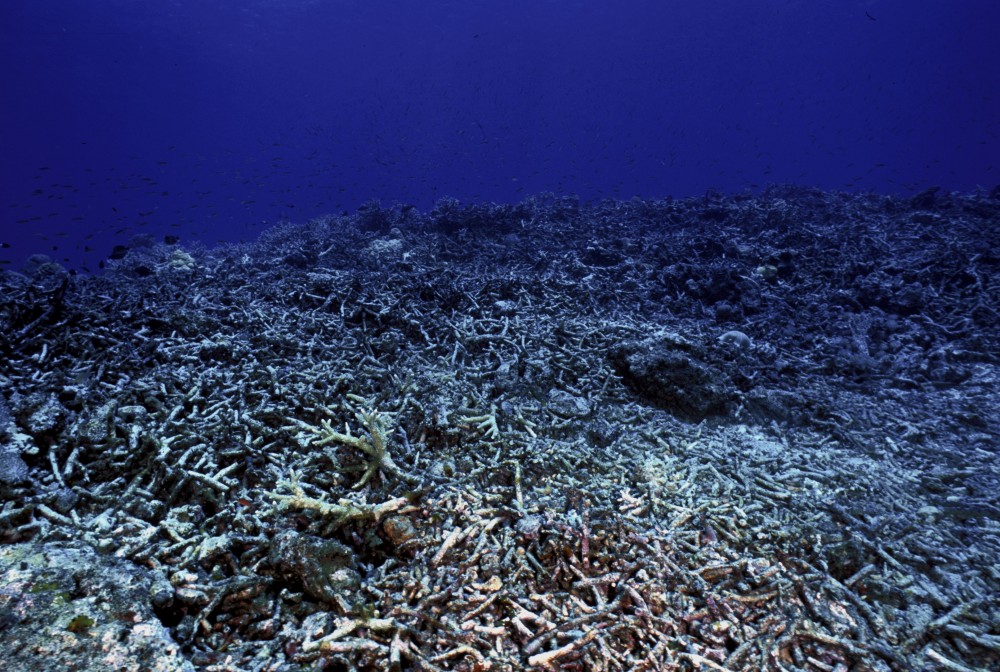
While working for Frontier Tanzania in the late 1990s I saw firsthand the devastating impact dynamite fishing had on coral reefs, the lives of the fishermen, and fish abundance in southern Tanzania. As an Asistant Marine Reserach Coordinator, I collected baseline data on the levels of biodiversity and habitat destruction using various marine survey techniques. The data collected was used to propose and finally lead to the opening-up of Mnazi Bay Marine Park in Luvura, Msimbati, Mtwara.
During my time with Frontier-Tanzania, together with Dr. Vicki Howe, Dr. Jean Luc Solandt, Dr. Jennie Mallela, Simon, Ian, Paul and many groups of research assistants from across the globe–we organized and facilitated a marine environmental education program for 12 primary schools 2 secondary schools and 1 teachers college on marine resources and conservation methods that included 365 students and 76 teachers.
In addition, we organized and facilitated a marine environmental education program for 19 local fishermen and 2 fisheries officers on marine resources and conservation, coastal zone management, power boat handling, and the collection and handling of fisheries data.
Furthermore, we developed the first bilingual (Swahili and English) environmental education teaching and learning manual for secondary schools. The teaching and learning manual hard information on coral reefs, mangroves, and sea grasses. The manual was intended to spear-head marine and environmental awareness in the coast areas of Tanzania.
The program target was environmental awareness to children who were more likely to become fishermen when they grew up. It helped the coastal resources users to understand why destructive fishing methods such as dynamite fishing are not good for the environment and to themselves. It also provided experiential learning and teaching materials to teachers and fisheries officers. The hope was that these efforts could be replicated elsewhere in the coastal communities.
It is very disheartening to hear that after all efforts and money from various donors and commitment from various organizations (Tanzania Coastal Management Partnership and the like) that dynamite fishing has returned to Tanzania with a vengeance.
To read more about dynamite fishing in Tanzania, click here.
Tanzania-Born Freelance Journalist Based in Atlanta.
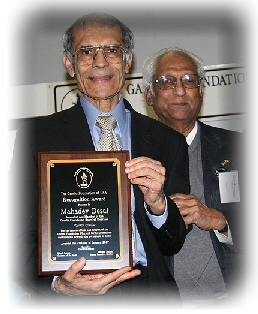
Mr. Mahadev told me in one of his e mails “I left Tanganyika in 1942 when I was nine years old. I have not visited Tanzania since.” I wish Mr. Mahadev could have the opportunity to visit Tanzania and see for himself the contribution of Tanzanian of Indian decent to the economy, education and political system in Tanzania. Dar Es Salaam of 1942 would be quite different from today’s Dar Es Salaam, I can imagine.
In Addition, Mr. Mahadev recently reviewed the inspiring memoirs of J.K.Chande a Tanzanian of Indian descent who was born and raised in Bukene, Tabora, in Tanzania. Such a coincidence, as I myself was born in Mabama, Tabora and was raised both in Tabora and Morogoro.
To read more about the review of Mr. J.K. Chande and his magnificent contribution to Tanzania click here. By the way, the book is called A Knight in Africa: Journey from Bukene. I have ordered a copy for myself from Amazon.com. Anyway, my book just arrived today.
This book is something. If you like reading books about Africa, don’t miss this one. It is an incredible memoir.

Unlock the Potential of a Tanzanian Child
There are so many talented children in Tanzania, but most of their potentials is being wasted before it can be realized. This kid in the video below could be the next Will Smith. The lack of resources and programs to foster children talents in science, arts, acting, story telling and the like will result to this kid’s dream to not being realized.
Watch the video and leave a comment!!!!
The Headline You Won’t See in the Tanzanian Media Today!!!

“The headline you won’t see in the Tanzanian media today, “JK Sack Defense Minister and Army Chief.” And what you will see is JK visits “Munitions Victim in a Hospital”. With photo of His Excellence kissing an injured baby. BUTIAMA TUMEZIKA MENGI.” A quote from- Henry Suffa.
The leadership in Tanzania is very predictable. Meetings will be held over this incident but none of the top people responsible will have a sweat over what happened twice over the course of two years. Nobody will voluntary resign or be sacked over their own incompetence, and/or gross irresponsibility.
What you will hear from these meetings are empty promises of never to happen again, “return to your homes…..the place is very secure now”…..the same words heard two years ago. Did it not happen again just the day before yesterday?!?
It is understandable that terrorist acts are actually pretty rare in this part of the globe except for the 1998 Embassy bombings in Dar Es Salaam and Nairobi, but incompetence, irresponsibility and ignorance are horrifyingly common place.
I will end with this quote I saw on one of the daily news channels here “I guess when we sold them the weapons we forgot to include instruction manuals on how to store ammunitions”. It really cracked me up despite the seriousness of the whole issue
Dar Blasts: Atleast 20 Reported Dead.

The toll from last night’s blasts at the army amory in Mbagala military base in Dar Es Salaam, Tanzania, is 20 people dead and 184 injured. Similar incident like this one happened in 2009, in which dozens of people were killed and several more were seriously injured.
I guess it is time to start asking questions. Who is reponsible here? And, who dropped the ball twice? Does someone in the ranks need to resign or at-least held accountable? The “it was an accident” excuse is so yesterday and lame. This is how people avoid their responsibilities by blame allah, jesus and/or god. Kazi ya Mungu (god’s will) has nothing to do with repeated and avoidable incidences.
I am Tired of Same Old Stories. Aren’t You?
Dar Bomb Explosion Picture
Click the link below to see a pic of exploding bombs by cnn ireport from Dar Es Salaam, Tanzania. If you are in Dar don’t hesitate to share your experience here even in Swahili. We would like to hear first hand account from people living in Dar and especially those close to Gongolamboto and other closest spots to the bomb explosions. I hope everyone survived these never ending explosion in that part of town.
RWANDA MINISTER RESIGNS OVER “PLAYBOY” PICTURES.
By Charles Onyango Obo
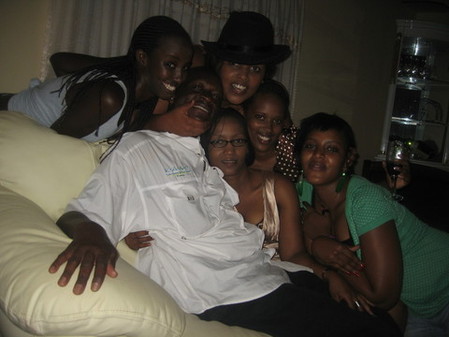
There have been a spate of these pictures recently. First, with Tanzania President Jakaya Kikwete playing hanky panky. Then there was that Liberian minister, in his naked magnificence–except that one was published in a newspaper in the country.
Meanwhile, Italian prime minister Silvio Berlusconi, is to be tried for consorting with an underage prostitute, and when she got in trouble later, good old Silvio used his office to spring her from a police jail! That Berlusconi must be an African president in white skin.
Having said that, I think in some of these cases, like Habineza’s, there is too much puritanical hysteria. He is shown dancing with a grown woman, holding her close, then with a larger group of women all squeezing him. At no point is any of them naked.
Well, here is the link, you be the judge:
http://www.leprophete.fr/actualit%C3%A9s-ad/joseph-13-02-11/
Investigating gold

“It’s not about African pride. It’s about heritage. That’s what we’re fighting for,” Evans Rubara says. The answer lies within Western multinational companies like Barrick Gold Mines, Anglogold Ashanti, and a corrupt government, he says. “Colonial attitude has carried over, like they were the king-makers,” Rubara says. Corporations have re-instilled rule through colonization, he suggests. These companies are looting our country and killing our people, Rubara says. “We do not have a history in Tanzania of fighting with ourselves, but it is coming,” he says. “If we are not careful, we will have a civil war.”
There are many gold mining companies in Tanzania, but Rubara only takes issue with the inhumane. The worst is Canadian-owned company Barrick Gold, Rubara says. Amnesty International accused Barrick of killing 70 miners by burying them alive. The company has denied the claims, but Rubara isn’t satisfied. “I say allegedly because of my journalism demands,” he says, “but personally I know it’s true.”
Natural resources are a nation’s pride; and, when you take this away, you unclothe the nationals of their pride and heritage, Rubara says. “I get pissed off when I talk about mining issues,” Rubara says. “They [mining companies] rape everybody—economically and culturally speaking; they take our wealth to build their own country.”
A voice for the voiceless
When Rubara was 15 years old, he was orphaned, left to care for himself and his two younger brothers. Rubara held several odd jobs so he could send his brothers to school. He taught himself all that he could before getting involved with missionaries who helped send him to school in Kenya. He underwent some journalism training, but got an intensive six-month training on investigative journalism while working for an Tanzanian investigative paper. “I became a journalist to speak on behalf of the voiceless,” he says.
Rubara says not much has changed in the policies of Tanzania since he began his investigations. He admits, however, a lot of the cases he reported on are either in court or the people at fault have stopped. The article that landed Rubara in jail was picked up by the Legal and Human Rights Centre; it dealt with the illegal eviction of six villages for a rich Arabian investor looking to start a farm. Land is the only equity Tanzanians have; when it is taken away there is nothing left to do but to beg, Rubara says. “It’s not about African pride,” Rubara says. “It’s about heritage. That’s what we’re fighting for. Good heritage is when all is equal in the face of the law.”
A few weeks ago an executive of Barrick approached Rubara at a seminar and said, “Evans, I want you to stop talking,” according to Rubara. Rubara has been thrown into custody, received death threats, and been beaten for his investigative reporting, but still says he will never stop. “If the liberation of my country will come from my death, I would rather not see results than die begging on my knees,” Rubara says. Tanzanian land is being raped and plundered while the majority in Tanzania are unemployed, Rubara says.
Due to extremely high unemployment, prostitution is prevalent for men and women, Rubara says. This creates a dangerous situation for the rapid spread of HIV/AIDS. In 2005, Tanzania had the highest HIV/AIDS prevalence rates in East Africa, Rubara says. “[The unemployed] have nothing else to do, they are hopeless,” Rubara says. “They are waiting for their death
To read more stories about Evans Rubara go to AfricaJournalists.org

Kikwete Did It Again: Serengeti Road gets a go ahead!!
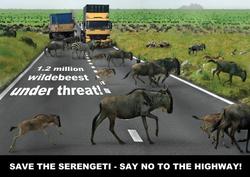
If you want to learn more about the negative impacts this road will have on the Serengeti and Maasai Mara National Parks, click here and here and here. These websites have a collection of the projected pros and cons and I do not see the reasons to waste my energy duplicating the same information.
One serious impact of the just approved Mara-Arusha Road through the Serengeti would be the cutting off of the wildebeest migration. This is one of the major factors that attract tourists across the globe to come and spend their hard-earned cash in Tanzania and Kenya every year. The road will not only impact the Serengeti ecosystem and tourism industry in Tanzania but also in Kenya. I am just wondering what the Kenyans are doing to influence a different outcome?
I thought we are building an East African community that is going to embrace and protect the interests of its fellow members. Building this road will not help to foster the East Africa integration which is the aspiration of many East Africans. It will actually damage Tanzania’s standing on that regard….. Period!!!
 www.kibogoji.com